The short answer
You likely need a new chimney liner if your flue is cracked, deteriorated or missing a liner, or if you are switching fuels or connecting a new appliance. TrueHearth's certified technicians inspect the flue with a camera, clean it, then install and test a liner sized to your fireplace, boiler or water heater.
A chimney liner is the protective channel inside your flue that carries smoke and exhaust up and out of the house. In many Brooklyn brownstones, row houses and older frame homes, the original clay tile liner has cracked, shifted or worn away, and some chimneys never had one at all. TrueHearth Chimney Service installs new liners for wood-burning fireplaces, gas and oil boilers, and water heaters. Our certified technicians inspect the flue first, size the liner to the appliance it serves, and install it from the roof down while keeping the inside of your home protected. This page explains when a liner is needed, what the job includes and how a visit works.
Signs you need a new chimney liner
Liner damage is usually hidden inside the masonry, so most owners notice the side effects first. If you notice any of these signs, have the flue checked before your next fire or the next heating season.
The last sign on the list matters a lot in New York City. When a building converts its boiler from oil to gas, the chimney has to be evaluated as part of the work, and a new liner is often needed. Gas exhaust produces acidic condensate. Over time, that condensate can corrode a masonry flue that handled oil exhaust without trouble.
- A smoke or creosote smell in the room, especially on humid days or when the fireplace isn't in use
- Poor draft: smoke rolling into the room, fires that are hard to start, or a boiler that struggles to vent
- Pieces of clay tile, mortar or flaking brick collecting in the firebox or at the base of the flue
- White staining on the brick inside or outside, a sign that moisture is moving through the masonry
- Water in the firebox, or rust on the damper after rain
- A planned switch from oil to gas, or a new boiler or water heater connected to an existing chimney
What's included in a liner installation
Every installation follows the same core steps. We adjust them to your chimney and the appliance it serves.
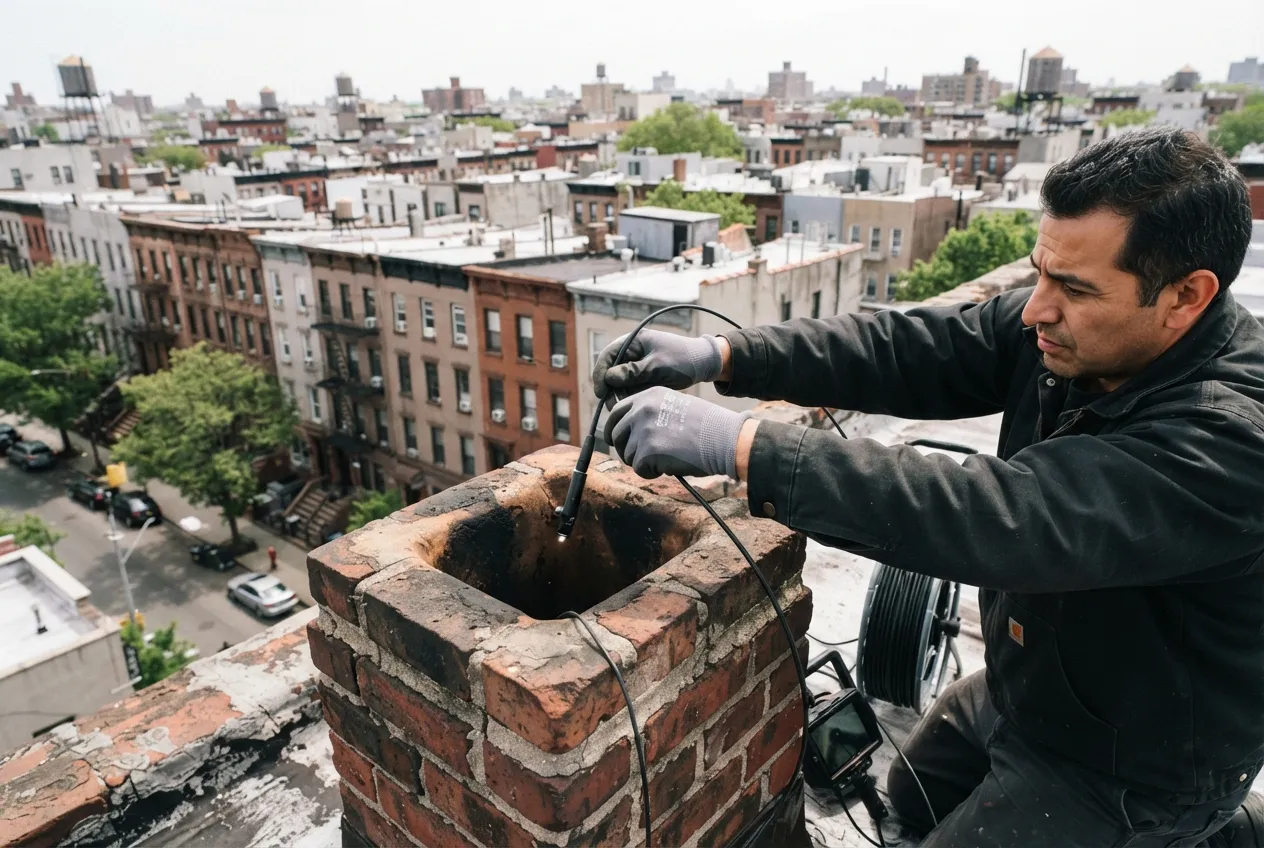
- Inspection of the existing flue, including a camera inspection of the interior
- Measuring the flue and matching the liner size to the appliance's venting needs
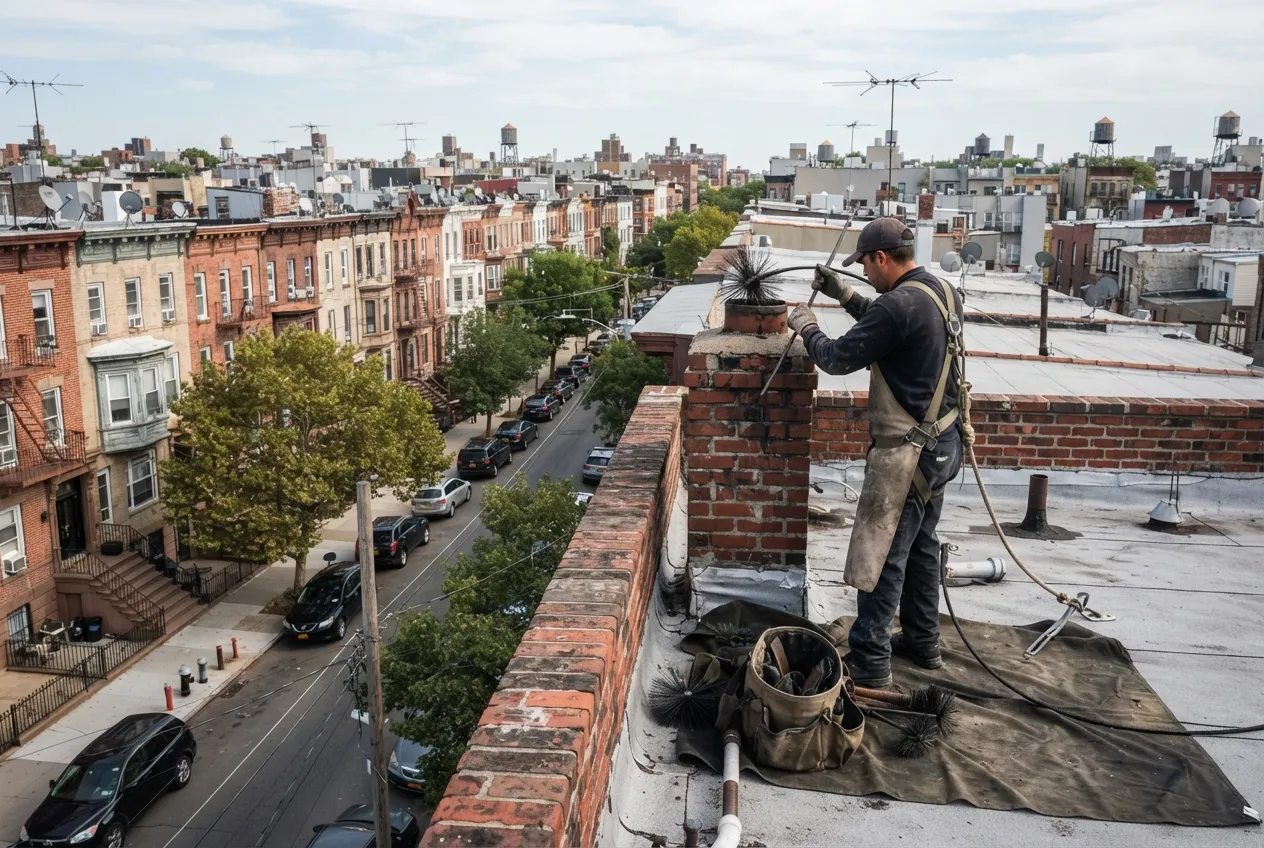
- Cleaning the flue with rotary brushes and removing loose tile, mortar and debris
- Removing old liner sections that would block the new liner
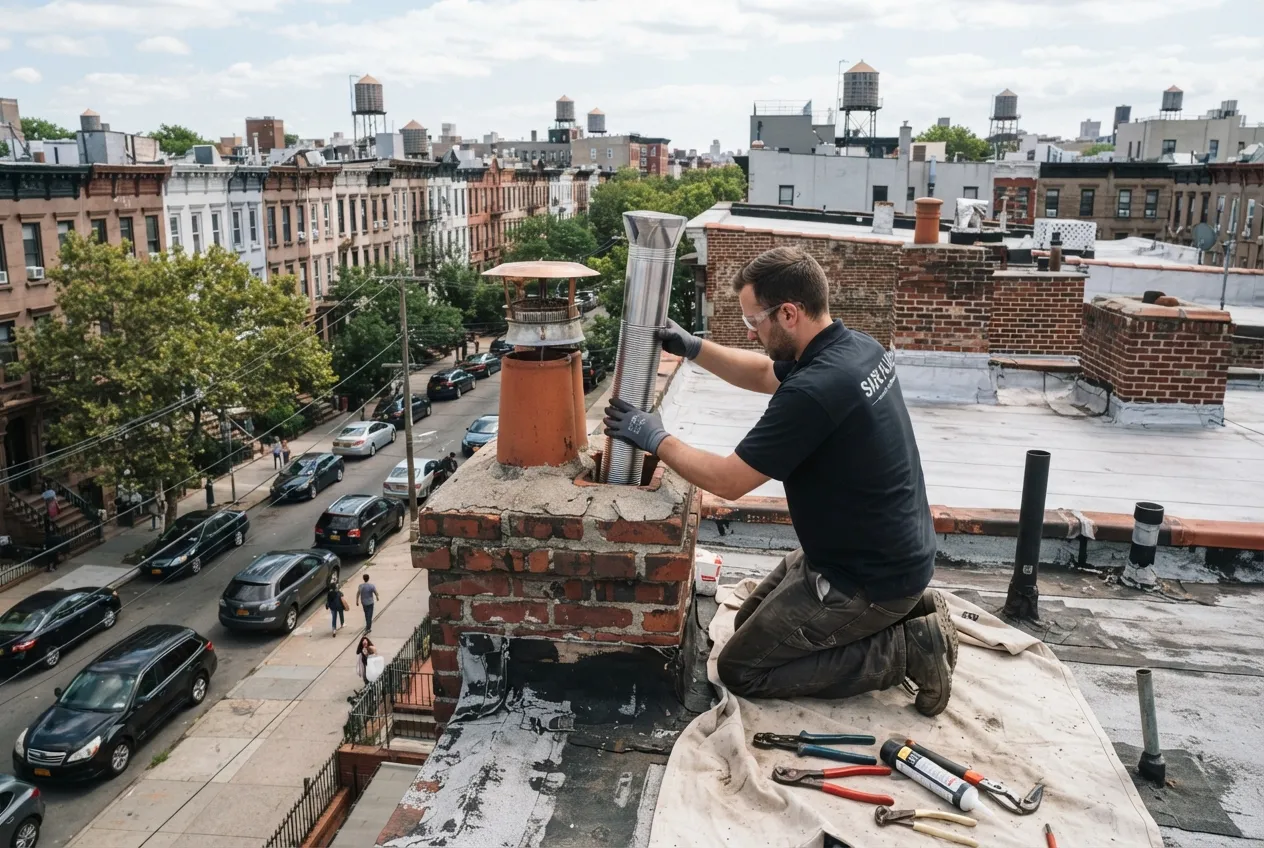
- Installing a stainless steel liner, or another liner suited to the fuel, from the roof down
- Connecting the liner to the appliance or smoke chamber with the correct fittings
- Insulating the liner where the chimney and appliance call for it
- Fitting a top plate and rain cap to keep out water, animals and debris
- A final camera check and draft test, with photos and a written summary of the work
How our crew works in your home and on the roof
Inside, we lay drop cloths from your door to the fireplace or boiler room and seal the opening before any brushing starts. HEPA vacuums run during cleaning so soot and dust stay in the flue instead of reaching your living room or basement. Rotary brushes clear the flue walls so the new liner slides down without snagging. The camera lets us show you the condition of the flue on a screen, so you can see it for yourself.
On the roof, the crew sets up safe access, checks the crown and flashing, and feeds the liner down from the top. Brooklyn roofs are often flat, with tight access through a bulkhead or hatch. Attached row houses can also share chimney stacks, so before work begins we plan the route and confirm which flue serves your home. We clean up the roof and every work area before we leave.
Time for your annual chimney check?
The standard we follow
Our chimney work follows NFPA 211, the national standard that calls for chimneys, fireplaces and vents to be inspected once a year. Chimney professionals use three inspection levels. Level 1 fits a system that hasn't changed. Level 2 applies when the system changes, such as a new appliance or a switch of fuel, or when the home is sold. Level 3 is used when a hidden hazard can only be reached by opening part of the chimney or building.
A liner installation changes the venting system, so we approach it at Level 2, including a camera look at the full flue. If the camera shows damage we can't reach without opening a wall or the chimney, we'll explain why a Level 3 inspection is needed before going further.
Timing matters too. New York City's heat season runs from October 1 through May 31. During those months, building owners must keep apartments heated to the city's minimum temperatures. If your chimney serves a boiler, scheduling liner work before October means you won't have to take the heat offline during those months.
What affects the price
Every chimney is different, so we quote after we've seen yours. The main factors are listed below.
Each item is explained in your written quote, so you can see what you're paying for before you agree to anything.
- Chimney height and roof access, including flat roofs, steep pitches and bulkhead or hatch entry
- Fuel type and appliance: wood, gas or oil, and whether the liner serves a fireplace, boiler or water heater
- Flue size and shape, and the condition of the existing tile or masonry
- How much creosote, soot or debris has to be removed first
- Whether the camera inspection turns up repairs, such as crown or flashing work
- Insulation, fittings and caps the installation requires
How a visit works
First, we schedule an inspection and ask what the chimney serves and what you've noticed. The technician inspects from inside the house and from the roof, runs a camera through the flue and walks you through what it shows.
If a liner is the right fix, you get a written quote that lists the full scope of work. On installation day, the crew protects the inside of your home, cleans and prepares the flue, installs and connects the liner, and tests the draft. Before leaving, we review the photos with you, explain how to use and care for the system, and tell you when your next yearly inspection is due.
Chimney Liner Installation by city
- Chimney Liner Installation in Prospect Heights
- Chimney Liner Installation in Clinton Hill
- Chimney Liner Installation in Fort Greene
- Chimney Liner Installation in Park Slope
- Chimney Liner Installation in Crown Heights
- Chimney Liner Installation in Bedford-Stuyvesant
- Chimney Liner Installation in Downtown Brooklyn
- Chimney Liner Installation in DUMBO
- Chimney Liner Installation in Boerum Hill
- Chimney Liner Installation in South Williamsburg
- Chimney Liner Installation in Prospect Lefferts Gardens
- Chimney Liner Installation in Wingate