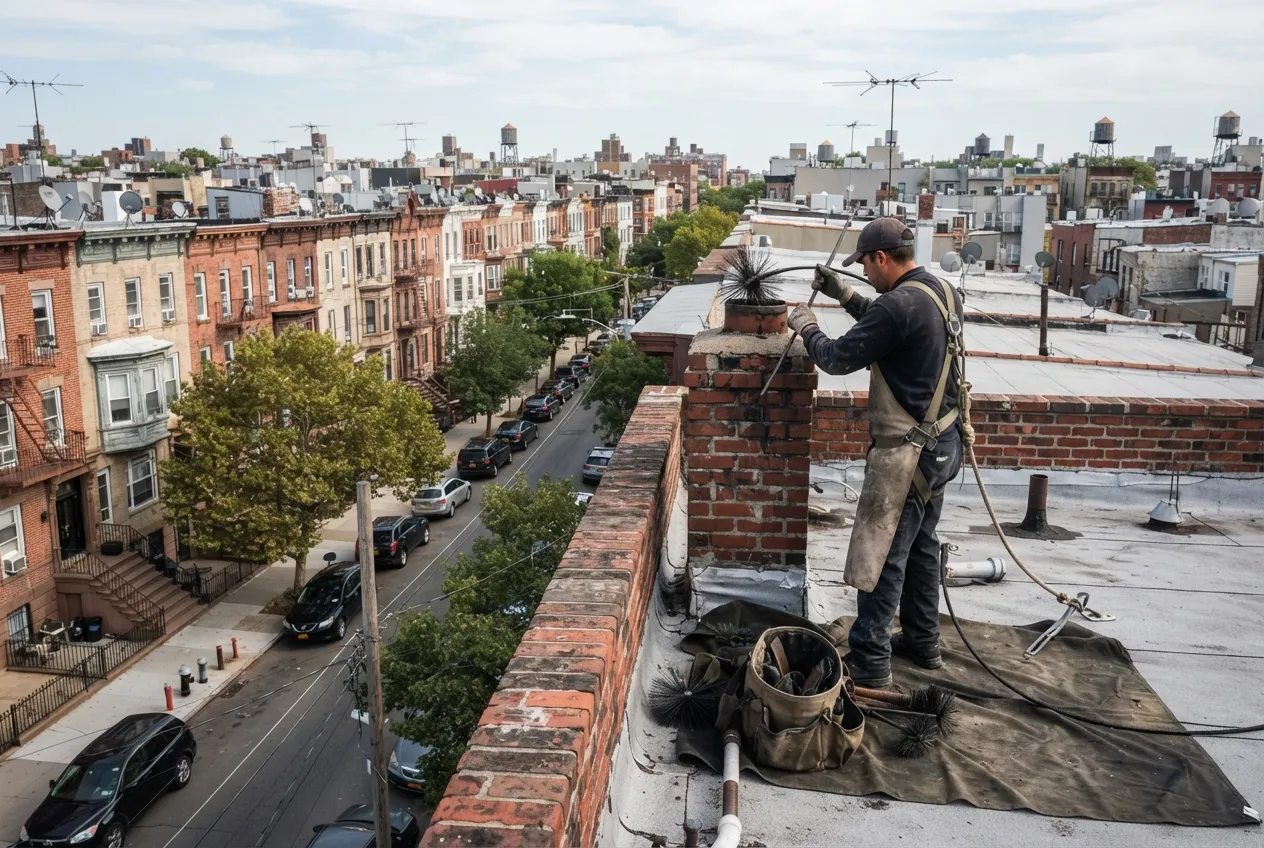
The short answer
If your Wingate chimney has a cracked, missing or wrong-sized liner, or you are switching a boiler from oil to gas, a new liner is usually the fix. TrueHearth inspects the flue, sizes a liner to your appliance and installs it. Ideally, the work is finished before New York City's heat season starts on October 1.
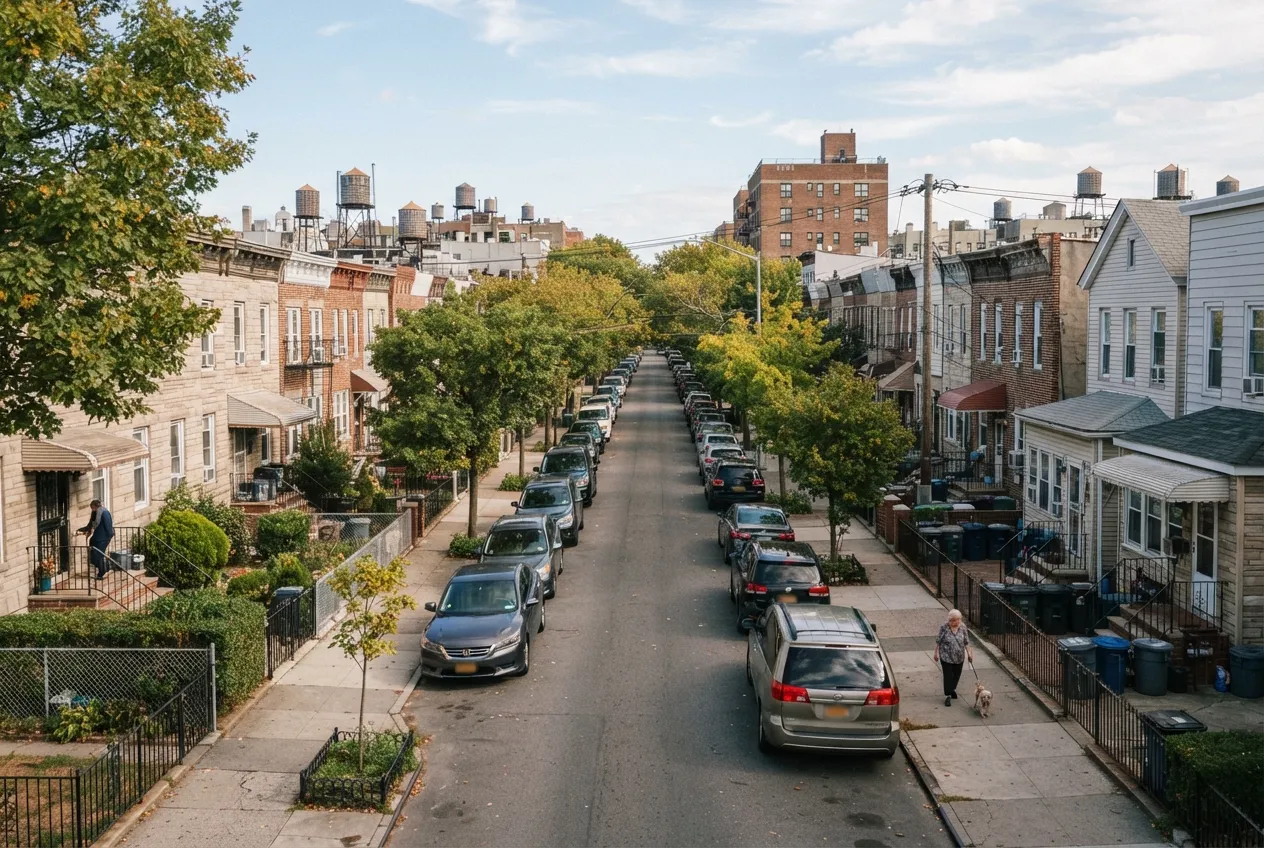
A chimney liner is the protective channel inside your flue that carries smoke and exhaust gases up and out of the house. Many homes in Wingate are older rowhouses, pre-war apartment buildings and detached houses with original masonry chimneys. Their liners are often cracked, missing, or no longer matched to the heating equipment they serve. TrueHearth Chimney Service installs chimney liners for Wingate homeowners and building owners from our office in Prospect Heights, about 2 miles away. This page explains how we decide whether you need a liner, what the work involves, and when to schedule it.
Why Wingate Chimneys Often Need a New Liner
Many chimneys in Wingate were built generations ago. Some have clay tile liners, and some have no liner at all. Over decades of heating seasons, tiles crack, mortar joints wear out, and pieces can fall into the flue. A damaged liner lets heat and exhaust reach the brick and any wood framing nearby. It can also let combustion gases leak into living space.
Liners can also stop matching the equipment below them. A flue sized for an old oil boiler or an original fireplace may be too large, or the wrong material, for a modern furnace, boiler or water heater. That mismatch can cause poor draft and moisture problems inside the chimney.
- Pieces of tile, flaking masonry or rust-colored debris at the base of the chimney or in the cleanout
- Water stains, white powdery deposits or damp spots on walls next to the chimney
- Smoke or odors coming back into the room, or a heating technician reporting poor draft
- A recent or planned change of boiler, furnace, water heater or fuel
- An inspection report that found cracked, gapped or missing liner sections
Relining for Oil-to-Gas Boiler Conversions
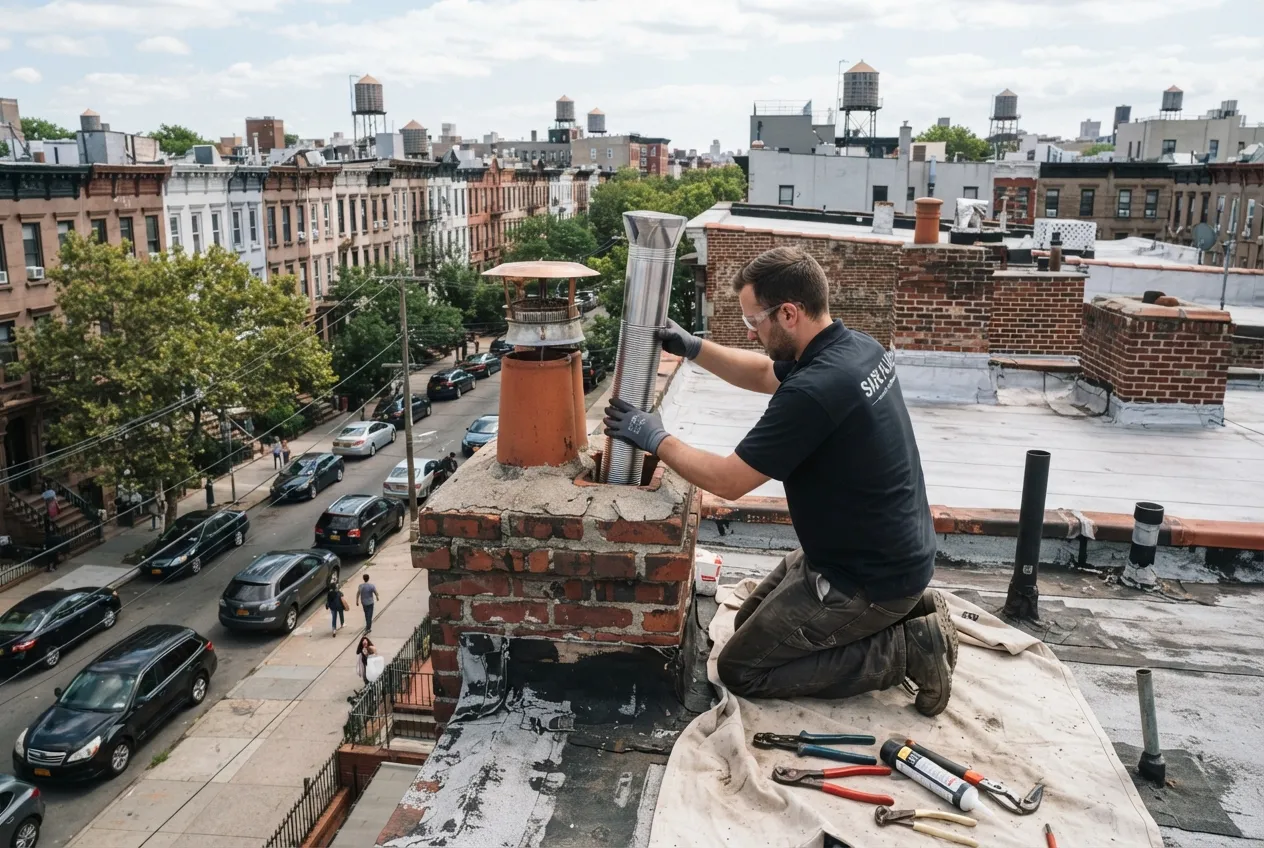
Many Wingate buildings have switched their boilers from oil to gas, or are planning to. In New York City, the chimney has to be evaluated as part of that conversion, and a new liner is often needed. Gas exhaust produces an acidic condensate. That condensate can corrode a masonry flue that handled oil exhaust for years without trouble.
We coordinate with your heating contractor. That way the liner is sized and specified for the new appliance, and the chimney work fits into the conversion schedule instead of holding it up.
How We Install a Chimney Liner
Every liner job starts with an inspection. The NFPA 211 standard calls for a Level 2 inspection when the heating system changes, such as a new appliance or a switch of fuel. As part of our work, we run a camera through the flue to see its condition. Sometimes a hidden hazard can only be reached by opening part of the chimney or a wall. That is a Level 3 inspection, and we explain why it is needed before doing it.
- Inspect the flue and note every appliance it serves
- Measure the flue's height and inside dimensions, then match the liner's size and material to the appliance
- Clean the flue so the new liner goes into a clear passage
- Install the liner from the top down, connect it at the appliance end and fit a cap at the top
- Check the draft and walk you through what was done, with photos
Time for your annual chimney check?
Planning Liner Work Around Heat Season
New York City's heat season runs from October 1 through May 31. During that time, building owners must keep apartments heated to the city's minimum temperatures. In a multi-family building in Wingate, replacing a liner in January means taking the boiler offline while tenants depend on it.
The simplest approach is to schedule the yearly inspection that NFPA 211 calls for in spring or summer. Any liner work can then be done before October. If a problem turns up mid-winter, we plan the work to keep downtime as short as possible. We also tell you up front how long the heat will be off. Our technicians are certified and used to working in occupied homes, so they protect floors and furniture while they work.
Serving Wingate and Nearby Brooklyn Neighborhoods
We work throughout Wingate, ZIP code 11225. Our Prospect Heights office is about 2 miles to the northwest, so scheduling a visit is straightforward. We also install liners in nearby Prospect Lefferts Gardens, Crown Heights, Prospect Heights, Park Slope and Bedford-Stuyvesant, where many homes have the same chimney issues.
More services in Wingate
- Chimney Sweep in Wingate
- Chimney Inspection in Wingate
- Chimney Repair in Wingate
- Air Duct Cleaning in Wingate