The short answer
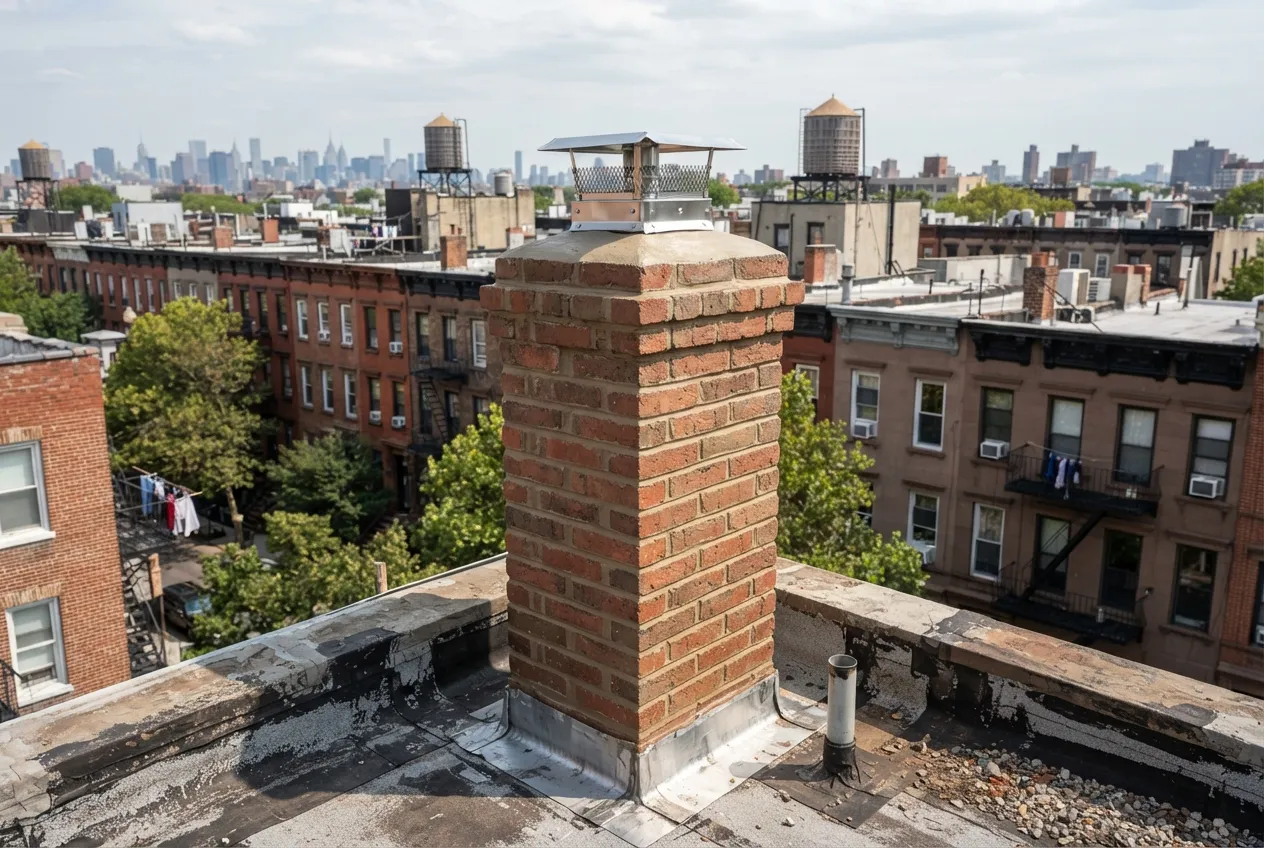
Chimney waterproofing protects brick and mortar from rain and freeze-thaw damage. We seal the crown and flashing and apply a breathable masonry repellent to the exposed stack. TrueHearth inspects first, so a leak from a cracked crown, loose flashing or a missing cap is found and handled before the repellent goes on.
Brick and mortar absorb water much like a sponge. In Brooklyn, chimneys take wind-driven rain, snow and freeze-thaw cycles every winter. Over time that moisture breaks down the masonry from the inside out. Water that soaks into a brick freezes, expands and pushes the face of the brick off. Mortar joints soften and wash out. Water also finds its way into the flue and down to the firebox. TrueHearth Chimney Service waterproofs chimneys on brownstones, row houses, frame homes and small multifamily buildings in Brooklyn and nearby neighborhoods. Our certified technicians start by finding where water is actually getting in and point out anything that has to be repaired first. Then they apply a breathable water repellent that keeps rain out of the masonry while letting moisture already inside escape.
Signs you need chimney waterproofing
Water damage in a chimney usually shows up in small ways before it turns into a masonry repair. If you notice any of the signs below, have the chimney looked at before the next heavy rain or hard freeze.
One sign on its own doesn't always mean a leak. When two or three show up together, water is usually the cause.
- Water in the firebox, or wet, clumped ash after a storm
- White, chalky staining on the brick, inside or outside, where water has carried salts to the surface
- Brick flakes, loose mortar sand or other debris collecting in the firebox
- A musty or strong creosote smell, especially on humid days, when moisture in the flue carries the odor into the room
- Rust on the damper, firebox doors or chimney cap
- Water stains or peeling paint on the ceiling or wall next to the chimney
- Brick faces chipping or popping off on the outside of the stack
What's included in chimney waterproofing
Waterproofing is not paint, and it is not a glossy sealer. Film-forming coatings trap moisture inside the brick, and that can make freeze damage worse. We use a vapor-permeable repellent made for masonry. It keeps liquid water out and lets water vapor pass through.
Repellent can't hold together failing masonry. If mortar joints are crumbling, bricks are cracked through, or the crown is broken, those need repair first. We'll show you what we found and give you a separate quote before any repair work starts.
- Visual inspection of the exterior: brick, mortar joints, crown, cap and flashing
- Camera inspection of the flue when the signs point to water inside the chimney
- Check for moisture at the roofline and on interior walls next to the chimney
- Cleaning of the masonry surface so the repellent can soak in evenly
- Sealing of hairline cracks in the crown with a flexible crown sealant
- Sealing of the flashing where the chimney meets the roof, if its condition allows
- Application of a breathable water repellent to the brick and mortar of the exposed stack
- Check that the chimney cap is in place and intact, to keep rain and animals out of the flue
- Written notes and photos of anything that needs repair beyond waterproofing
How our crew works inside your home and on the roof
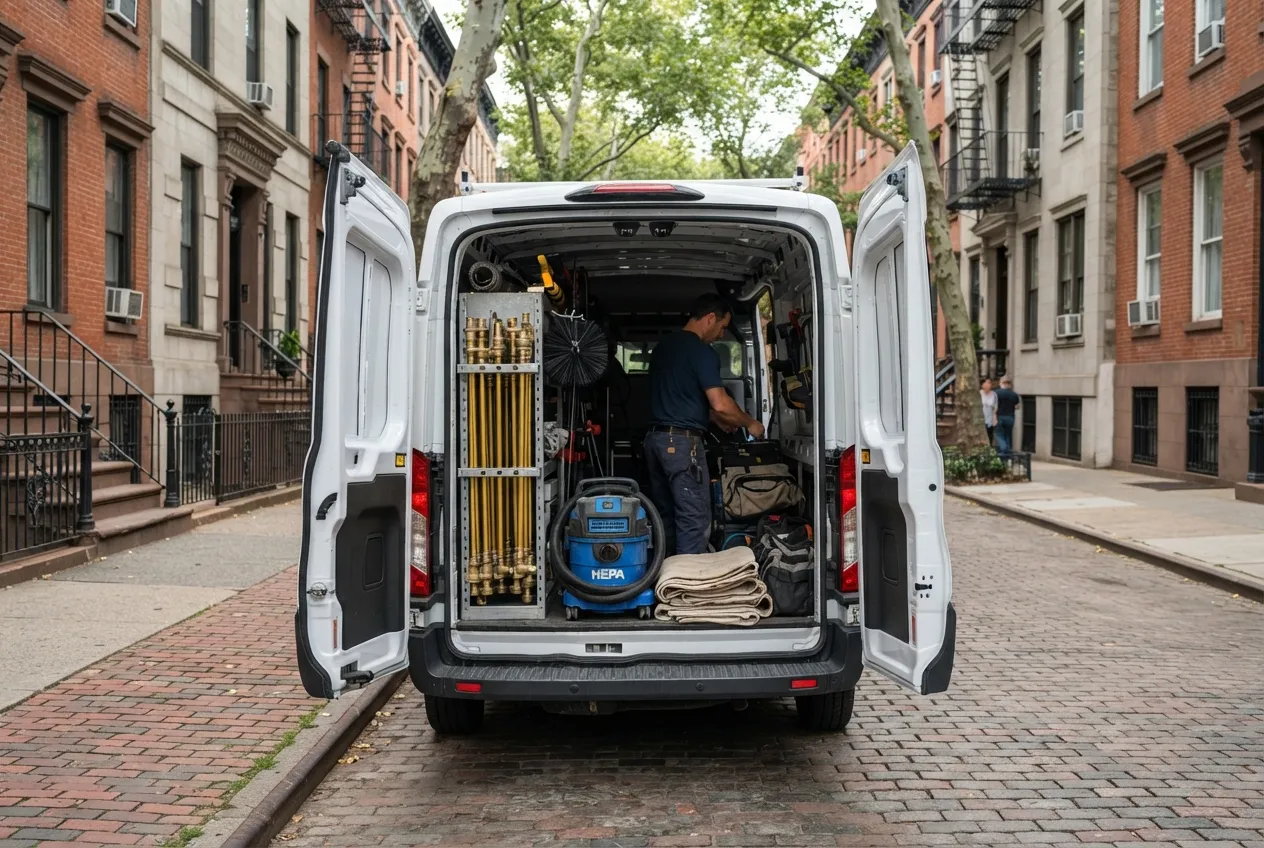
Most of this job happens on the roof. We still check inside, because the firebox and the walls around the chimney show where water is ending up. Before anyone opens the fireplace, the crew lays drop cloths from your door to the hearth and seals off the fireplace opening. HEPA vacuums capture any soot or debris we disturb. If the flue has enough buildup to hide damage, we sweep it with rotary brushes first. Then we run a camera up the flue to look for cracked flue tiles, open joints and water staining.
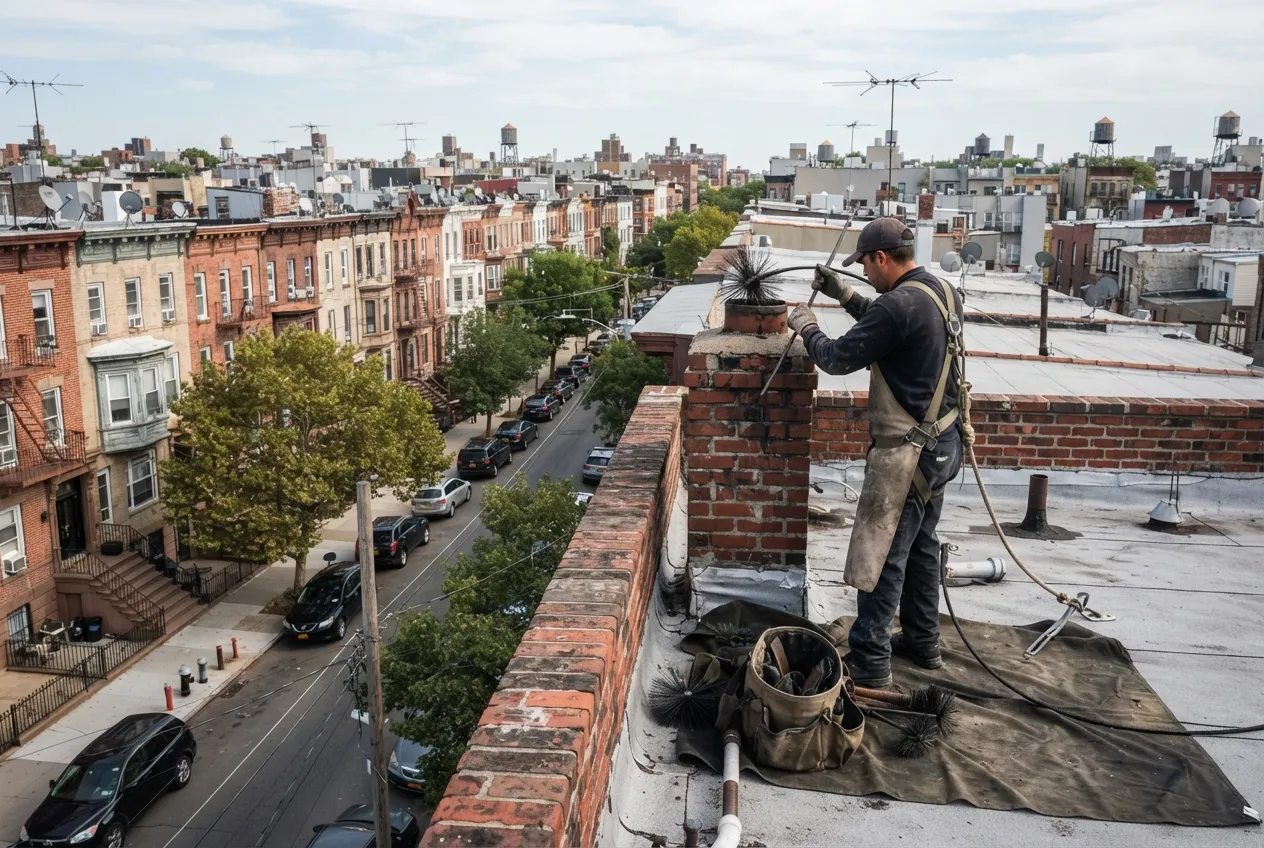
On the roof, we inspect the crown, cap and flashing up close before any product goes on. We cover nearby roofing, skylights and windows so overspray doesn't land where it shouldn't. Repellent goes on with a low-pressure sprayer or brush until the masonry is evenly coated. It needs dry brick and suitable temperatures to soak in properly. If rain is coming, we reschedule rather than apply it on wet masonry. When we're done, we clear the roof and the room and walk you through what we did.
Time for your annual chimney check?
The standard we follow
Our work follows NFPA 211, the national standard for chimneys, fireplaces and vents. It calls for these systems to be inspected once a year. Chimney professionals use three inspection levels. Level 1 applies when nothing about the system has changed. Level 2 applies when the system changes, such as a new appliance or a switch of fuel, or when the home is sold. Level 3 applies when a hidden hazard can only be reached by opening part of the chimney or building. Waterproofing usually goes along with a Level 1 or Level 2 inspection. We'll tell you if anything we see calls for more.
Some moisture comes from inside the chimney, not from rain. When a New York City building converts its boiler from oil to gas, the chimney has to be evaluated as part of the work. A new liner is often needed, because gas exhaust produces acidic condensate that can corrode a masonry flue. Exterior waterproofing doesn't fix that. If your heating system has changed, we'll check the flue for it.
Timing matters too. New York City's heat season runs from October 1 through May 31. Scheduling waterproofing in the warmer, drier months means the chimney is protected before the heating season and the winter freezes.
What affects the price
Every chimney is different, so we price the job after we've seen it. You get the price before any work begins. These are the main factors:
- Height of the chimney and roof access, including the number of stories, the roof pitch and whether there's a roof hatch
- Size of the stack and how much masonry is exposed above the roofline
- Fuel type and how much buildup is in the flue, if it needs sweeping before inspection
- Flue size and condition
- Condition of the crown and flashing, and whether they can be sealed or need repair
- Whether a camera inspection of the flue is needed
- Any brick, mortar or crown repair that has to happen before the repellent goes on
How a visit works
When you contact us, we'll ask what you've noticed and when you've seen it, for example after heavy rain or only in winter. We'll also ask what kind of building you have and how the roof is reached. That helps us send the right equipment.
On the day of the visit, the crew protects your floors and fireplace area, then inspects the inside and the roof. We show you photos of what we found and explain whether the chimney is ready for waterproofing or needs repairs first. You decide how to proceed. If you approve, we do the work, clean up and tell you how long the repellent needs to dry before it gets wet. You can keep using the fireplace as usual. At your yearly inspection, we'll check how the waterproofing is holding up.