The short answer
A chimney liner protects the masonry around your flue from heat and corrosive exhaust and helps the appliance vent properly. In Park Slope, liners are most often needed when an older flue is cracked or deteriorated, or when a building switches its boiler from oil to gas. We inspect first, then recommend the liner type and size that fits your appliance.
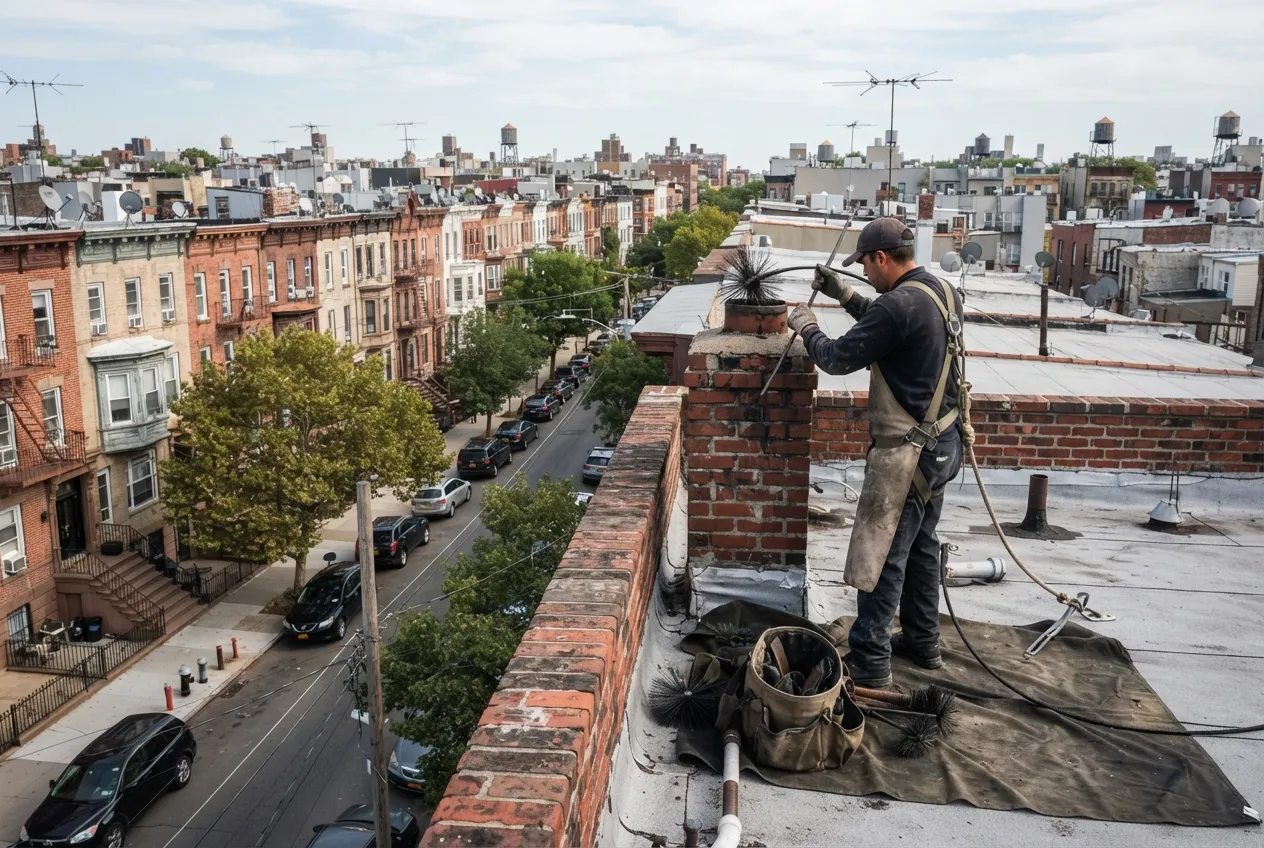
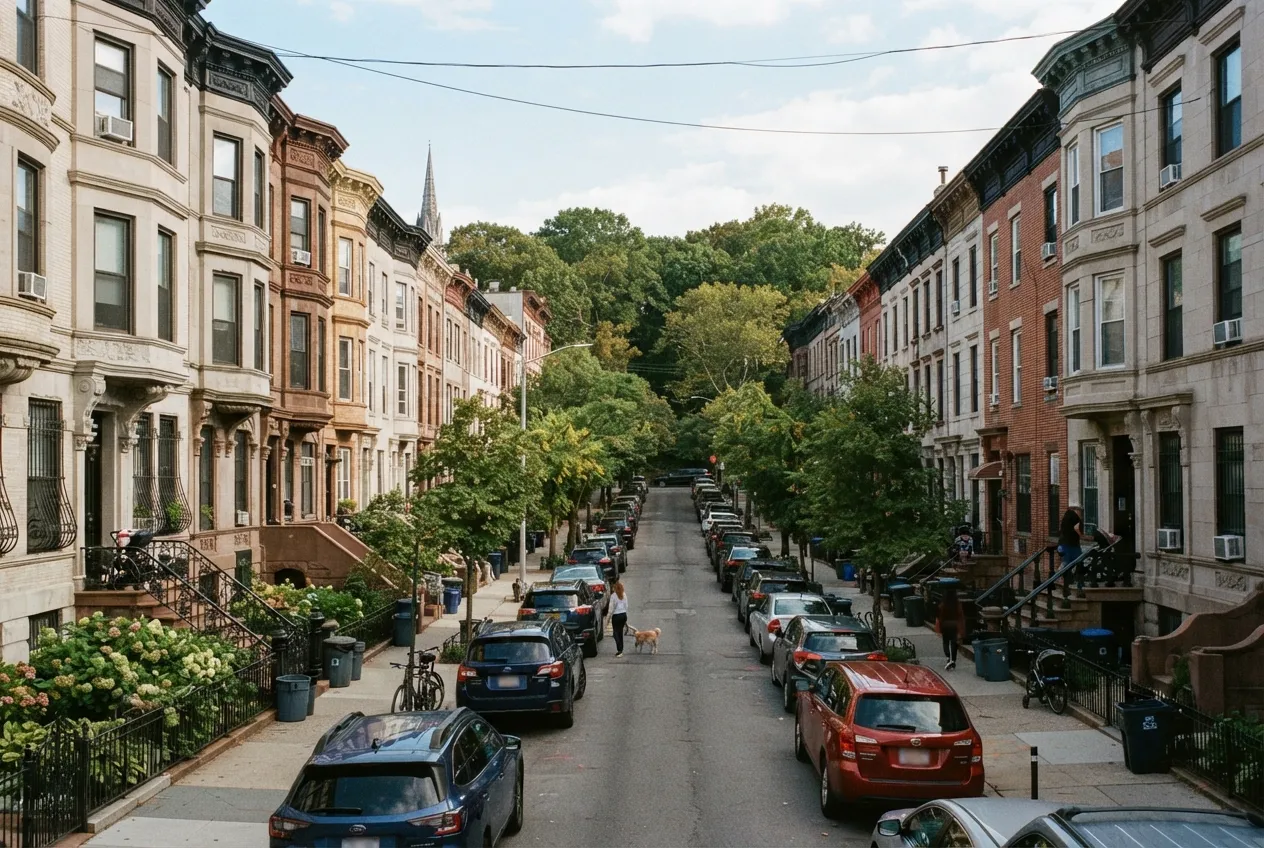
Many Park Slope homes were built long before modern heating equipment, and their chimneys show it. An old clay tile flue, or a masonry flue with no liner at all, may not be safe or sized correctly for the boiler, furnace or fireplace you use today. TrueHearth Chimney Service installs chimney liners for brownstones, rowhouses and pre-war apartment buildings throughout Park Slope (11217). We're based in Prospect Heights, about a mile away. Our certified technicians start with an inspection, explain what your flue needs and why, and then install a liner matched to your appliance and your chimney.
Why Park Slope Chimneys Often Need a New Liner
Park Slope's brownstones, rowhouses and pre-war apartment buildings typically have tall masonry chimneys that have served several generations of heating equipment. Over that time, clay tiles can crack, mortar joints between tiles can wear away, and some flues were never lined in the first place. Exhaust heat and gases can then reach brick and mortar that weren't meant to handle them.
Attached homes add another concern. When a chimney runs alongside a shared party wall, deteriorated masonry inside the flue is a problem that can affect more than one household. A properly sized, continuous liner keeps exhaust contained inside the flue and carries it out of the building.
Oil-to-Gas Conversions and Your Chimney
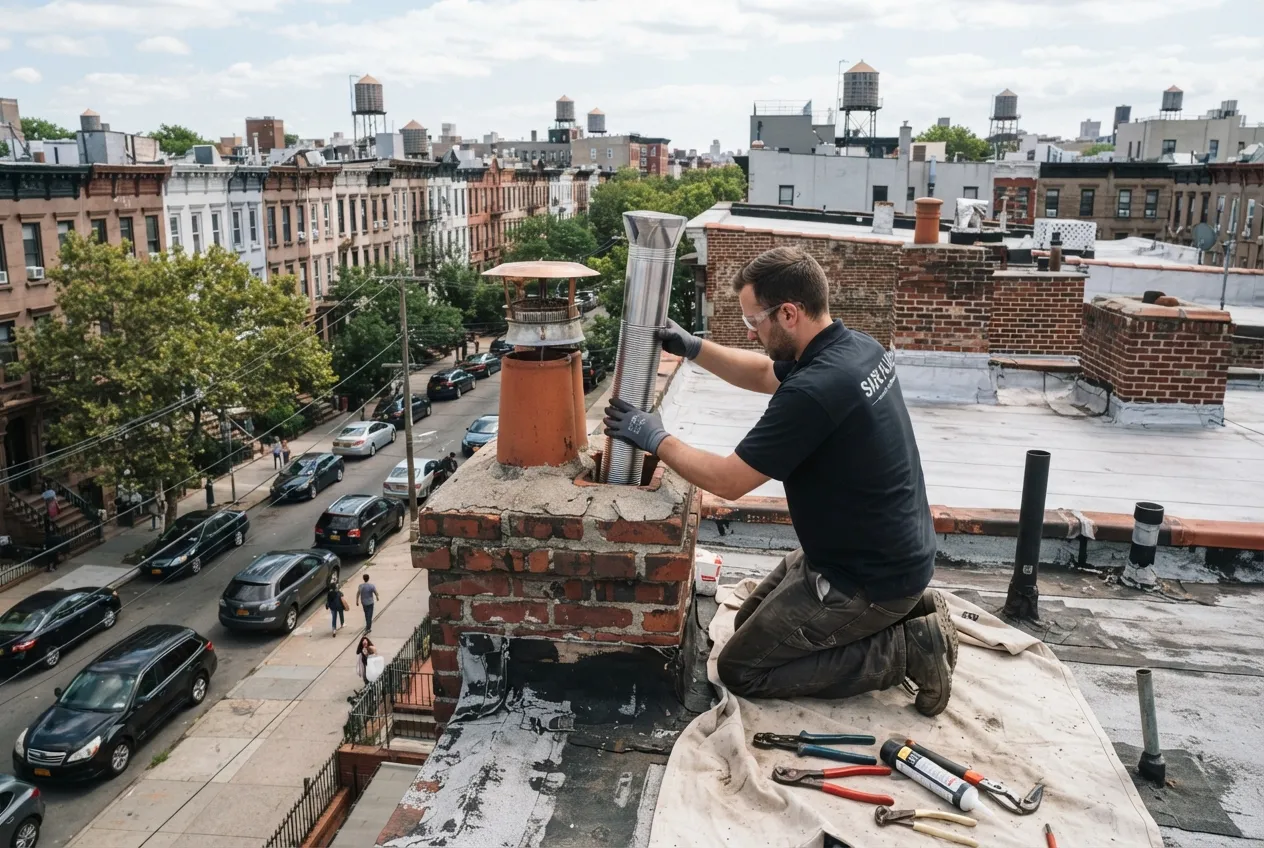
Many Brooklyn buildings have moved, or are planning to move, from oil heat to gas. When a New York City building converts its boiler from oil to gas, the chimney has to be evaluated as part of the work. A new liner is often needed because gas exhaust produces acidic condensate that can corrode a masonry flue.
A flue that worked well for oil for decades can deteriorate after a conversion if it isn't lined for gas. A change of fuel also calls for a more thorough inspection than a routine annual check. We can work with you or your heating contractor so the chimney is assessed and lined as part of the conversion, not as an afterthought.
Liner Options We Install
The right liner depends on the appliance it serves, the size and shape of your flue, and the condition of the masonry. After inspecting your chimney, we explain which option makes sense and why. The main choices are:
- Stainless steel liners, which suit most gas and oil boilers, furnaces and water heaters and can be sized to the appliance's venting needs
- Insulated stainless liners for wood-burning fireplaces and stoves, where higher temperatures are involved
- Cast-in-place liners, which can help restore and seal a masonry flue whose interior is worn or irregular
- Replacement clay tile in some situations where the chimney can be accessed and rebuilt
Time for your annual chimney check?
What Installation Looks Like
We try to keep the work clean and predictable, which matters in finished brownstone interiors and occupied apartment buildings. Here is the general sequence:
- Inspection of the flue, including a camera inspection where needed, to check its condition and measure it
- A clear explanation of what we found and the liner we recommend
- Cleaning the flue and protecting floors and furnishings around the work area
- Installing the liner from the top of the chimney and connecting it to the appliance
- Fitting a cap where appropriate to keep out rain, debris and animals
- A final check that the system is venting as it should, plus photos of the work
Timing Around Heat Season
New York City's heat season runs from October 1 through May 31. During those months, building owners must keep apartments heated to the city's minimum temperatures. For buildings with tenants, that makes the spring and summer the easiest time to reline a boiler chimney, because the heat can be off without pressure.
Problems don't always wait for summer, though. If an inspection turns up a damaged flue during the heating season, we'll talk through your options and how to keep the work as short as possible. The NFPA 211 standard calls for chimneys, fireplaces and vents to be inspected once a year, and an annual inspection is the best way to catch liner problems early.
More services in Park Slope
- Chimney Sweep in Park Slope
- Chimney Inspection in Park Slope
- Chimney Repair in Park Slope
- Air Duct Cleaning in Park Slope