The short answer
A chimney cap or chase cover keeps rain, animals, debris and stray embers out of your chimney and protects the flue and masonry from water damage. TrueHearth measures each flue, fits and fastens the right cover, and checks the chimney top for damage the old cover may have let in.
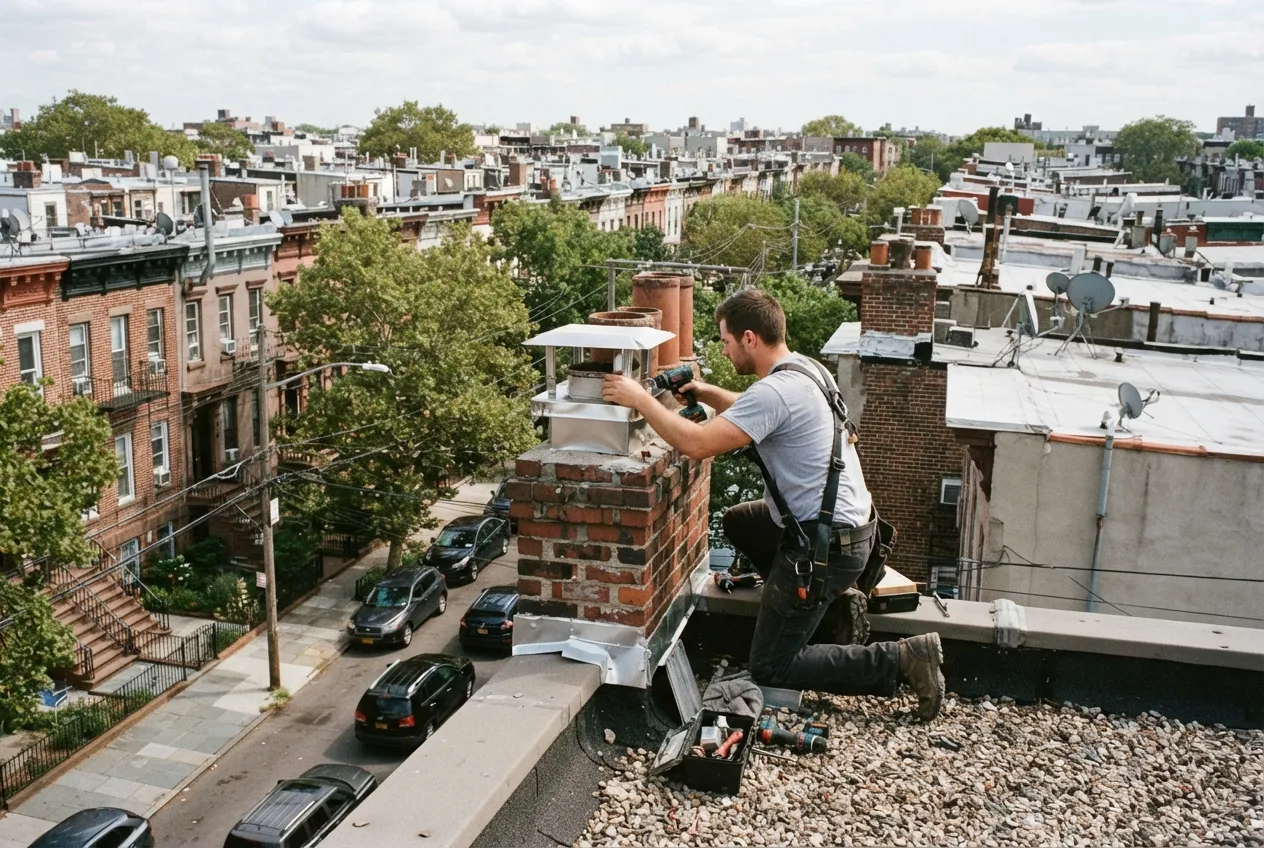
The top of a chimney takes more weather than almost any other part of a house. A chimney cap keeps rain, snow, birds, squirrels and leaves out of the flue. Its mesh also helps stop embers from landing on nearby roofs, which matters on Brooklyn blocks where rowhouses share walls and rooflines. A chase cover does the same job for a framed chimney built around a factory-made fireplace or vent pipe. TrueHearth Chimney Service measures, fits and fastens caps and chase covers on homes across Brooklyn and nearby neighborhoods. We also check for anything a missing or failed cover has already let in.
Signs you need it
A missing, rusted or loose cap usually shows up inside the house before anyone looks at the roof. These are the signs homeowners mention most often:
Any one of these is worth a look. Water that gets past the top of a chimney can rot a damper, crack flue tiles and wear down mortar joints over a few freeze-and-thaw seasons. It is easier and less disruptive to deal with early.
- Water in the firebox, drips on the damper, or wet stains on the ceiling or wall beside the chimney after a storm
- Scratching, chirping or fluttering inside the chimney, especially in spring when birds and squirrels look for nesting spots
- Leaves, twigs, nesting material or flakes of brick and mortar collecting in the firebox
- White, powdery staining on the brick, inside or out, which means water is moving through the masonry
- A smoky or creosote smell that gets stronger in humid or rainy weather
- Poor draft, or smoke puffing back into the room on windy days
- On a framed chase: a rusted or sagging metal top, rust streaks down the siding, or water standing on the cover
What's included
Every cap or chase cover job covers the full top of the chimney, not just the piece of metal. A standard visit includes:
- Inspection of the chimney top, crown, flue tiles and existing cap or chase cover
- Measuring each flue, or the full chase, so the new cover fits properly instead of relying on a stock size
- Help choosing a single-flue cap, a multi-flue cap that covers several flues at once, or a chase cover with a built-in collar
- Removal of the old cap or chase cover and any nesting material or debris at the top of the flue
- Installation fastened to the flue tile, crown or chase framing, with mesh sized to keep animals out while letting the flue draw
- Sealing fastener points and confirming the chase cover sheds water instead of letting it pool
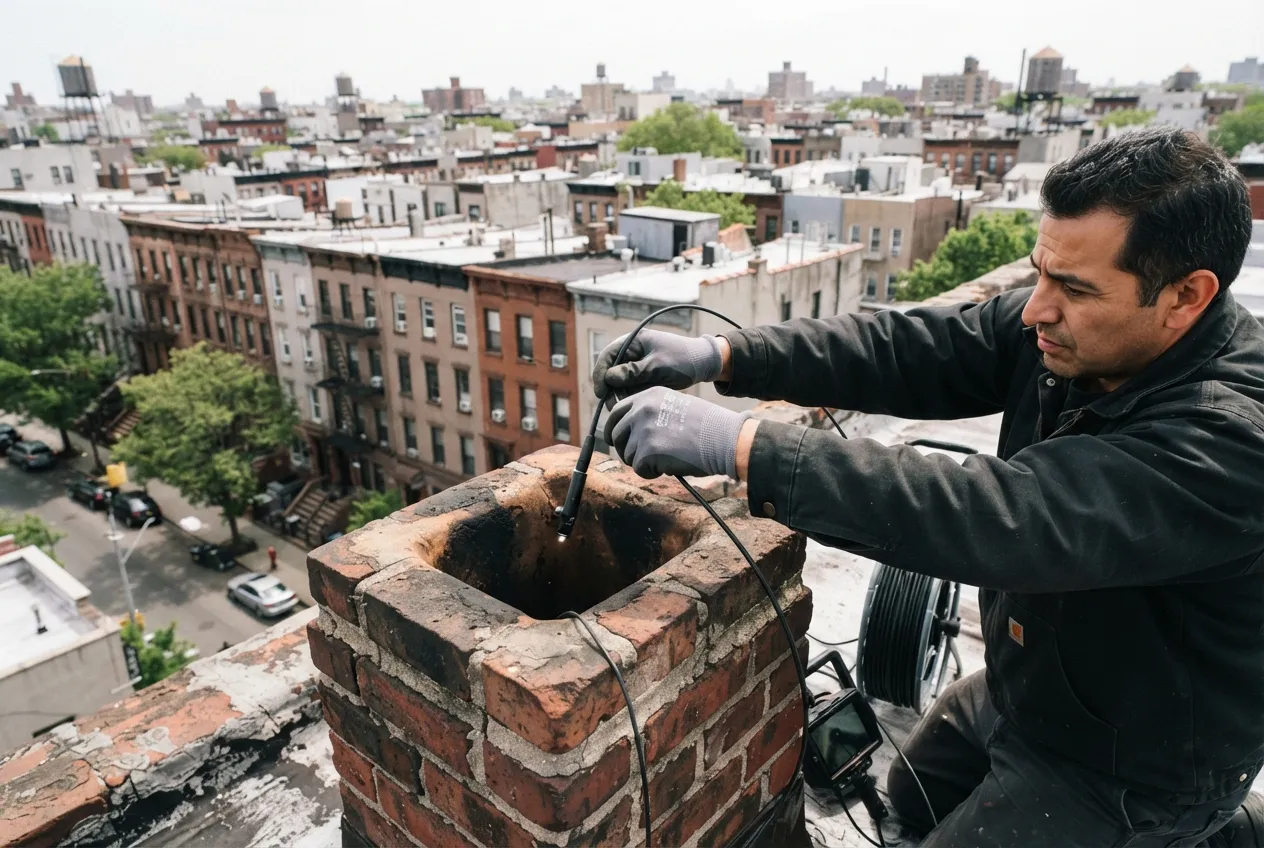
- A look down the flue from the top, plus a camera inspection when there are signs of water damage
- Cleanup inside and out, with photos and a written note on anything else we saw, such as crown cracks or loose bricks
How we work inside your home and on the roof
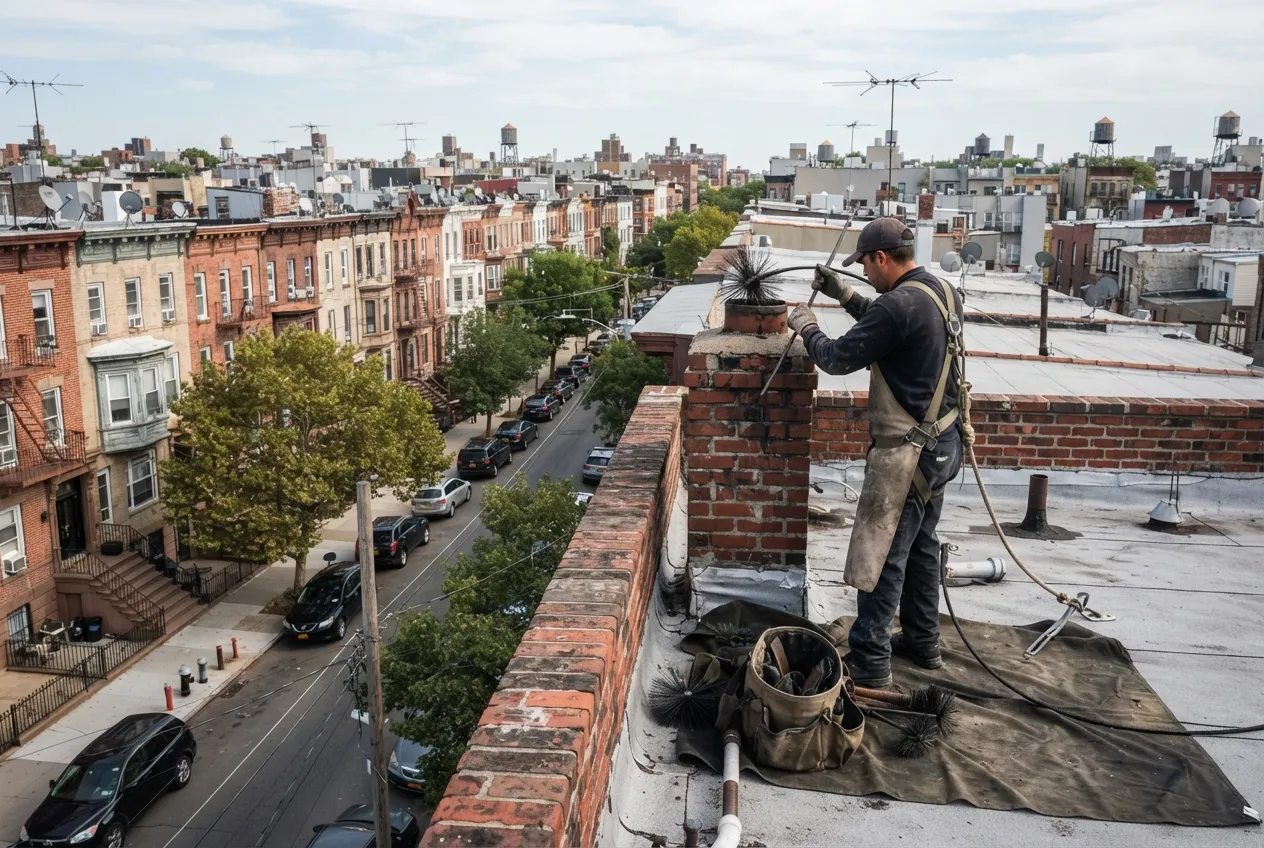
Inside, the crew lays drop cloths from the door to the fireplace or appliance and closes off the opening before any work starts at the top of the chimney. That way, loosened debris and soot stay in the flue. Anything that falls into the firebox is cleared with HEPA vacuums rather than swept up. If the flue needs cleaning before a cap goes on, we run rotary brushes through it to break loose creosote and nesting material, then vacuum it out. That is common when birds have nested or the fireplace sees regular use.
When there are water stains, a smell or a draft problem, we run a camera up the flue to check the tile joints and liner for cracks or moisture damage. The footage shows whether a cap alone will solve the problem or whether something else needs attention.
On the roof, technicians use access suited to the roof type and height, and they protect roofing and parapet walls while they work. They measure every flue, set the cap so its mesh sits clear of the flue opening, and fasten it securely enough to hold through winter winds. On a framed chase, the old cover comes off, the framing is checked for rot, and the new cover is fitted and fastened along its edges.
Time for your annual chimney check?
The standard we follow
The NFPA 211 standard calls for chimneys, fireplaces and vents to be inspected once a year. A cap installation is a good time to do that inspection, since we are already on the roof. Chimney professionals use three inspection levels. A Level 1 inspection fits when nothing about the system has changed. A Level 2 inspection is called for when the system changes, such as a new appliance or a switch of fuel, or when the home is sold. A Level 3 inspection is for hidden hazards that can only be reached by opening part of the chimney or building.
Fuel changes matter for caps too. When a New York City building converts its boiler from oil to gas, the chimney has to be evaluated as part of the work. A new liner is often needed, because gas exhaust produces acidic condensate that can corrode a masonry flue. The cap then has to fit that liner and suit the appliance it serves. Our technicians are certified and will tell you which inspection level your situation calls for.
What affects the price
We give a price after seeing the chimney, because no two chimney tops are the same. The main factors are:
- Chimney height and roof access, including steep pitches, parapets and how the crew reaches the roof
- Fuel type, since wood, gas and oil appliances each need a cap suited to their exhaust
- Flue size, how many flues there are, and the condition of the flue tiles and crown
- How much debris, nesting material or creosote has to be cleared before the cap goes on
- Whether a camera inspection is needed, or a repair such as crown sealing, flue tile replacement or chase framing work
How a visit works
When you book, tell us what you have noticed, such as water, noises, or a missing cap you spotted from the street. We schedule an arrival window and bring the cap materials we are likely to need. The technician talks with you first, looks at the fireplace or appliance, and sets up drop cloths. Then the crew goes up to inspect and measure. If a standard cap fits, it can often be installed the same visit. Custom multi-flue caps and chase covers may need a return trip. Before leaving, we clean up, show you photos of the finished chimney top, and explain anything else we found.
Booking before fall helps. New York City's heat season runs from October 1 through May 31, and a boiler flue with a blocked or damaged top should be sorted out before the heat has to stay on.