
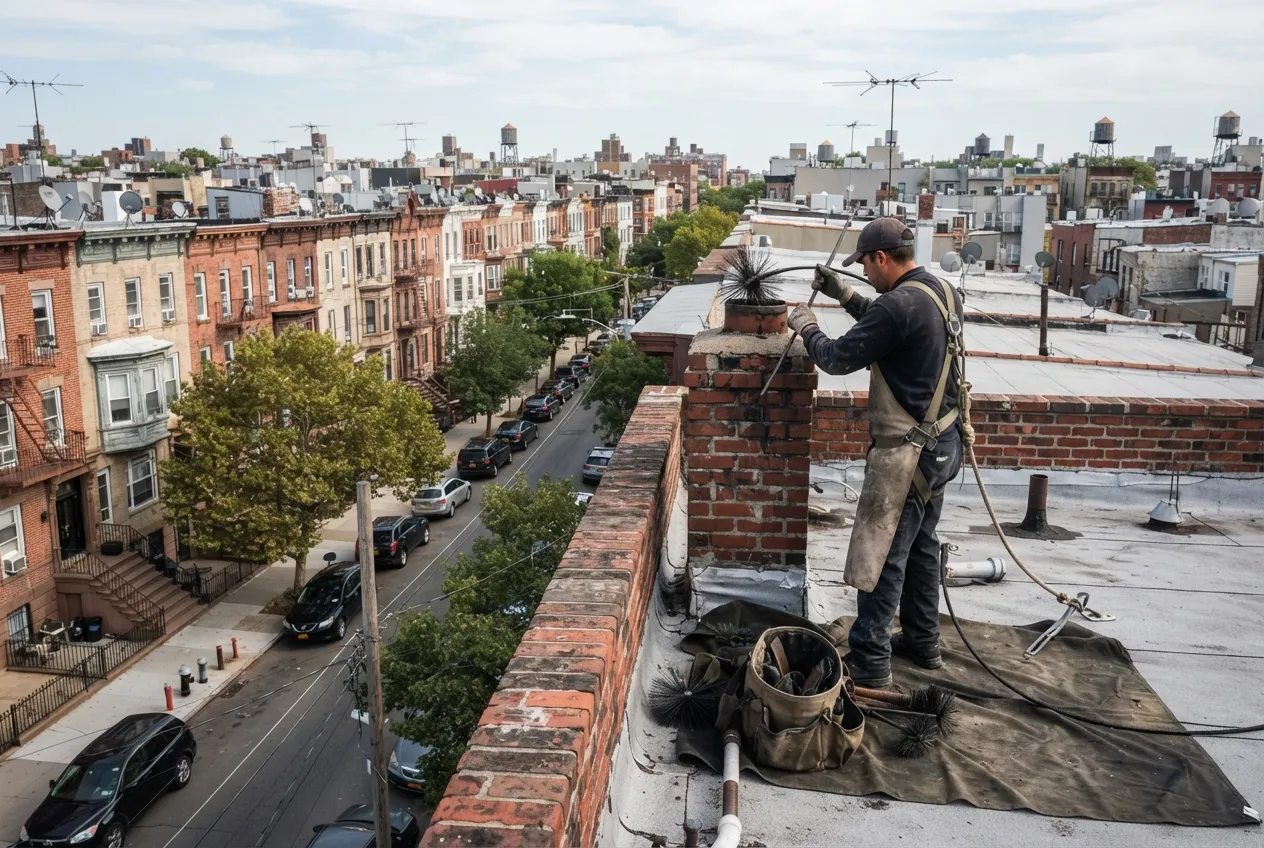
Chimney Inspection Levels: What Level 1, 2 and 3 Mean for Your Home
Serving Brooklyn and nearby cities.
- Diagnosis before any repair
- Written price first
- Written price before we start
Not every chimney inspection is the same. The NFPA 211 standard calls for chimneys, fireplaces and vents to be inspected once a year, and chimney professionals use three levels of inspection depending on what is going on with your system. This guide explains what each level covers, when you need it, what you get from a TrueHearth inspection, and how to get your home ready for the visit. If you're not sure which level fits your situation, that's normal. Tell us about your fireplace, stove or heating system, and our certified technicians will help you figure out where to start.
Level 1: The Yearly Check for an Unchanged System
A Level 1 inspection is the standard yearly check for a chimney that hasn't changed since it was last looked at. If you use your fireplace, wood stove or heating appliance the same way you did last year, with the same fuel and the same equipment, this is usually the level you need.
The technician examines the readily accessible parts of the chimney exterior, the chimney interior, and the appliance and its connection. Nothing is opened up and no permanent parts are removed. A Level 1 inspection pairs naturally with a chimney sweep, because a clean flue is easier to evaluate.
- The firebox, damper and smoke chamber, as far as they can be seen
- The flue, checked for blockages such as nests, debris or heavy creosote buildup
- The chimney's basic soundness and its clearance from combustible materials where visible
- The chimney cap, crown and exterior masonry from accessible vantage points
Level 2: When Something Changes or the Home Is Sold
A Level 2 inspection includes everything in Level 1, plus a closer look at accessible areas of attics, crawl spaces and basements, and a video scan of the inside of the flue. It is called for when the system changes, when the home is sold, or when an event may have caused damage you can't see from the hearth.
Fuel switches deserve special attention in New York City. When a building converts its boiler from oil to gas, the chimney has to be evaluated as part of the work, and a new liner is often needed because gas exhaust produces acidic condensate that can corrode a masonry flue. A Level 2 inspection shows whether your existing flue can handle the change or whether chimney liner installation should be part of the project.
For home sales, a Level 2 inspection gives buyers and sellers an honest picture of the chimney's condition before closing, so there are fewer surprises after move-in.
- Adding, replacing or removing a heating appliance, such as a new boiler, water heater, insert or stove
- Switching fuel, for example from oil to gas or from wood to gas
- Relining the flue or changing its size
- Buying or selling a home
- After a chimney fire, a strong storm or any event that may have damaged the chimney
Level 3: Reaching a Hidden Hazard
A Level 3 inspection is the most involved, and it is recommended only when a Level 1 or Level 2 inspection points to a serious hazard that can't be confirmed any other way. It includes everything in the first two levels, plus removal of specific parts of the chimney or building, such as a section of wall, a chase panel or masonry, to reach the area of concern.
Common reasons include suspected damage concealed behind a wall after a chimney fire, signs of heat or smoke where they shouldn't be, or a need to confirm whether combustible framing sits too close to the flue. Because part of the structure is opened, we explain exactly what will be removed and why before any work begins, and we talk through what restoration will involve. Findings at this level often lead to chimney repair or chimney rebuilding.
What You Get After the Inspection
Every TrueHearth inspection ends with clear documentation, not just a verbal "looks fine."
Keep the report with your home records. It is useful for conversations with your insurer, for future buyers, and for tracking whether a small crack or a little water staining is getting worse over time. If repairs are recommended, such as fireplace and damper repair, a new chimney cap and chase cover, or chimney waterproofing, the report explains what each one addresses so you can decide with full information.
- Photos of the firebox, damper, crown, cap, masonry and any problem areas
- Video footage of the flue interior on Level 2 and Level 3 inspections
- A written report describing what was checked, what was found and what we recommend
- A plain explanation of which issues are urgent and which can be planned for
How to Prepare for Your Inspection
A little preparation makes the visit faster and cleaner for everyone.
Heating appliances may need to be turned off during part of the inspection. If you manage a multi-unit building, keep in mind that New York City's heat season runs from October 1 through May 31, when owners must keep apartments heated to the city's minimum temperatures. Planning inspections of shared boiler chimneys with that in mind can make scheduling easier for you and your tenants.
- Stop using the fireplace or stove the day before so the firebox and flue are cool
- Remove fireplace screens, tools, decorations and anything on the hearth or mantel
- Clear a path to the fireplace, the boiler or furnace, and any attic or basement access
- Move furniture, rugs and valuables a few feet away from the hearth
- Keep pets and children in another room during the visit
- Write down anything you've noticed: smoke odors, draft problems, water stains, falling debris or animal sounds
- Have appliance paperwork or past inspection reports handy
Inspections
Three levels of chimney inspection
The NFPA 211 standard calls for a yearly inspection. Which level you need depends on what has changed since the last one.
-
Level 1
Annual check
For a chimney and appliance that have not changed and will be used the same way: the readily accessible parts of the chimney, the flue and the connection, checked for soundness, blockages and deposits.
-
Level 2
Camera inspection
When something changed — a new stove, insert or boiler, a fuel switch such as oil to gas, the sale of the home, or a chimney fire, storm or quake. Adds a video scan of the whole flue and the accessible attic, roof and crawl spaces.
-
Level 3
Concealed areas
Only when a Level 1 or 2 points to a hidden hazard that cannot be checked any other way: parts of the chimney or building are opened to reach it.
FAQ
Common questions
How often should my chimney be inspected?
The NFPA 211 standard calls for chimneys, fireplaces and vents to be inspected once a year. That applies even if you rarely use the fireplace, since animals, weather and moisture can cause problems in a chimney that sits idle.
Do gas appliances need chimney inspections too?
Yes. The yearly inspection covers vents as well as fireplaces and chimneys. Gas exhaust produces acidic condensate that can corrode a masonry flue, so chimneys serving gas boilers and water heaters still need regular checks.
Which inspection level do I need when buying or selling a home?
A home sale calls for a Level 2 inspection. It includes a video scan of the flue and a look at accessible attic, basement and crawl space areas, which gives a fuller picture than a standard yearly check.
Will a Level 3 inspection damage my home?
A Level 3 inspection does involve opening specific parts of the chimney or building, but only when a hidden hazard can't be confirmed another way. We explain exactly what will be removed and why before starting, and we discuss restoration with you.
Is a chimney inspection the same as a chimney sweep?
No. A sweep cleans creosote, soot and debris from the flue, while an inspection evaluates the condition of the chimney and its parts. They are often done on the same visit, since a clean flue is easier to inspect.
How do I know which level to book?
Tell us whether anything has changed since your last inspection, such as a new appliance, a fuel switch, a sale, a chimney fire or storm damage. If nothing has changed, a Level 1 is usually the starting point, and we'll recommend a higher level only if the findings call for it.
Not sure what your chimney or vents need?
Tell us what you're noticing and what kind of building you're in. We'll schedule a visit, inspect the system, show you photos of what we find and give you a written price before any work begins.