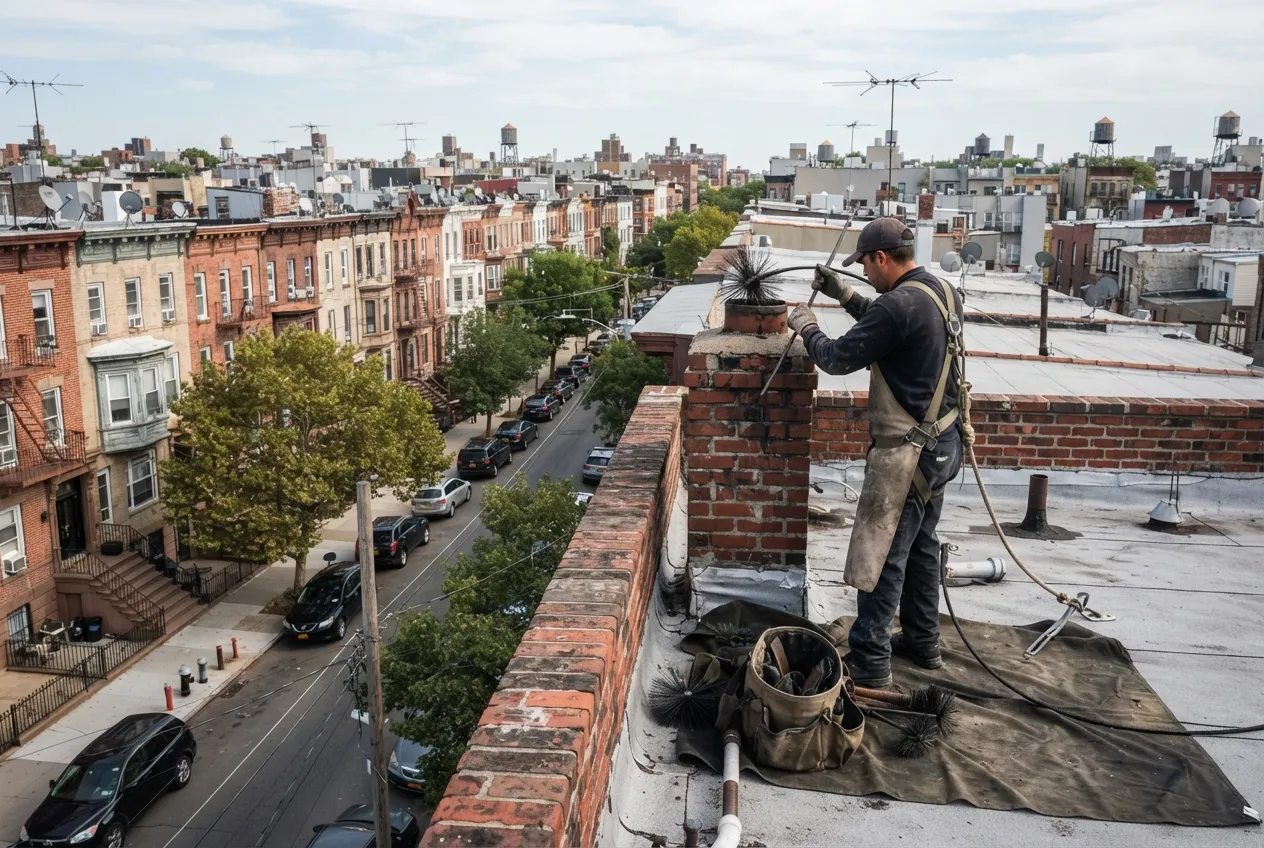
The short answer
You likely need a new chimney liner if your flue is cracked or deteriorated, or if you've replaced your heating appliance or switched fuels, especially in an oil-to-gas conversion. We start with an inspection, recommend a liner that fits your appliance and chimney, and install it from the roof down.
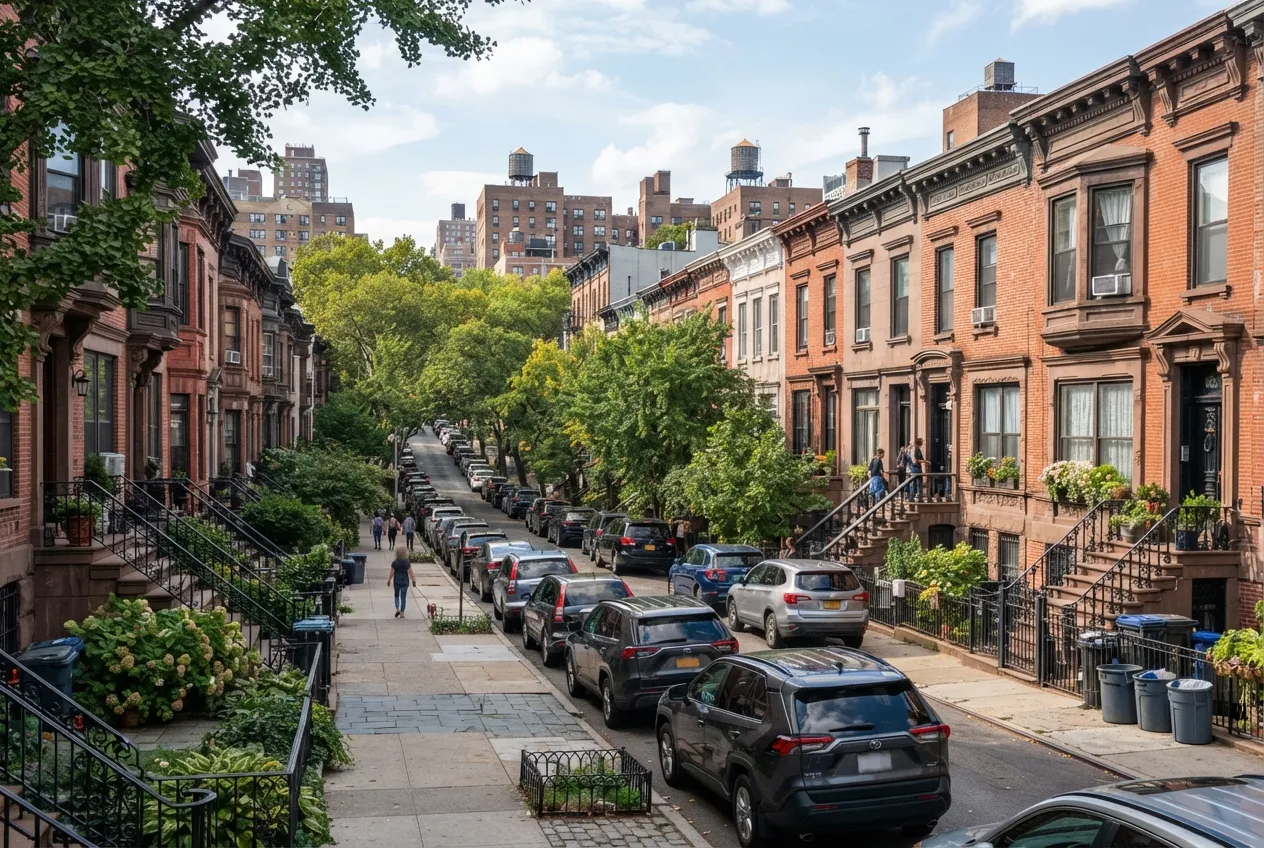
A chimney liner is the protective channel inside your flue that carries smoke and exhaust up and out of the house. In Prospect Heights, many brownstones, rowhouses and pre-war apartment buildings still rely on original masonry flues built for coal or wood and later adapted for oil or gas. Over time those flues crack, lose mortar, or no longer fit the appliance they serve. TrueHearth Chimney Service installs new liners for homes and buildings across the neighborhood, working from our office at 20 Underhill Ave.
Why Older Prospect Heights Chimneys Often Need a New Liner
Much of the housing here is masonry construction, with chimneys that run past several floors or sit against shared walls. When a flue liner is cracked, missing or worn away, heat and exhaust can reach the brick and nearby wood framing. Gases such as carbon monoxide can also leak into living space instead of venting outside.
A liner also has to be the right size for the appliance. If a flue is too large for a modern boiler or water heater, exhaust can cool too quickly. That leads to weak draft and condensation inside the chimney.
- Pieces of tile or masonry falling into the firebox or cleanout
- Water stains, white staining or crumbling brick on the chimney
- Smoke or odors backing up into the room
- A heating appliance that was replaced or switched to a different fuel
- An inspection that found gaps, cracks or missing sections in the flue
Oil-to-Gas Conversions and Chimney Liners
Many Brooklyn buildings have moved from oil heat to gas. When a New York City building converts its boiler from oil to gas, the chimney has to be evaluated as part of that work. A new liner is often needed because gas exhaust produces acidic condensate that can corrode a masonry flue.
If you're planning a conversion, bring us in early. We can inspect the existing flue, explain what the new appliance will require, and coordinate timing with your heating contractor so the chimney isn't the last item holding up the job.
Liner Options We Install
The right liner depends on the appliance, the condition of the chimney and the shape of the flue. After the inspection, we'll explain which option fits your situation and why.
- Stainless steel liners, a common choice for gas and oil boilers, water heaters and many wood-burning setups, in rigid or flexible form depending on the flue's path
- Cast-in-place liners, a poured lining that can also strengthen an older chimney with deteriorated interior masonry
- Clay tile relining, used in some masonry rebuilds where the chimney is being repaired anyway
- Insulation around the liner where needed to keep exhaust warm and the draft strong
Time for your annual chimney check?
What Liner Installation Involves
Work starts with an inspection. Under the NFPA 211 standard, a Level 2 inspection is called for when the system changes, such as a new appliance or a switch of fuel, or when a home is sold. That's why most liner projects begin there. If a hidden problem can only be reached by opening part of the chimney or building, a Level 3 inspection may be needed.
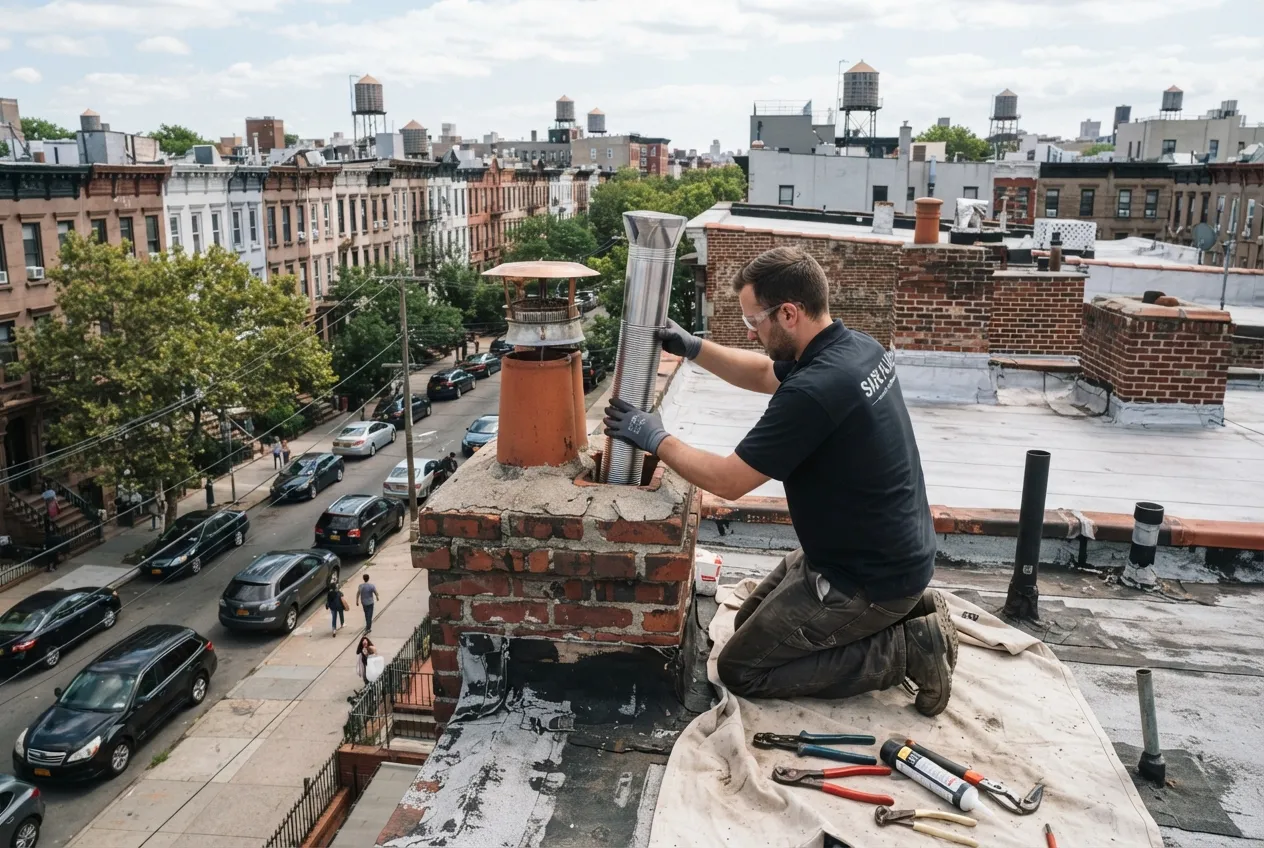
Next, we clean and measure the flue. For a metal liner, our certified technicians lower it down from the roof, connect it to the appliance at the bottom, and secure a top plate and cap at the crown. In attached rowhouses and multi-unit buildings, we pay close attention to roof access and neighboring flues, and we keep the work area inside your home clean.
Before we leave, we check that the appliance is drafting properly and walk you through what we did.
Planning Around NYC Heat Season
New York City's heat season runs from October 1 through May 31. During that time, building owners must keep apartments heated to the city's minimum temperatures. For owners of multi-family buildings, a liner problem found in midwinter can be stressful. Scheduling an inspection and any needed liner work in the warmer months gives you more room to plan. If an issue turns up during heat season, we'll talk through your options for getting the heating system back in safe service.
After installation, keep up with yearly inspections. NFPA 211 calls for chimneys, fireplaces and vents to be inspected once a year. A Level 1 inspection is typical when nothing has changed.
Serving Prospect Heights and Nearby Neighborhoods
From our Prospect Heights office, we also install chimney liners in Park Slope, Clinton Hill, Fort Greene, Crown Heights and Downtown Brooklyn. Whether you have a brownstone, a detached home or a pre-war apartment building, we'll look at your specific chimney and explain what it needs.
More services in Prospect Heights
- Chimney Sweep in Prospect Heights
- Chimney Inspection in Prospect Heights
- Chimney Repair in Prospect Heights
- Air Duct Cleaning in Prospect Heights