The short answer
Under the NFPA 211 standard, a chimney should be inspected once a year, and it should be swept when soot or creosote has built up. A TrueHearth sweep clears the flue, checks its condition and keeps your home clean while the work is done.
A chimney sweep removes the soot, creosote and debris that build up inside a flue, so smoke and exhaust leave your home the way they should. TrueHearth Chimney Service sweeps wood-burning fireplaces, gas appliance flues and boiler chimneys in brownstones, row houses and detached homes across Brooklyn and nearby neighborhoods. Every sweep includes a look at the condition of the flue, so you know whether the chimney is ready to use or needs attention first. Our certified technicians work cleanly inside your home and carefully on the roof. They explain what they find in plain terms before you decide on anything beyond the sweep.
Signs you need a chimney sweep
Creosote is a tar-like byproduct of burning wood, and a little more of it collects inside the flue with every fire. Gas and oil appliances leave less creosote, but they can still leave soot, scale and blockages. Brooklyn homeowners most often notice these signs before they call us:
None of these signs means the chimney is unsafe on its own. Each one is still a good reason to stop using the fireplace until someone has looked inside.
- A smoky or campfire-like smell in the room, especially on humid days or when the air conditioning is running
- Poor draft: smoke rolls into the room instead of rising, or the fire is hard to start and keep going
- Black flakes, crumbled mortar or bits of brick landing in the firebox
- White staining on the outside brick, which usually means moisture is moving through the masonry
- Scratching, chirping or fluttering sounds in the chimney from birds, squirrels or raccoons
- Water pooling in the firebox, or rust on the damper after rain
- A year or more since the last sweep, or a newly bought house with an unknown chimney history
What's included in every chimney sweep
Every visit follows the same checklist, so you know what was done and what was found.
- Drop cloths to protect the floor and furniture around the fireplace before any work starts
- A check of the firebox, damper and smoke chamber for damage before cleaning
- Rotary brushing along the full length of the flue, with brushes sized to your liner
- Removal of soot and creosote from the firebox, smoke shelf and damper area
- Removal of nests and loose debris that block the flue
- A check of the chimney cap, crown and flashing from the roof when access is safe
- A camera look inside the flue when the condition of the liner can't be judged by eye
- A plain-language rundown of what we found, with photos where we have them
- Cleanup that leaves the work area as clean as we found it
How our crew works inside your home and on the roof
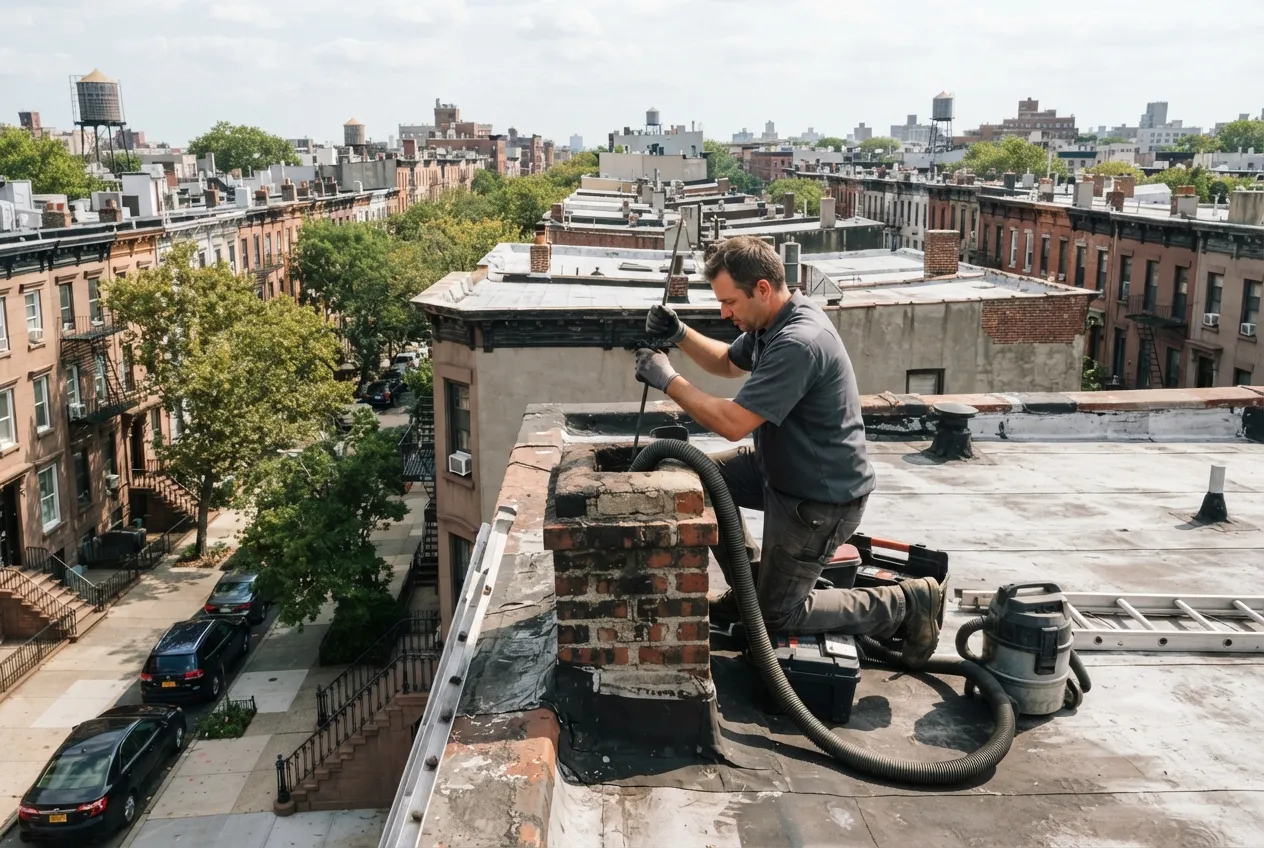
Inside, the technicians lay drop cloths from the door to the hearth and seal the fireplace opening before brushing starts. A HEPA vacuum runs throughout the sweep. It pulls the fine soot that the brushes knock loose out of the air, so it doesn't settle on your rugs, books and furniture.
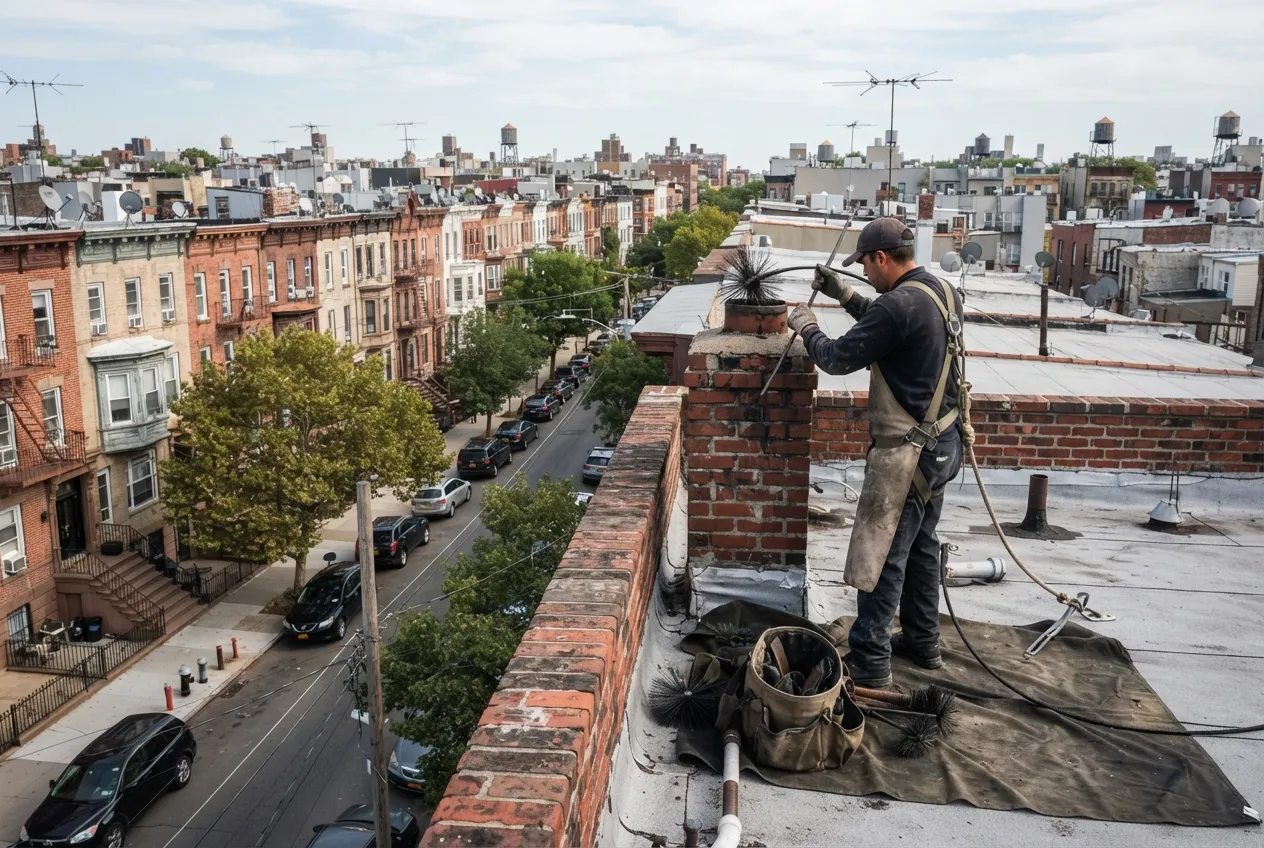
Rotary brushes do most of the work. They spin against the walls of the flue and break up soot and creosote more evenly than a straight push brush. We choose the brush heads to match the size and material of your liner, so they clean without scraping it. If glazed or hardened creosote won't come off with brushing, we tell you instead of forcing it.
On the roof, the crew checks access first. Many Brooklyn row houses have flat roofs reached through a bulkhead or hatch, while detached homes may need ladders on a pitched roof. We look at the cap, the crown, the mortar joints and the flashing, and we photograph anything that needs attention so you can see it without going up yourself. If ice, rain or high wind makes the roof unsafe that day, we sweep from below where possible and reschedule the roof check.
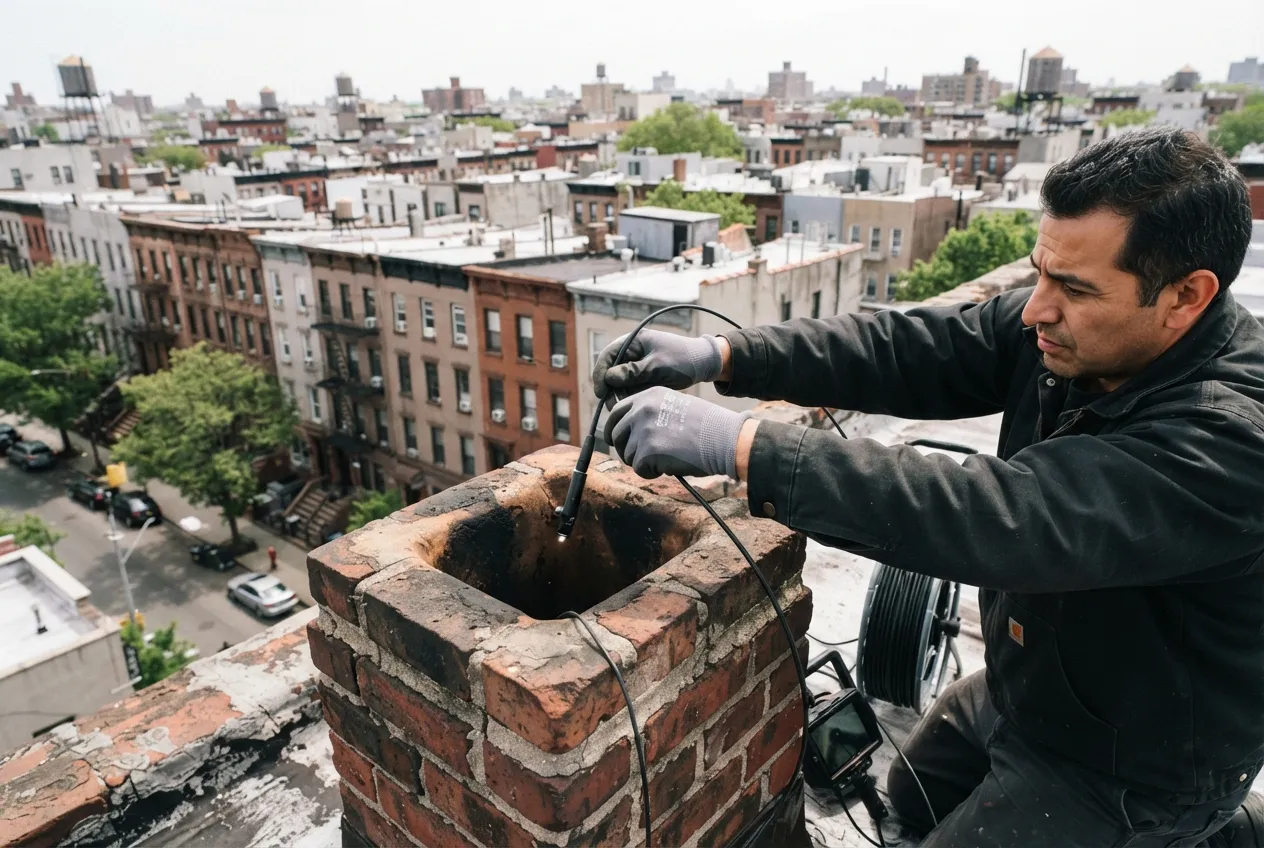
We use a camera inspection when there's a reason for one, such as cracks we suspect but can't see, a liner of unknown age, or a flue that is about to serve a new appliance.
Time for your annual chimney check?
The standard we follow
We work to NFPA 211, the national standard that calls for chimneys, fireplaces and vents to be inspected once a year. Chimney professionals use three inspection levels. A Level 1 inspection fits a chimney that has been in regular use with no changes. A Level 2 inspection is called for when the system changes, such as a new appliance or a switch of fuel, and when a home is sold. A Level 3 inspection is needed when a hidden hazard can only be reached by opening part of the chimney or the building.
Fuel switches are common in Brooklyn. When a building converts its boiler from oil to gas, the chimney has to be evaluated as part of the work. A new liner is often needed, because gas exhaust produces acidic condensate that can corrode a masonry flue. If you're planning a conversion, have the flue checked before the new boiler goes in.
Timing matters too. New York City's heat season runs from October 1 through May 31. That makes boiler chimneys easiest to service before the heat has to stay on.
What affects the price
Every chimney is different, so we price the job once we know what it involves. The main factors are:
If we find something that needs repair, we explain it and let you decide before we do any additional work.
- The height of the chimney and how the crew reaches the roof
- The fuel type (wood, gas or oil) and whether the flue serves a fireplace, stove or boiler
- The size, shape and condition of the flue, including whether it has a liner
- How much soot and creosote has built up, and whether any of it is glazed
- Whether a camera inspection is needed
- Whether repairs come up, such as a new cap, crown work or flashing
How a visit works
When you request a visit, we ask a few questions about the chimney: what it serves, when it was last swept, and anything you've noticed. Your answers help us bring the right brushes and plan for roof access.
Please don't use the fireplace for about a day beforehand so the firebox is cool. On the day of the visit, the technicians walk the area with you, set up protection, sweep and inspect, and then clean up. Before they leave, they go over what they found, show you photos, and tell you whether the chimney is ready to use or what should happen next.
Chimney Sweep by city
- Chimney Sweep in Prospect Heights
- Chimney Sweep in Clinton Hill
- Chimney Sweep in Fort Greene
- Chimney Sweep in Park Slope
- Chimney Sweep in Crown Heights
- Chimney Sweep in Bedford-Stuyvesant
- Chimney Sweep in Downtown Brooklyn
- Chimney Sweep in DUMBO
- Chimney Sweep in Boerum Hill
- Chimney Sweep in South Williamsburg
- Chimney Sweep in Prospect Lefferts Gardens
- Chimney Sweep in Wingate