The short answer
Boerum Hill chimneys often need a new liner when old clay tiles crack or when a boiler converts from oil to gas, because gas exhaust produces acidic condensate that can corrode masonry. TrueHearth's certified technicians inspect the flue, size a liner to your appliance and install it, ideally outside the October-to-May heat season.
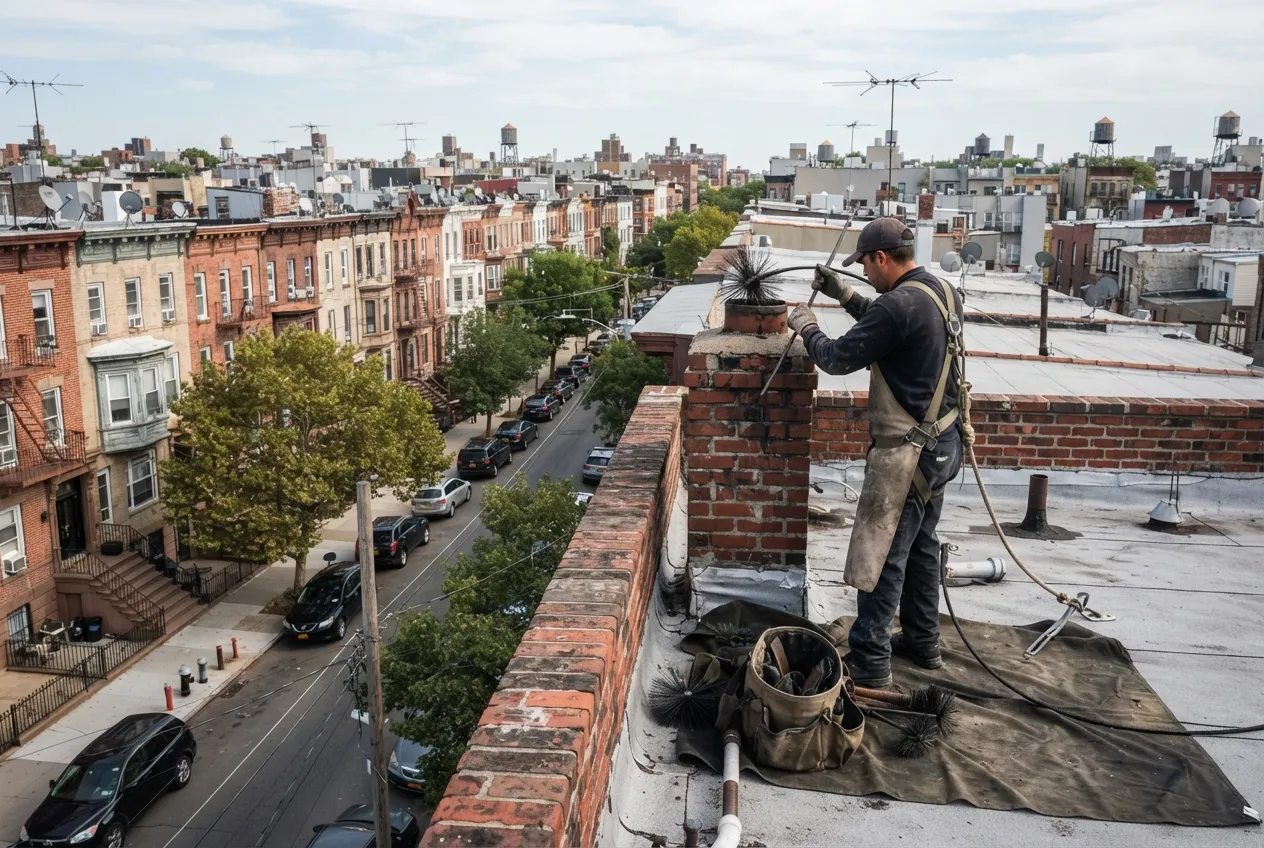
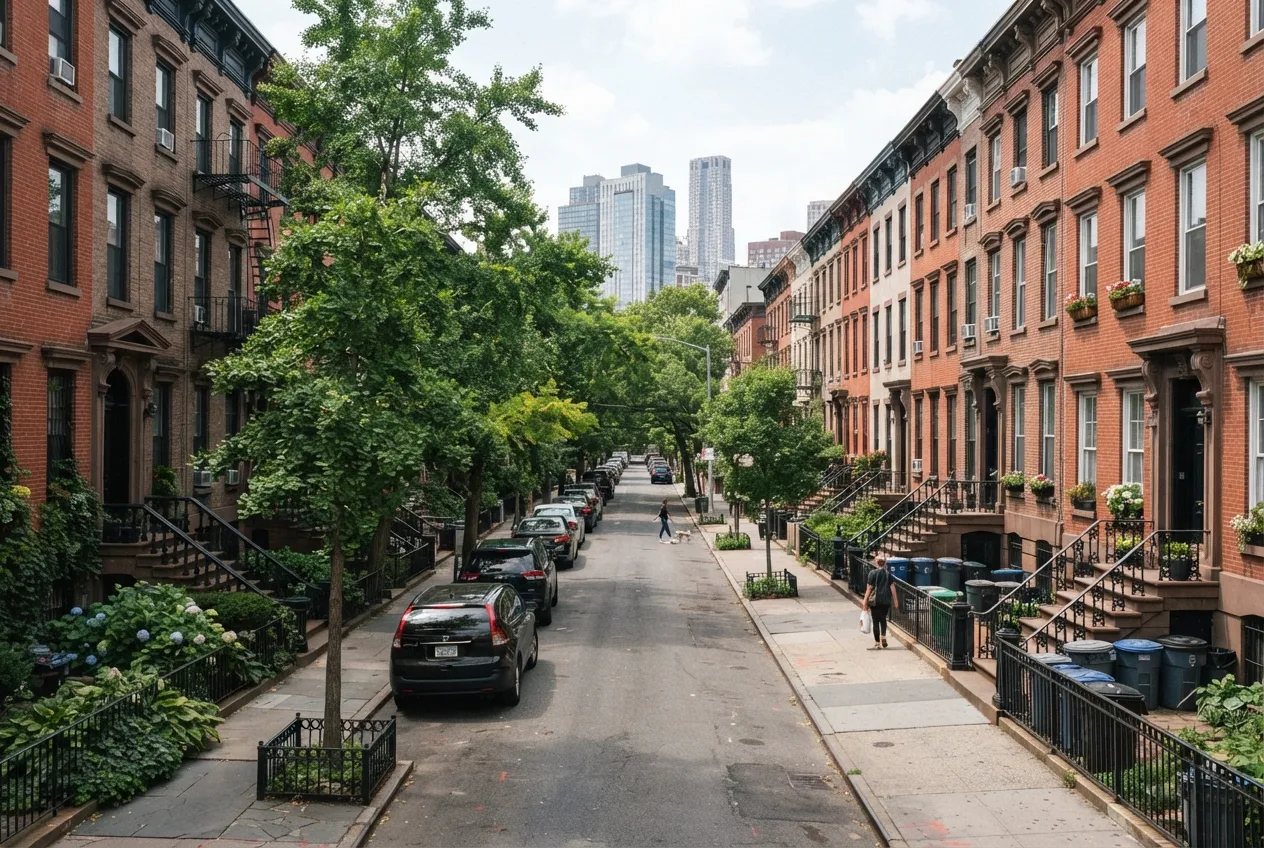
Many Boerum Hill homes are brownstones, rowhouses and pre-war apartment buildings with masonry chimneys that still vent a boiler, a water heater or a fireplace. Inside each chimney, the liner keeps hot exhaust, moisture and acidic byproducts away from the brick and mortar. When that liner is cracked, missing or wrong for the appliance, the chimney can't do its job safely. TrueHearth's certified technicians install new chimney liners throughout ZIP code 11201, working from our Prospect Heights office about 2 miles away.
Why Older Boerum Hill Chimneys Often Need a New Liner
Chimneys in older Brooklyn row buildings were often built with clay tile liners, and some were built with no liner at all. Over decades, tiles can crack, joints can open up, and mortar can wash out from moisture and freeze-thaw cycles. Because rowhouses share party walls, a damaged flue isn't just one household's concern. Gaps in the masonry can let heat, smoke or carbon monoxide travel where they shouldn't.
A liner problem usually turns up during an inspection rather than on its own. Signs we look for include:
- Cracked, shifted or missing flue tiles seen on camera
- Flakes of tile or mortar collecting at the base of the chimney
- Water stains, white mineral deposits or crumbling brick on walls near the chimney
- A flue that is too large or too small for the appliance connected to it
- Poor draft, backdrafting or exhaust odors in the basement or living space
Liners and Oil-to-Gas Boiler Conversions
Many Boerum Hill buildings have moved, or are planning to move, from heating oil to natural gas. When a New York City building converts its boiler from oil to gas, the chimney has to be evaluated as part of that work. A new liner is often needed, because gas exhaust produces acidic condensate that can corrode a masonry flue that handled oil without trouble for years.
If you're planning a conversion, bring us in early. We can inspect the existing flue, tell you whether relining is likely, and size the liner to the new equipment so the chimney work lines up with your heating contractor's schedule.
How We Install a Chimney Liner
Every job starts with an inspection. Under the NFPA 211 standard, a change to the system, such as a new appliance or a switch of fuel, calls for a Level 2 inspection, which includes a camera look inside the flue. From there, the work typically follows these steps:
On attached homes, roof access is part of the planning. We'll talk with you ahead of time about getting to the roof and protecting the interior where the liner connects, whether that's in the basement or at the fireplace.
- Confirm the appliance type, fuel and venting requirements
- Measure the flue and select a liner sized to the appliance
- Clean the existing flue and clear debris or obstructions
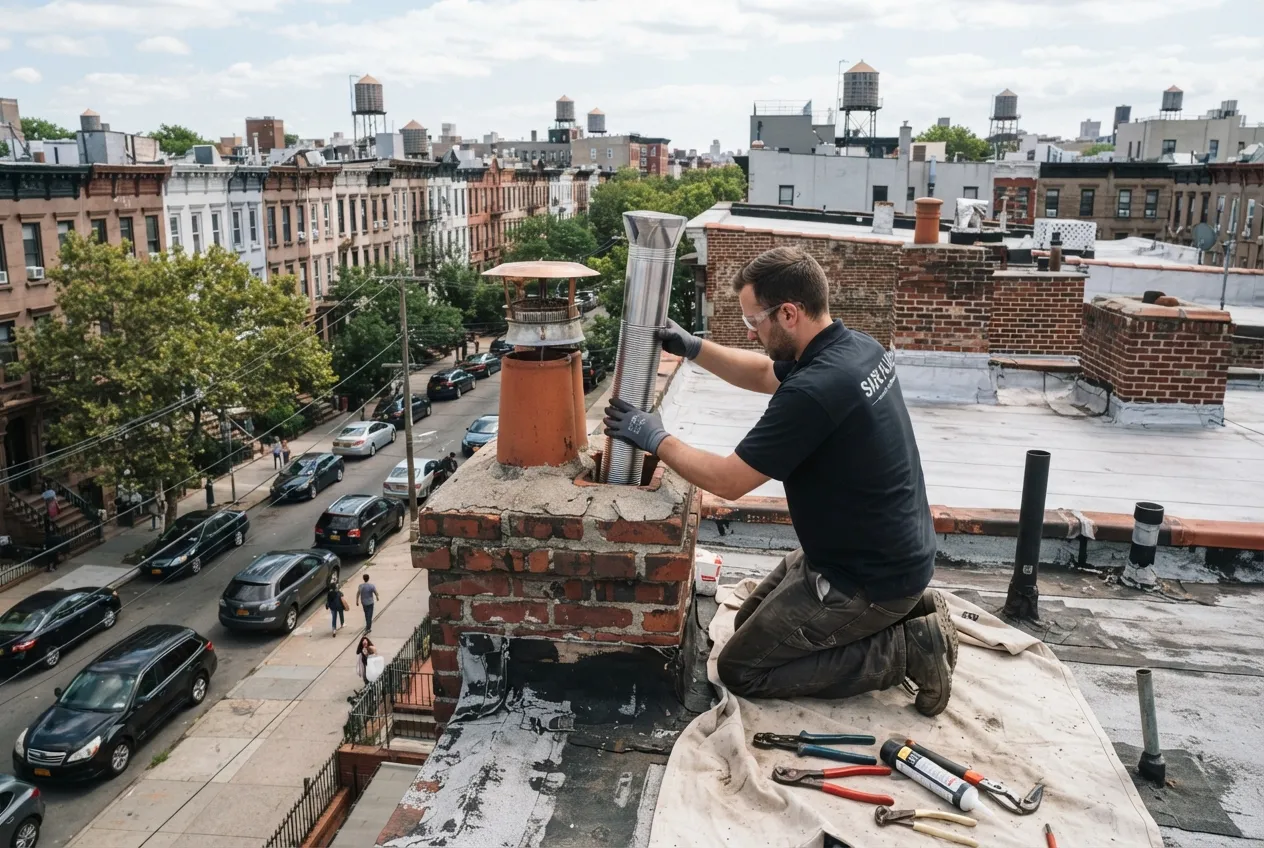
- Lower the liner from the roof and connect it at the base
- Insulate the liner where the application calls for it
- Fit a cap at the top to keep out rain and animals
- Test the draft and walk you through what we found and did
Time for your annual chimney check?
Matching the Liner to Your Appliance
There's no single liner that fits every chimney. A gas boiler, an oil boiler, a water heater and a wood-burning fireplace each produce different exhaust temperatures and byproducts, and the liner has to suit what it carries. Most of the liners we install are stainless steel, either flexible or rigid depending on the shape of the flue, and sized to the appliance's venting needs. Oversizing can be as much of a problem as undersizing, since a flue that's too large lets exhaust cool and condensation form.
If one chimney serves more than one appliance, or if you have a fireplace you'd like to start using again, we'll explain the options for each flue before any work begins.
Planning Around Heat Season
New York City's heat season runs from October 1 through May 31, when building owners must keep apartments heated to the city's minimum temperatures. For owners of multifamily brownstones and pre-war buildings, that makes the warmer months the easiest time to reline a boiler chimney, since the heat can be shut down briefly without affecting tenants. If an inspection during the season turns up a serious liner problem, we'll work with you on scheduling so the heating system can be back in service as soon as it's safe.
After installation, NFPA 211 still calls for chimneys, fireplaces and vents to be inspected once a year. A Level 1 inspection is usually enough in years when nothing about the system has changed.
Serving Boerum Hill and Nearby Neighborhoods
Along with Boerum Hill, we install chimney liners in Downtown Brooklyn, DUMBO, Fort Greene, Clinton Hill and Prospect Heights, where you'll find a similar mix of rowhouses, brownstones and older apartment buildings. If you're not sure whether your chimney needs a new liner, start with an inspection and we'll tell you plainly what we see.
More services in Boerum Hill
- Chimney Sweep in Boerum Hill
- Chimney Inspection in Boerum Hill
- Chimney Repair in Boerum Hill
- Air Duct Cleaning in Boerum Hill