The short answer
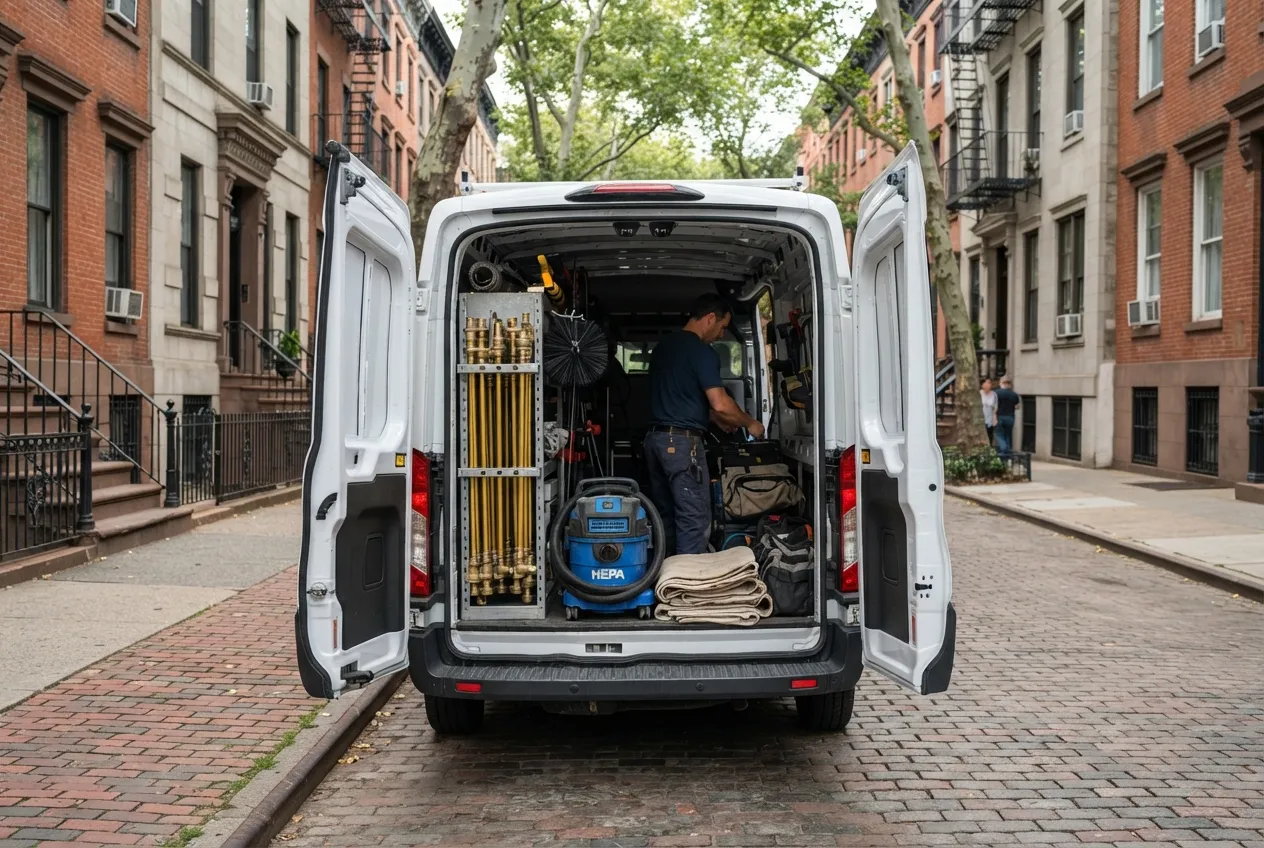
Air duct cleaning makes sense when there's a visible problem: dust blowing from vents, heavy debris, renovation residue, pests, or visible mold. TrueHearth's certified technicians clean the full system with rotary brushes and HEPA-filtered vacuums. We don't promise health benefits, because the EPA says duct cleaning hasn't been shown to prevent health problems.
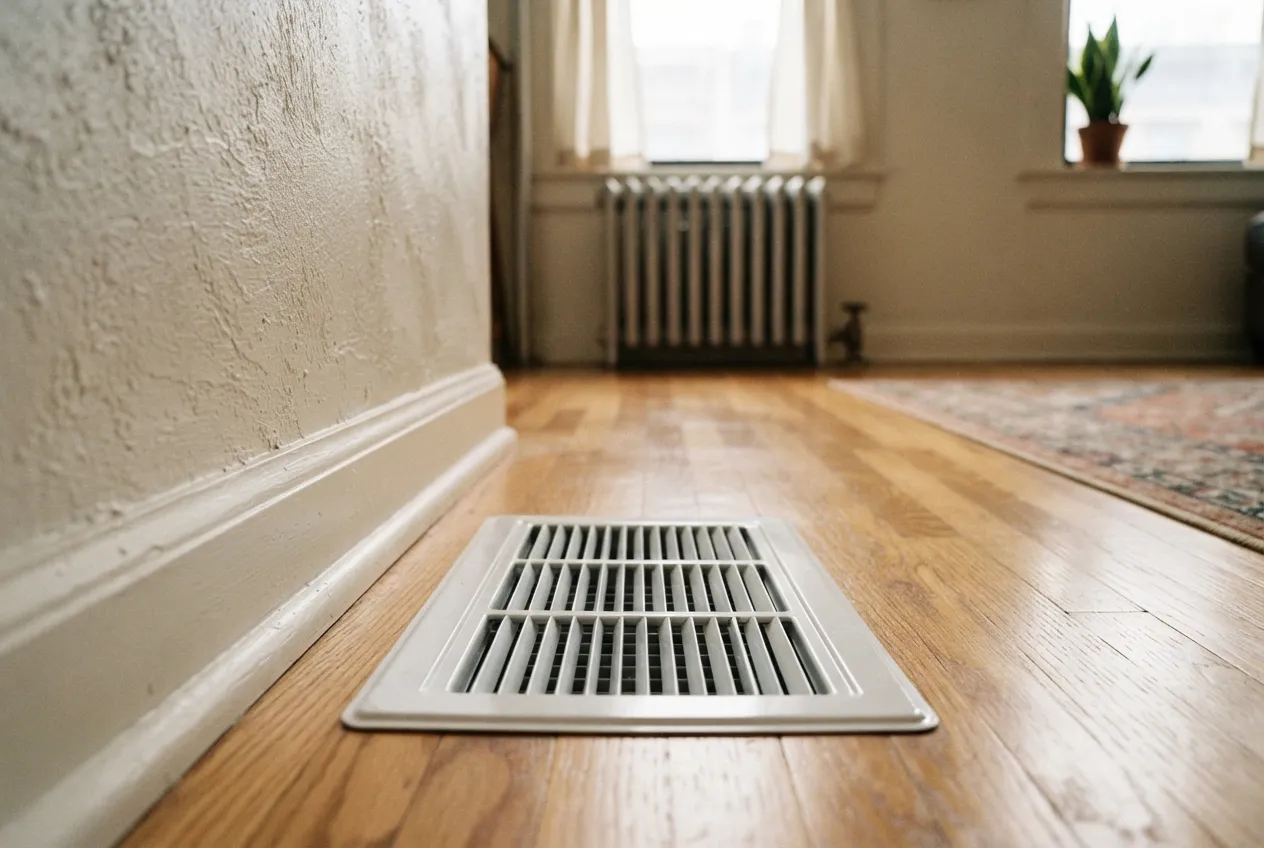
Air ducts carry heated and cooled air to every room of your home, and over time they collect dust, debris, and sometimes things that don't belong there. In Brooklyn row houses, brownstones, and the single-family and multifamily homes nearby, renovation work and older duct runs make this common. TrueHearth Chimney Service cleans supply and return ducts, registers, and the parts of the air handler that move air through them. We focus on problems you can see or measure: dust and debris in the ducts, buildup on registers, pests or nests, lingering odors, and weak airflow. We don't sell duct cleaning as a health treatment, and if your ducts don't need cleaning, we'll tell you.
Signs You Need It
Most homeowners contact us after noticing something specific. These signs point to ducts worth a closer look:
One sign alone doesn't always mean you need a full cleaning. Weak airflow, for example, can come from a clogged filter or a crushed section of flex duct. We inspect first and tell you what we find.
- Dust blowing from supply vents when the system turns on
- Gray buildup on register covers that comes back soon after you wipe it
- Fine drywall or plaster dust that keeps settling after a renovation, even if the work area was sealed off
- Scratching, rustling, or other animal noises in walls or ceilings near duct runs
- Droppings, nesting material, or insect debris visible inside a register
- A musty or stale odor that's strongest when the heat or air conditioning runs
- Rooms that get noticeably weaker airflow than they used to
- Visible mold growth on duct surfaces or around the air handler
What's Included
A standard air duct cleaning covers the whole system, not just the vent covers you can see. Here's what we do on every job:
- Walk-through to locate every supply and return register
- Inspection of accessible ducts before cleaning, with a camera on runs we can't see directly
- Drop cloths and covers for floors and furniture along the work path
- Supply and return ducts agitated with rotary brushes and air whips
- Loosened debris pulled out under negative pressure with HEPA-filtered vacuum equipment
- Registers and grilles removed, washed, and reinstalled
- Return plenum and accessible blower compartment cleaned
- Filter checked, and replaced if you have a new one on hand
- Written notes on problems we find, such as disconnected joints, crushed flex duct, gaps, or pest entry points
- Before-and-after photos where camera access allows
How the Crew Works in Your Home
Inside your home, the crew lays drop cloths from the entry to each work area and covers furniture near open registers. We seal the registers we aren't working on, so loosened dust is pulled toward the vacuum instead of blowing into the room. A HEPA-filtered vacuum connects to the main trunk line and keeps the system under negative pressure while we work branch by branch. Rotary brushes and air whips loosen buildup from the duct walls, and the vacuum carries it out. On runs where we can't see the full length, we run a camera to check what's inside before and after cleaning.
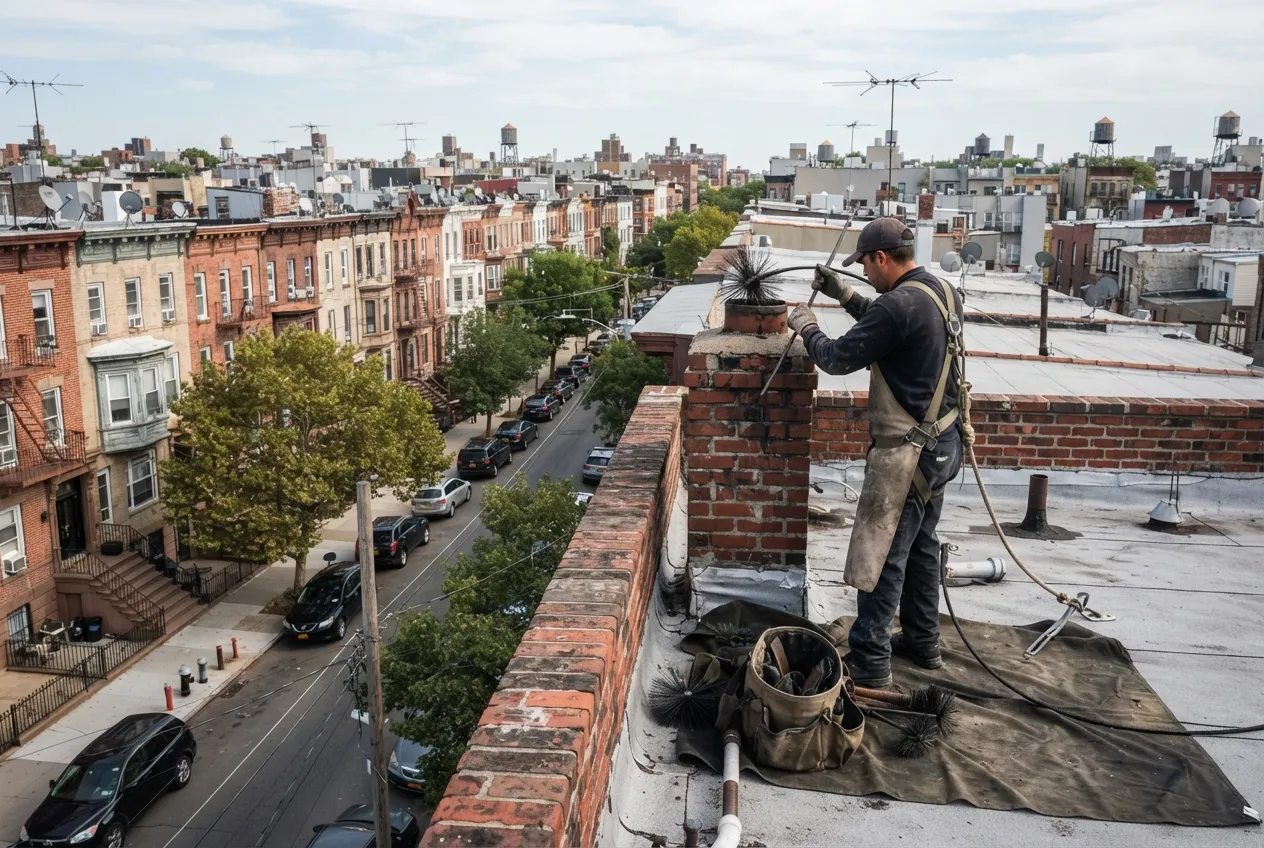
Most air duct work happens indoors, at the air handler, the registers, and the trunk lines. The crew only goes up on the roof when part of your system is there, such as a rooftop unit or an exhaust termination, and only when roof access is safe. We don't use chemical sprays or sealants by default. If one ever seems warranted, we'll explain what it is and why we'd use it, and the choice is yours.
Time for your annual chimney check?
The Guidance We Follow
Residential air ducts don't have a yearly inspection standard the way NFPA 211 sets one for chimneys, fireplaces, and vents. For ducts, we follow the U.S. Environmental Protection Agency's guidance. The EPA advises cleaning air ducts when there is substantial visible mold growth, vermin, or excessive dust and debris. It also says duct cleaning has not been shown to prevent health problems, so we won't tell you it will.
The EPA also warns homeowners to research the process before responding to very cheap advertised offers, and to be careful with chemical treatments. We agree. Ask any company, including us, exactly what equipment they use, how they reach every duct run, and what, if anything, they'll apply inside your ducts.
If you have a clothes dryer, its vent is a separate job worth keeping up with. According to the U.S. Fire Administration, failure to clean is the leading factor contributing to clothes dryer fires in homes. We can check your dryer vent during the same visit.
What Affects the Price
Every quote is based on your home and your system. The main factors are:
You get the quote before any work starts. If we find something during the job that changes the scope, we stop and talk with you first.
- Number of supply and return registers and the total length of duct runs
- Access to the air handler, trunk lines, and ducts in attics, basements, or soffits
- Duct type and condition: rigid metal, flex duct, or older lined ducts
- How much dust, debris, or renovation residue has built up
- Whether pests, nesting material, or mold need to be dealt with
- Whether a camera inspection is needed on runs we can't see
- Repairs such as resealing joints or replacing damaged flex duct
- Roof access, if part of the system sits on the roof
How a Visit Works
Contact us and tell us what you've noticed. We'll ask about the size of your home, where the air handler is, and whether you've had recent renovation work. Then we schedule an arrival window that works for you.
On the day of the visit, our certified technicians walk through the system with you, inspect the ducts, and confirm the scope and quote. Then they protect the work area and clean the system. Larger systems or heavy buildup take longer. When we finish, we turn the system on with you, check airflow at the registers, and go over anything we found, with photos where we have them.
A note on timing: New York City's heat season runs from October 1 through May 31. Many homeowners like to have their ducts cleaned before the heat comes on in the fall, or right after renovation work wraps up, so the system starts the season clean.
Air Duct Cleaning by city
- Air Duct Cleaning in Prospect Heights
- Air Duct Cleaning in Clinton Hill
- Air Duct Cleaning in Fort Greene
- Air Duct Cleaning in Park Slope
- Air Duct Cleaning in Crown Heights
- Air Duct Cleaning in Bedford-Stuyvesant
- Air Duct Cleaning in Downtown Brooklyn
- Air Duct Cleaning in DUMBO
- Air Duct Cleaning in Boerum Hill
- Air Duct Cleaning in South Williamsburg
- Air Duct Cleaning in Prospect Lefferts Gardens
- Air Duct Cleaning in Wingate