The short answer
Yes. TrueHearth's office is at 20 Underhill Ave in Prospect Heights, and our certified technicians sweep, inspect, repair and reline chimneys and clean dryer vents and air ducts throughout the neighborhood and nearby Brooklyn areas. Book an inspection before heat season starts on October 1 so any problems can be fixed before you need heat.
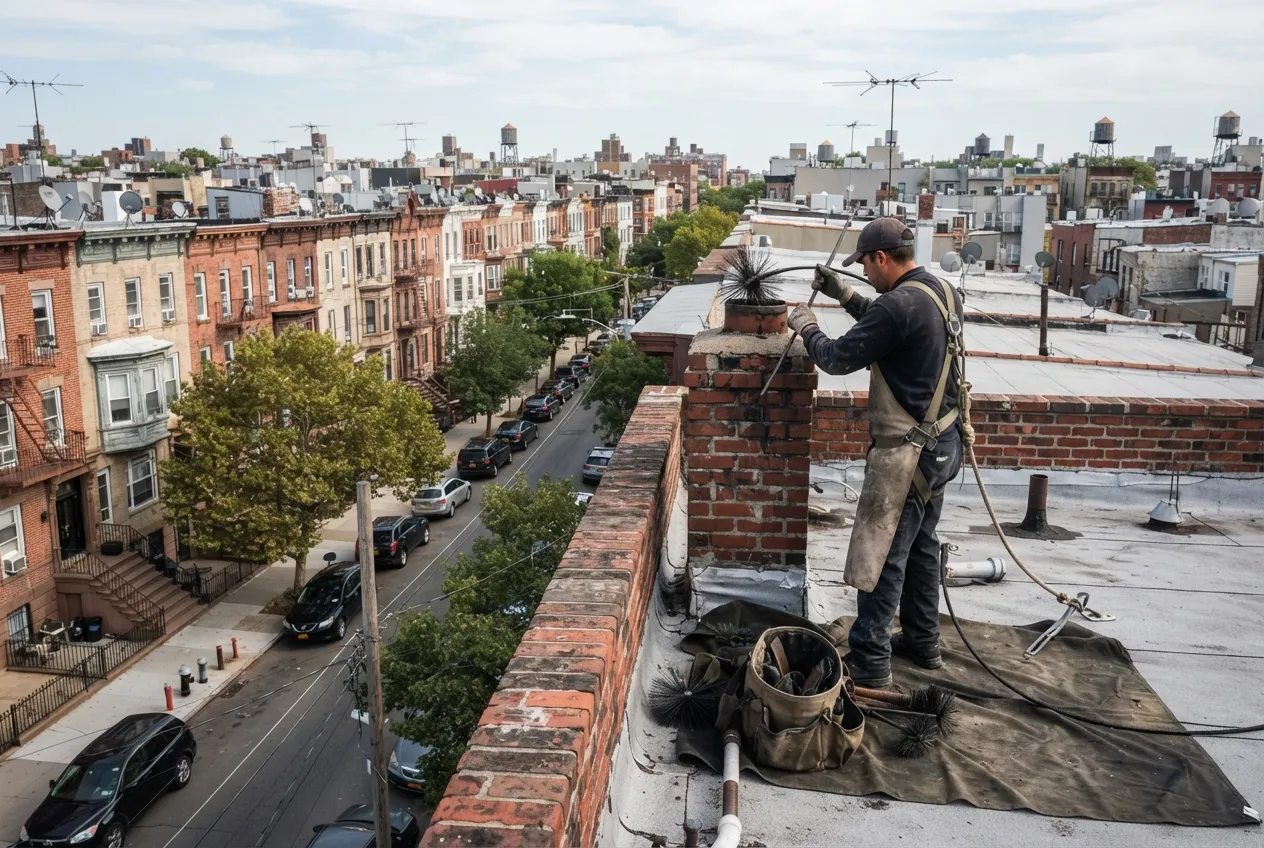
TrueHearth Chimney Service is based in Prospect Heights, with our office at 20 Underhill Ave. Our crews clean, inspect and repair chimneys, fireplaces, dryer vents and air ducts in the brownstones, rowhouses and pre-war apartment buildings that make up much of the neighborhood. We also serve nearby Park Slope, Clinton Hill, Fort Greene, Crown Heights and Downtown Brooklyn. Our technicians are certified, and they know how to work around the narrow flues, shared walls and older masonry common in this part of Brooklyn.
What Prospect Heights Homes Need From a Chimney Service
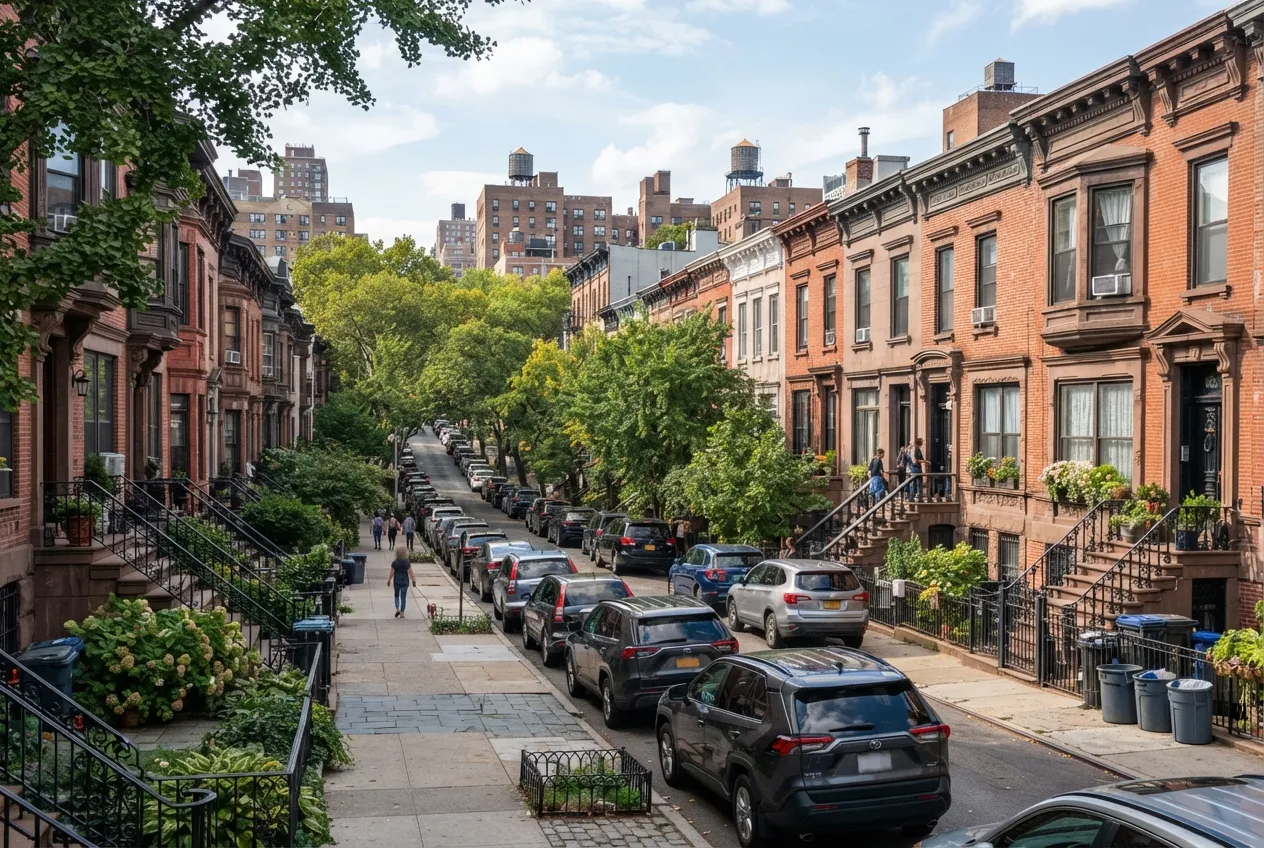
Much of Prospect Heights is made up of brownstones and rowhouses with masonry chimneys that run up through shared walls. Many of these homes still have their original fireplaces. Some fireplaces are in regular use, some were closed off long ago, and some have been reopened by owners who want a working fire again. A fireplace that has sat unused for years needs a proper inspection before the first fire. The flue can hold old debris, nests or crumbling mortar, and the damper may have rusted shut or may no longer seal.
The neighborhood's pre-war apartment buildings raise different concerns. Their chimneys usually vent a central boiler rather than a fireplace, and one flue may serve every unit in the building. A problem there affects heat and air quality for all residents. We work with owners, managers and supers to plan access to roofs, cellars and boiler rooms.
How Brooklyn Weather Wears Down Chimneys
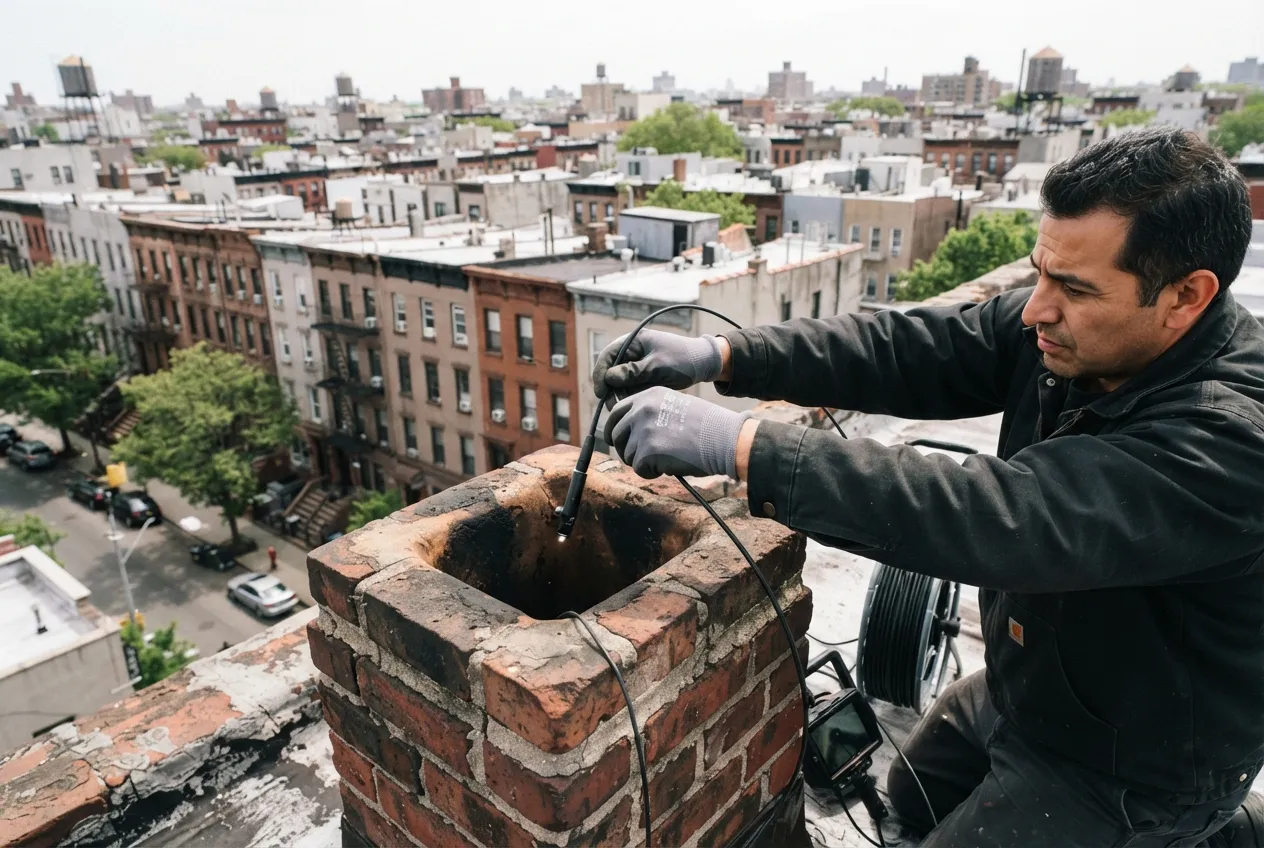
New York winters bring repeated freeze-thaw cycles. Water soaks into brick, mortar joints or a cracked chimney crown, then freezes, expands and slowly breaks the masonry apart. Wind-driven rain from coastal storms pushes moisture into exposed chimney tops. Humid summers can draw a damp, smoky odor out of a fireplace that hasn't been cleaned. In older rowhouses, a leaking chimney can stain ceilings and walls on more than one floor before anyone finds the source.
Signs that you should call us:
- Cracked or crumbling chimney crown
- Brick faces flaking or popping off (spalling)
- Missing or sandy mortar joints
- Rusted, loose or missing chimney cap
- Water stains near the fireplace or on ceilings next to the chimney
- A damper that sticks, won't close or lets in cold drafts
Inspections Before Heat Season and Oil-to-Gas Conversions
New York City's heat season runs from October 1 through May 31. During that period, building owners must keep apartments heated to the city's minimum temperatures. A boiler chimney that is blocked or failing is hard to fix quickly in midwinter. Late summer and early fall are the best times to schedule an inspection and any repairs.
The NFPA 211 standard calls for chimneys, fireplaces and vents to be inspected once a year. Chimney professionals use three inspection levels:
- Level 1: for a system that hasn't changed
- Level 2: when the system changes, such as a new appliance or a switch of fuel, or when the home is sold
- Level 3: when a hidden hazard can only be reached by opening part of the chimney or building
Time for your annual chimney check?
Liners for Oil-to-Gas Boiler Conversions
When a New York City building converts its boiler from oil to gas, the chimney has to be evaluated as part of the work. A new liner is often needed. Gas exhaust produces acidic condensate that can corrode a masonry flue. We assess the flue and install a liner when one is required.
Services Available in Prospect Heights
Every service below is available in Prospect Heights and the surrounding neighborhoods we serve:
- Chimney Sweep: removes soot, creosote and debris from fireplace and boiler flues
- Chimney Inspection: yearly checks plus inspections for system changes and home sales
- Chimney Repair: fixes for crowns, mortar joints and damaged brick
- Chimney Liner Installation: new liners for unlined flues, damaged flues and oil-to-gas conversions
- Chimney Cap & Chase Cover: keeps rain, animals and debris out of the flue
- Chimney Waterproofing: protects masonry from freeze-thaw damage
- Fireplace & Damper Repair: for fireplaces being reopened or ones that no longer draw well
- Chimney Rebuilding: for chimneys too deteriorated to repair
- Dryer Vent Cleaning: clears lint from long vent runs
- Air Duct Cleaning: for ducts with visible mold, pests or heavy debris
Dryer Vents and Air Ducts in Rowhouses and Apartments
According to the U.S. Fire Administration, failure to clean is the leading factor contributing to clothes dryer fires in homes. In rowhouses and apartments, dryer vents often run a long way through walls or up to the roof, which gives lint more places to collect. If clothes take longer to dry or the laundry area feels hot, the vent probably needs cleaning.
For air ducts, we follow the U.S. EPA's guidance. Cleaning makes sense when there is substantial visible mold growth, signs of vermin, or excessive dust and debris. Duct cleaning has not been shown to prevent health problems, and we don't claim it will. We explain what we found and what we recommend. We also discuss any chemical treatment with you before using it.
Services in Prospect Heights
- Chimney Sweep in Prospect Heights
- Chimney Inspection in Prospect Heights
- Chimney Repair in Prospect Heights
- Air Duct Cleaning in Prospect Heights
- Chimney Liner Installation in Prospect Heights