The short answer
Clinton Hill homes often need a new chimney liner when an old clay or unlined masonry flue is damaged, or when a boiler converts from oil to gas. TrueHearth inspects the chimney, then installs a liner sized to the furnace, boiler, water heater or fireplace it vents.
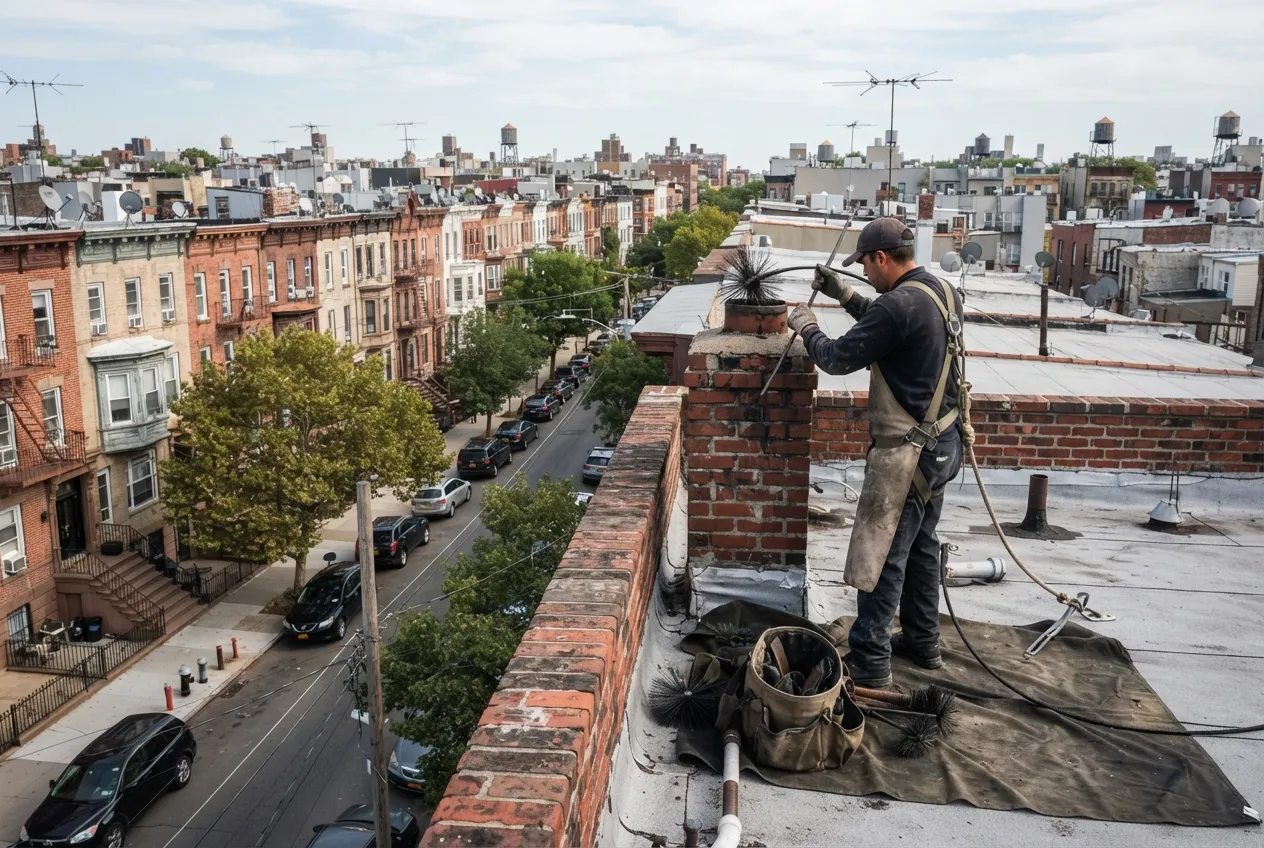
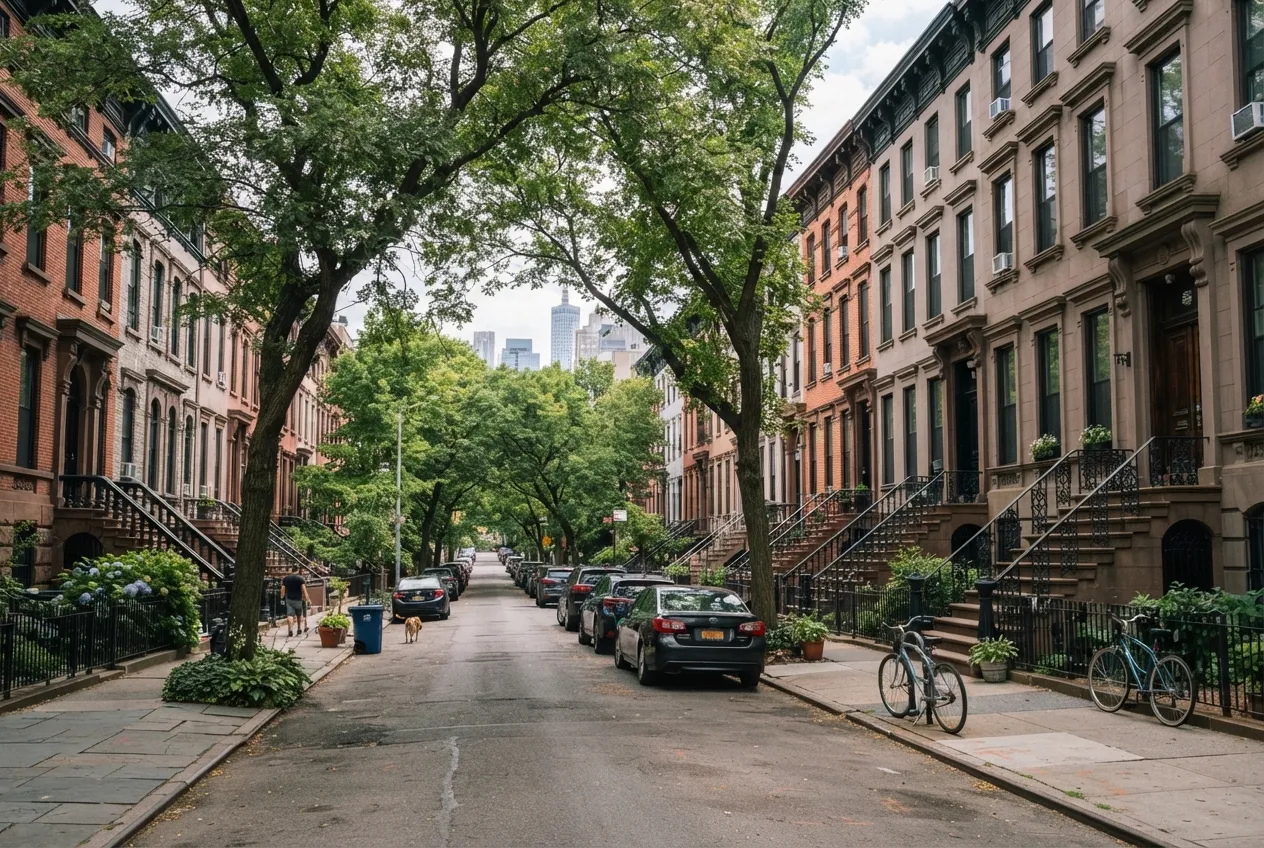
Clinton Hill's brownstones, rowhouses, pre-war apartment buildings and detached homes mostly have masonry chimneys that were built long before modern heating equipment. When an old clay tile liner cracks, or a boiler switches from oil to gas, the flue may no longer vent exhaust safely. TrueHearth Chimney Service installs chimney liners throughout Clinton Hill from our office in Prospect Heights, about a mile away. Our certified technicians inspect the flue first, explain what they find in plain terms, and fit a liner sized for the appliance it serves.
Why Older Clinton Hill Chimneys Often Need a New Liner
A chimney liner is the inner channel that carries smoke and combustion gases up and out of the house. It keeps heat away from the surrounding brick and wood framing and gives exhaust a smooth, properly sized path to rise.
Many older masonry chimneys in the neighborhood are either unlined or lined with clay tiles that have shifted, cracked or lost mortar at the joints after decades of use and Brooklyn winters. Those gaps can let heat reach nearby framing and let gases leak into living space. In attached rowhouses and brownstones that share party walls, a failing flue can affect the home next door as well as your own.
Oil-to-Gas Conversions Need a Chimney Evaluation
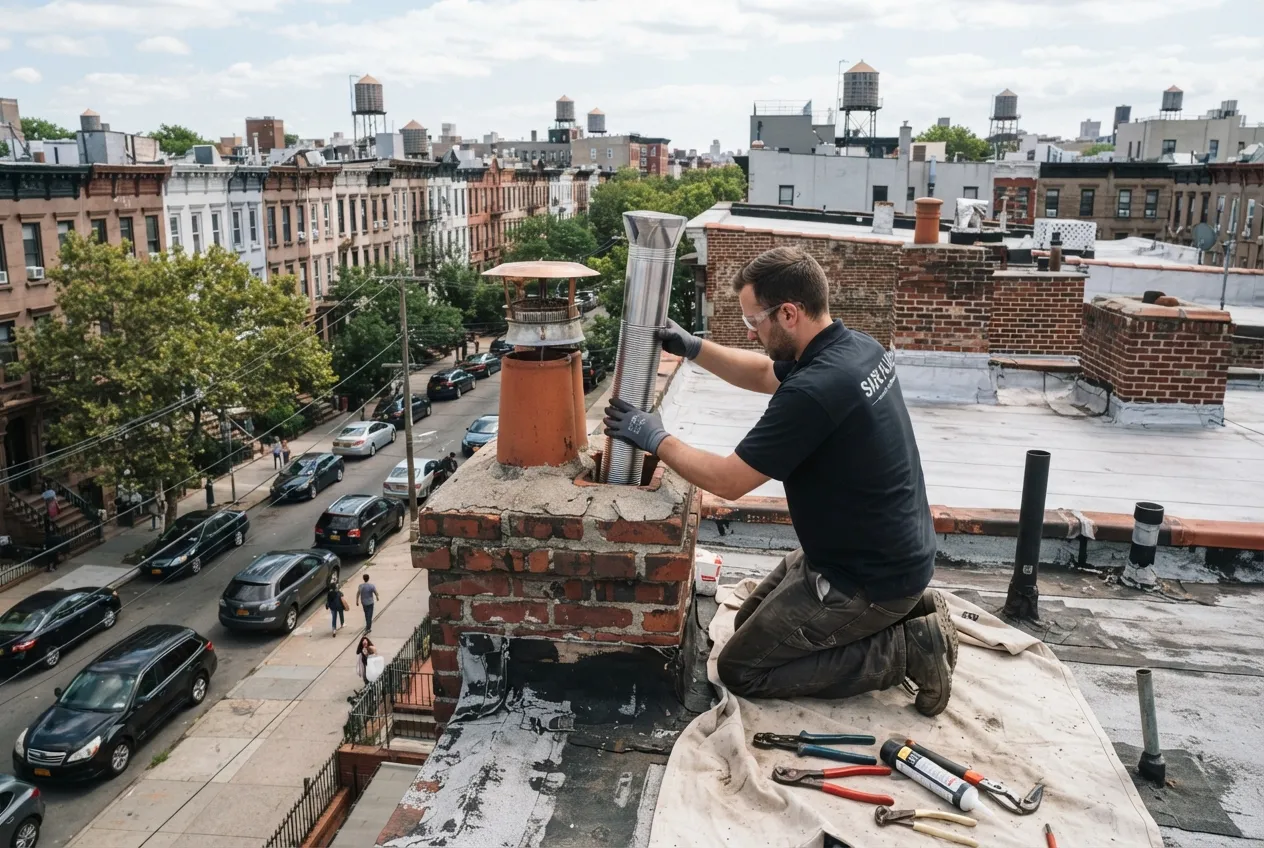
When a New York City building converts its boiler from oil to gas, the chimney has to be evaluated as part of the job. A new liner is often required because gas exhaust produces acidic condensate that can corrode a masonry flue from the inside.
That damage tends to show up gradually. Signs we look for include:
- Crumbling or sandy mortar inside the flue or at the top of the chimney
- White or brown staining on exterior brick
- Debris collecting at the base of the chimney or in the cleanout
- Water stains on walls or ceilings near the chimney
How We Install a Chimney Liner
Every job starts with an inspection. Under the NFPA 211 standard, a change to the system, such as a new appliance or a switch of fuel, calls for a Level 2 inspection, which includes a camera look at the inside of the flue. From there, the work typically follows these steps:
- Measure the flue and confirm the venting needs of the furnace, boiler, water heater or fireplace it serves
- Clean the flue and remove loose debris and broken tile
- Select the liner, typically flexible or rigid stainless steel, with insulation where the chimney calls for it
- Lower the liner through the flue and connect it to the appliance
- Seal and cap the top of the chimney to keep out rain and animals
- Check draft and walk you through what was done
Time for your annual chimney check?
Planning Around Heat Season in Multi-Unit Buildings
New York City's heat season runs from October 1 through May 31, and building owners must keep apartments heated to the city's minimum temperatures during that period. For owners of brownstones with rental units or pre-war apartment buildings in Clinton Hill, that matters when the liner serves the main boiler.
If liner work has to happen during heat season, we plan the job so the boiler is out of service for as short a time as possible and let you know in advance when heat will be off. When there is flexibility, scheduling liner work outside heat season gives everyone more room.
Serving Clinton Hill and Nearby Neighborhoods
Because we are based in Prospect Heights, Clinton Hill is close to home for our crews. We also install chimney liners in Fort Greene, Prospect Heights, South Williamsburg, Downtown Brooklyn and DUMBO, where housing stock is similar and the same flue problems come up.
After a new liner goes in, the NFPA 211 standard still calls for chimneys, fireplaces and vents to be inspected once a year. A routine Level 1 inspection is usually enough when nothing about the system has changed.
More services in Clinton Hill
- Chimney Sweep in Clinton Hill
- Chimney Inspection in Clinton Hill
- Chimney Repair in Clinton Hill
- Air Duct Cleaning in Clinton Hill