The short answer
A chimney inspection checks the firebox, damper, flue liner, appliance connections and exterior masonry for damage, blockages and buildup that can cause a fire or push exhaust into your home. The NFPA 211 standard calls for an inspection once a year, and a more detailed Level 2 inspection when you change fuel, add an appliance or sell the home.
A chimney can look fine from the street and still hide a cracked flue tile, a gap where a boiler pipe meets the masonry, or a nest blocking the top. An inspection tells you what is actually happening inside the chimney, so you can use your fireplace, wood stove, boiler or furnace without guessing. TrueHearth's certified technicians inspect chimneys in Brooklyn and nearby neighborhoods, from brownstone fireplaces to the flues that vent building boilers. You get a clear look at the condition of the whole system, photos of what we found, and plain recommendations ranked by how urgent they are.
Signs you need a chimney inspection
Most homeowners call us after they notice something is off. Any of these is a good reason to have the chimney checked before the next fire or heating season:
You don't need a symptom to book. If you're buying a home, switching fuels, adding an appliance, or it has been more than a year since the last inspection, one is due.
- A smoky or tar-like creosote smell in the room, often stronger on humid days or when the air conditioning runs
- Poor draft: smoke rolls into the room, or fires are hard to start and keep going
- Pieces of flue tile, mortar or flaking brick landing in the firebox
- White, chalky staining on the chimney brick, inside or out, which points to moisture moving through the masonry
- Scratching, chirping or fluttering sounds coming from the flue
- Water, rust or a damp smell in the firebox after rain
What's included in every inspection
We check the readily accessible parts of the chimney system, from the firebox to the crown:
- Firebox, smoke chamber and damper: cracks, gaps, rust, and whether the damper opens, closes and seals
- Flue liner: cracked or missing tiles, open joints, deterioration, and whether the liner suits the appliance it serves
- Creosote and soot buildup, including hardened, glazed creosote
- Obstructions such as nests, leaves or fallen debris
- Appliance connections: the pipe from a boiler, furnace, water heater or wood stove, and the point where it enters the chimney
- Visible clearances between the chimney or fireplace and nearby woodwork
- Exterior brick and mortar joints, including crumbling or leaning sections
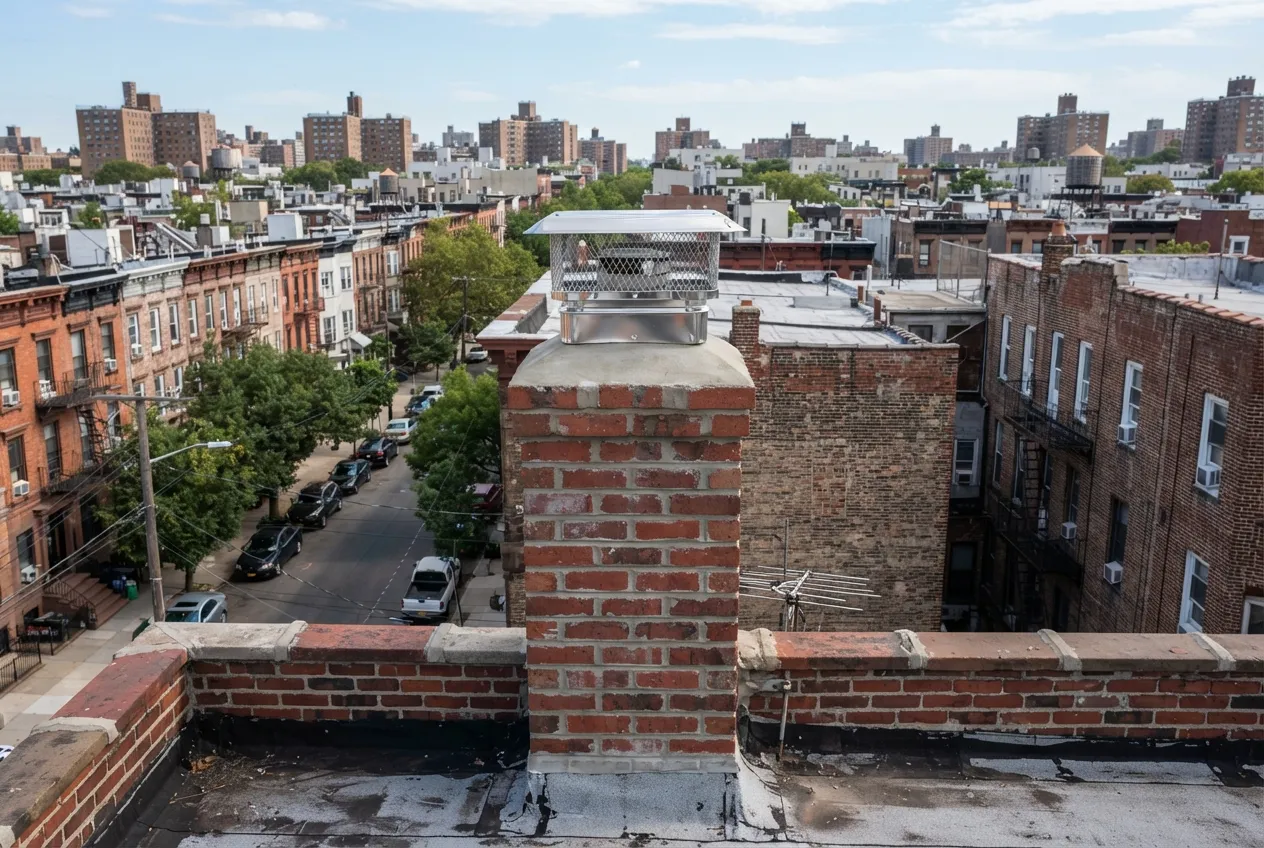
- Crown, cap and flashing where the chimney meets the roof
- Signs of water entry inside and out
- A written report with photos, findings in plain language and recommendations ranked by urgency
How our crew works in your home and on the roof
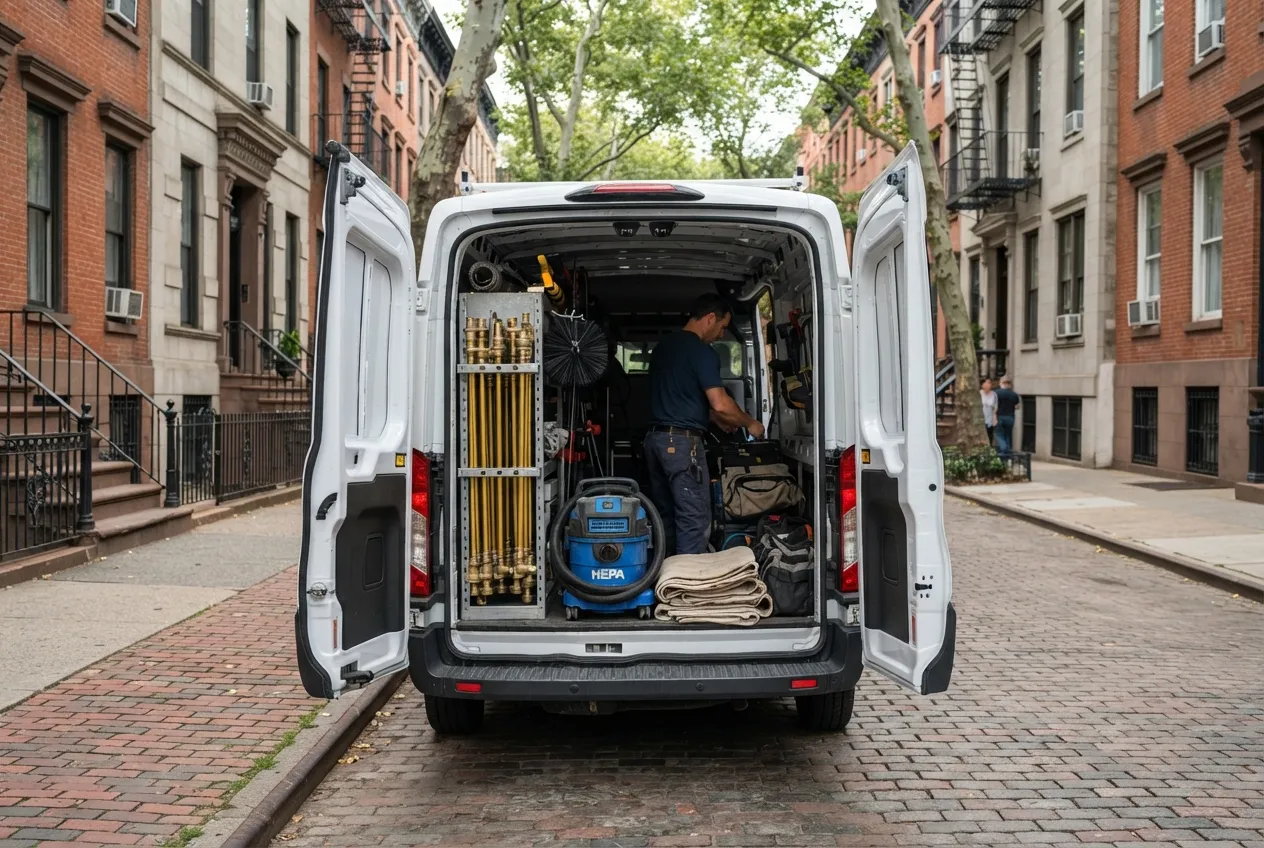
Inside, we lay drop cloths from your door to the fireplace or appliance and cover the hearth. When the flue has to be opened or swept so we can see it clearly, we run HEPA vacuums at the opening to keep soot and dust in the chimney and out of the room. If a sweep is part of the visit, we use rotary brushes to clear loose deposits from the liner walls.
Where the flue can't be seen well from either end, we run a camera up the chimney to look at liner joints, tiles and the smoke chamber. The footage shows cracks and gaps a flashlight can't reach, and we'll show it to you.
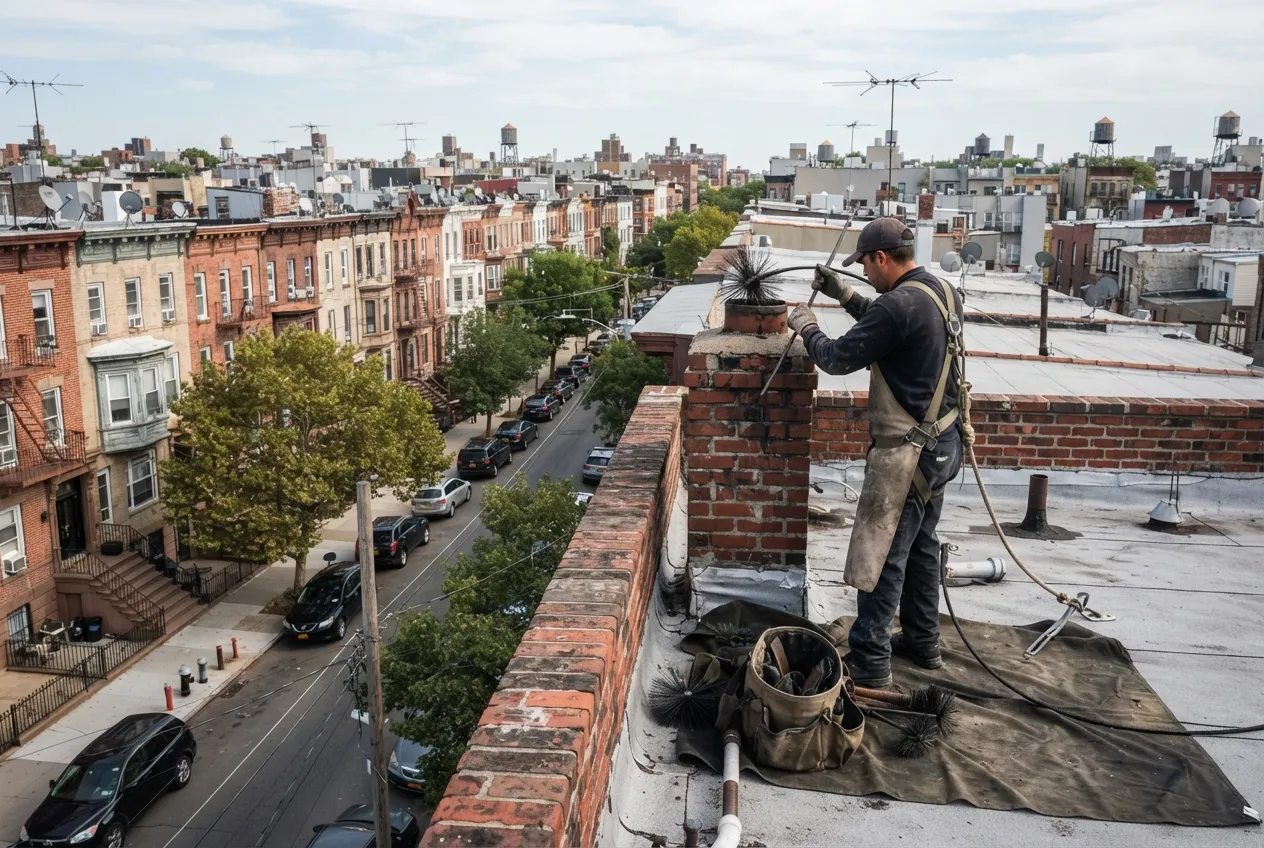
On the roof, we inspect the crown, cap, flashing and brick, and look down the flue from the top. Many Brooklyn rowhouses have flat roofs reached through a hatch, so we'll ask about access when you book. We only go up when it's safe; if we can't reach part of the chimney, the report says so.
Time for your annual chimney check?
The standard we follow
The NFPA 211 standard calls for chimneys, fireplaces and vents to be inspected once a year, even if you rarely light a fire. Chimney professionals use three inspection levels:
Two New York City points also matter. When a building converts its boiler from oil to gas, the chimney has to be evaluated as part of the work, and a new liner is often needed because gas exhaust produces acidic condensate that can corrode a masonry flue. And because the city's heat season runs from October 1 through May 31, when building owners must keep apartments heated to minimum temperatures, it makes sense to inspect boiler chimneys before October so any repair doesn't interrupt heat.
- Level 1: when nothing about the chimney or the appliance has changed since the last inspection
- Level 2: when the system changes, such as a new appliance or a switch of fuel, or when the home is sold; we typically include a camera inspection of the flue
- Level 3: when a hidden hazard has to be reached by opening part of the chimney or building; we only recommend this when earlier findings point to a problem we can't reach any other way
What affects the price
We'll explain the cost before we start. Any repairs are quoted separately, after you've seen the findings. The main factors:
- Chimney height and roof access, including whether there's a roof hatch
- Fuel type: wood, gas and oil appliances leave different deposits and need different checks
- Flue size, shape and condition, and how many flues share the chimney
- How much creosote or soot has built up, and whether a sweep is needed before we can see the liner
- Whether a camera inspection or a Level 2 or Level 3 inspection is needed
- Any repairs we find, such as a cap, crown, flashing or liner work
How a visit works
When you book, we'll ask what fireplace or appliance you have, when the chimney was last checked and how to reach the roof. Please don't use the fireplace or stove for at least a day beforehand so the firebox is cool. For a boiler or furnace chimney, we'll arrange to have the system off while we work.
On the day, the technician walks through the job with you, sets up drop cloths and inspects from inside and from the roof. Before leaving, we clean the work area, show you the photos or camera footage and go over what we found. You'll get a written report you can keep for your records or share with a buyer or contractor.
Chimney Inspection by city
- Chimney Inspection in Prospect Heights
- Chimney Inspection in Clinton Hill
- Chimney Inspection in Fort Greene
- Chimney Inspection in Park Slope
- Chimney Inspection in Crown Heights
- Chimney Inspection in Bedford-Stuyvesant
- Chimney Inspection in Downtown Brooklyn
- Chimney Inspection in DUMBO
- Chimney Inspection in Boerum Hill
- Chimney Inspection in South Williamsburg
- Chimney Inspection in Prospect Lefferts Gardens
- Chimney Inspection in Wingate