The short answer
A chimney inspection checks your flue, liner, masonry and connected appliances for damage, blockages and fire or exhaust hazards. The NFPA 211 standard calls for an inspection once a year, and a more detailed Level 2 inspection after a fuel switch, a new appliance or a home sale. TrueHearth's certified technicians inspect chimneys across Crown Heights and nearby Brooklyn neighborhoods.
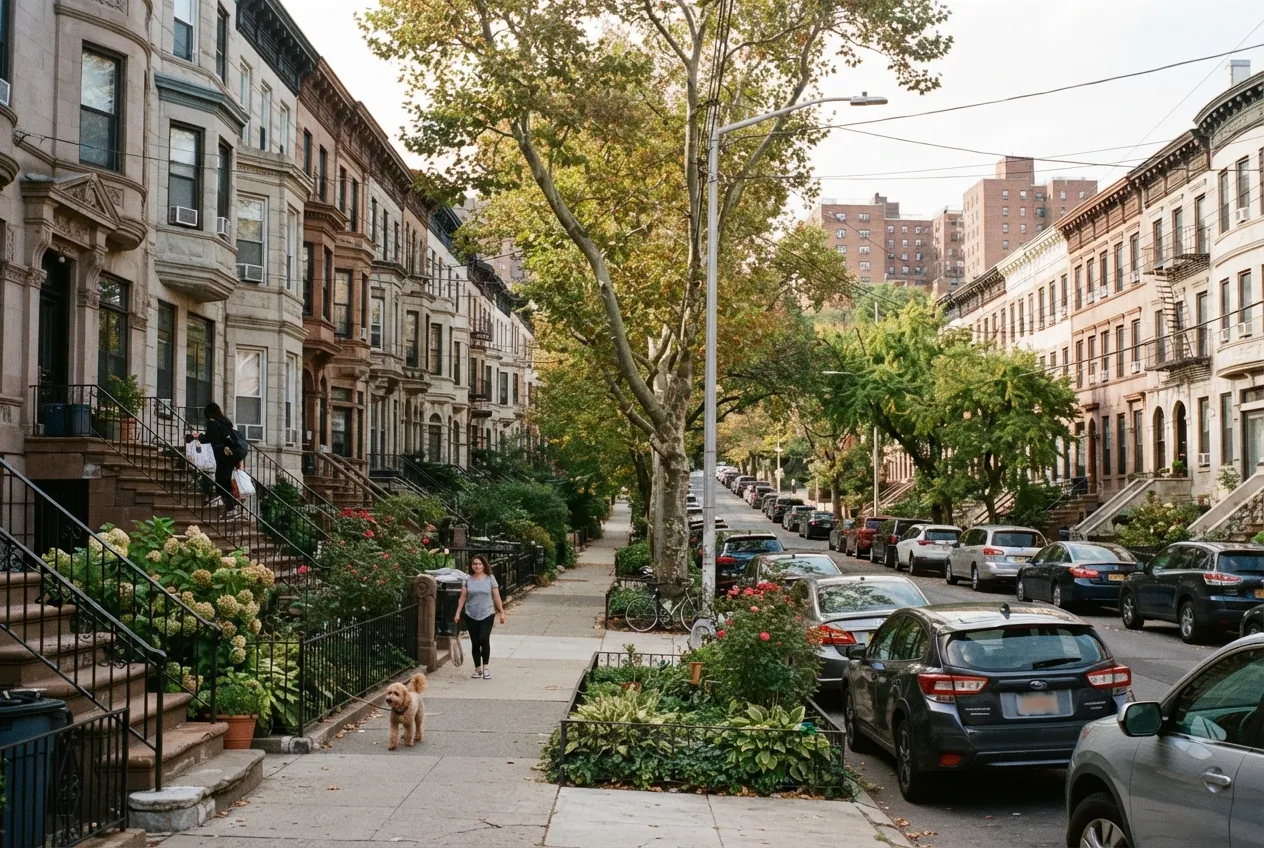
Crown Heights has a wide mix of housing: brownstones and rowhouses, pre-war apartment buildings, and some detached homes. Many of these chimneys have been in service for generations, and many have changed along the way. Boilers get replaced, fuels get switched, and fireplaces get sealed up or reopened. Each change can affect how safely smoke and exhaust leave the house. TrueHearth Chimney Service inspects chimneys, fireplaces and vents throughout Crown Heights (ZIP 11213) from our office in Prospect Heights, about a mile away. Our certified technicians tell you what they found, show you where it is, and explain what needs attention now and what can wait.
What we check during a Crown Heights chimney inspection
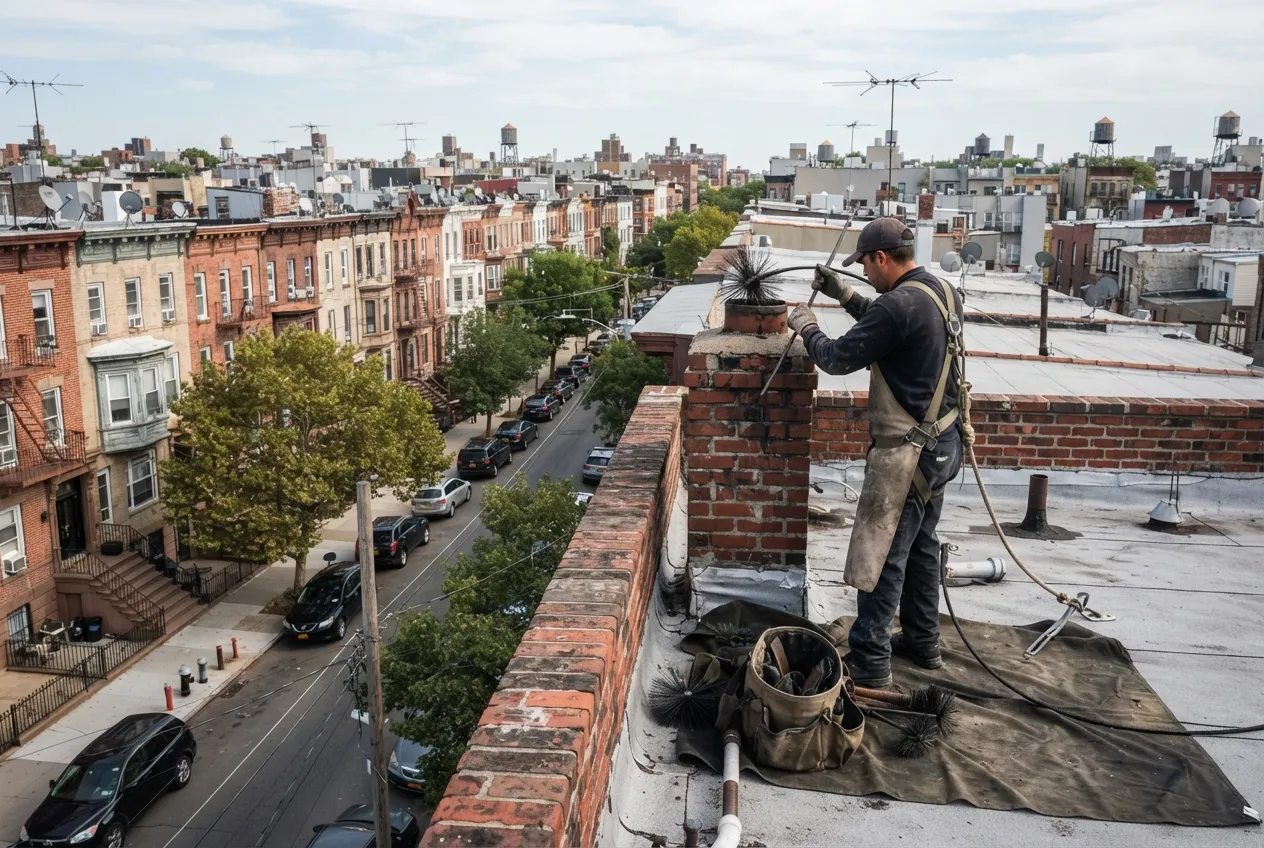
An inspection looks at the whole venting system, not just the firebox. In brownstones and rowhouses, a chimney often runs up through several floors and may hold more than one flue. One might serve a parlor fireplace, another an upstairs fireplace, and another the boiler in the cellar. We check that each flue is in sound condition and doing the job it is supposed to do.
Here is what we typically look at:
- Flue and liner condition: cracks, gaps, missing sections or corrosion that could let heat or exhaust escape
- Creosote and soot buildup in flues serving wood-burning fireplaces
- Blockages from debris, loose masonry or animal nests
- Firebox, damper and smoke chamber condition
- Connector pipes from boilers, furnaces and water heaters
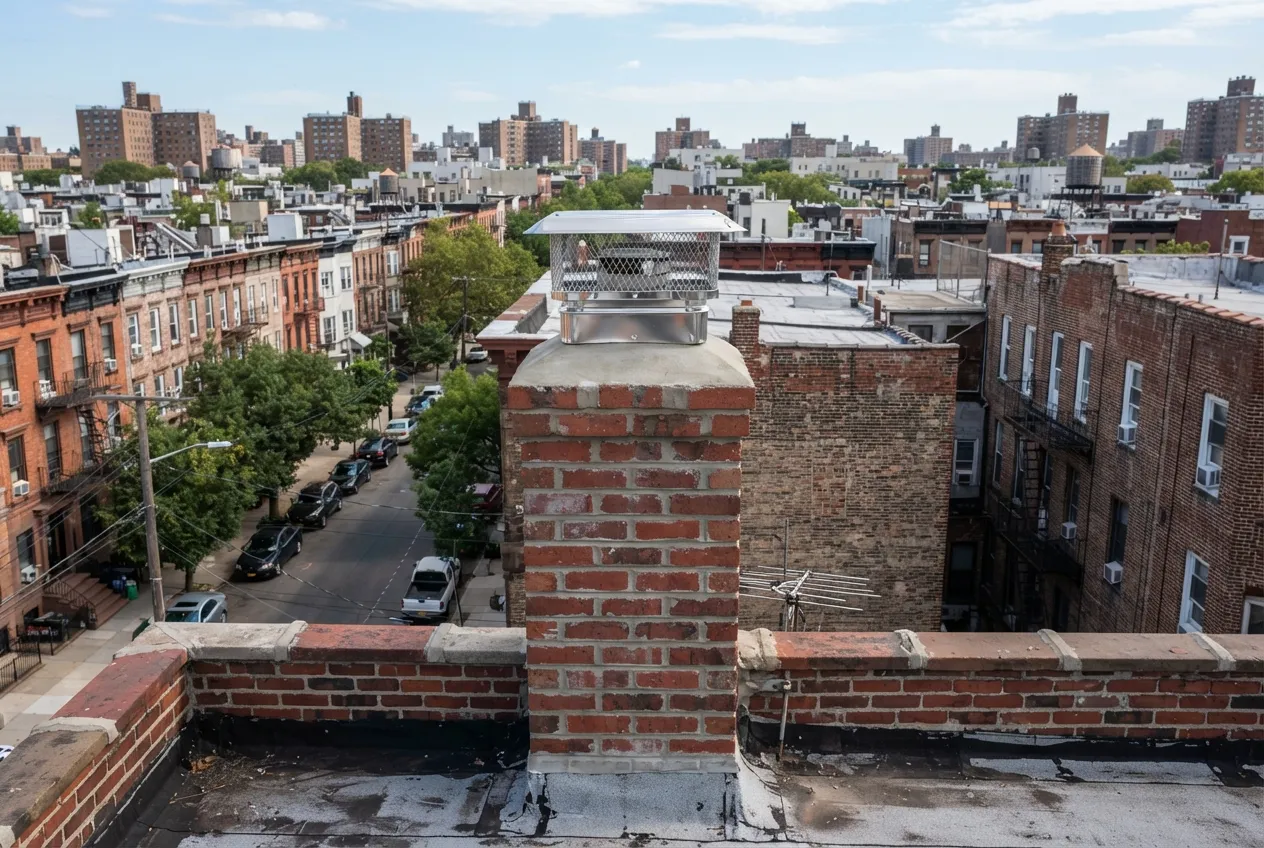
- Chimney crown, cap, flashing and exterior brick and mortar, where they can be reached safely
Which inspection level your home needs
The NFPA 211 standard calls for chimneys, fireplaces and vents to be inspected once a year. Chimney professionals use three levels of inspection, and the right one depends on what has happened with your home since its last inspection.
A Level 1 inspection fits when nothing has changed. You use the same appliance, the same fuel and the same setup as before. A Level 2 inspection is called for when the system changes, such as a new boiler or a switch from oil to gas, or when the home is sold. If you are buying or selling a house in Crown Heights, a Level 2 inspection gives both sides a clear picture of the chimney's condition. A Level 3 inspection is reserved for cases where a hidden hazard is suspected and part of the chimney or building has to be opened to reach it. We explain why before recommending one.
Oil-to-gas conversions in older buildings
Many older buildings in the neighborhood originally heated with oil. When a New York City building converts its boiler from oil to gas, the chimney has to be evaluated as part of the work. A new liner is often needed, because gas exhaust produces acidic condensate that can corrode a masonry flue that was built for oil.
If you are planning a conversion, or one was done without a close look at the chimney, we can inspect the flue and tell you whether the existing liner is suitable for the new appliance. Catching a liner problem early is much simpler than dealing with deteriorating masonry inside a wall later.
Time for your annual chimney check?
Timing your inspection around heat season
New York City's heat season runs from October 1 through May 31. During those months, building owners must keep apartments heated to the city's minimum temperatures. For a landlord with a multi-family brownstone or a small apartment building, a chimney problem found in midwinter can mean a heating shutdown while repairs are arranged.
Scheduling the yearly inspection before heat season begins gives you time to handle any repairs while the boiler can safely be off. If heat season is already underway, an inspection is still worthwhile. It is better to know about a blocked or damaged flue now than to find out when the system is under heavy use.
Serving Crown Heights and nearby neighborhoods
Because our office is in Prospect Heights, Crown Heights is close to home for our crews. We also inspect chimneys in Prospect Lefferts Gardens, Wingate, Bedford-Stuyvesant, Prospect Heights and Clinton Hill, where the housing is similar: attached brick homes, pre-war buildings and some detached houses.
On inspection day, we protect the area around the fireplace or appliance, check the system inside and out, and then go over the findings with you. If something needs repair, we explain what it is and why it matters, so you can decide on next steps with the full picture.
More services in Crown Heights
- Chimney Sweep in Crown Heights
- Chimney Repair in Crown Heights
- Air Duct Cleaning in Crown Heights
- Chimney Liner Installation in Crown Heights