The short answer
A chimney sweep removes soot, creosote and debris from your flue so smoke and exhaust leave your home safely. In Crown Heights, where many homes have older masonry chimneys serving fireplaces or boilers, it makes sense to have the chimney swept when needed and inspected once a year, ideally before the October heating season begins.
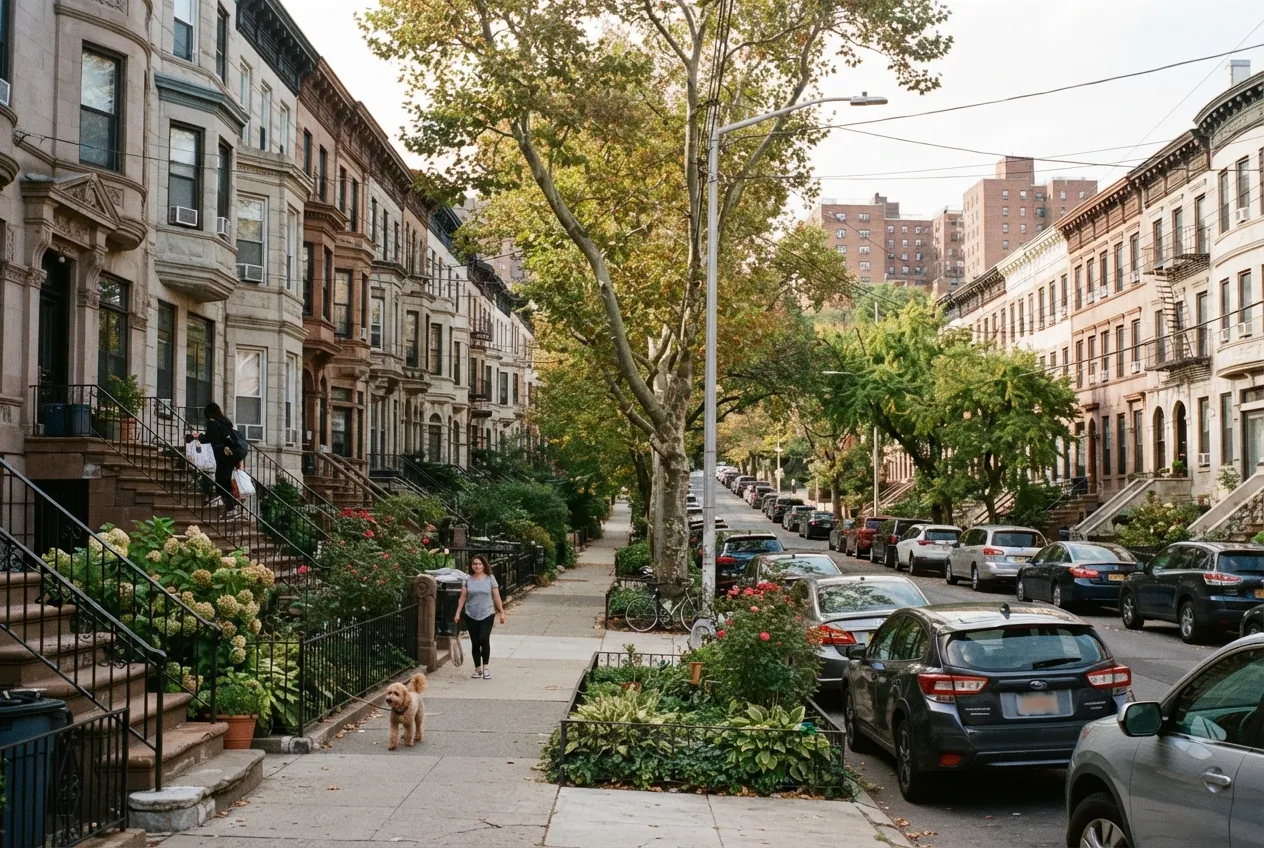
Crown Heights has a lot of working chimneys. Brownstones and rowhouses often still have their original fireplaces, and many pre-war apartment buildings send boiler exhaust up masonry flues that are decades old. TrueHearth Chimney Service is based in Prospect Heights, about a mile away, so a sweep in Crown Heights is a short trip for our crew. Our certified technicians clean wood-burning fireplaces, gas and oil appliance flues, and the smoke chambers and dampers that connect them. We look closely at what we find so you know the condition of your chimney, not just that it was swept.
What a Chimney Sweep Covers in a Crown Heights Home
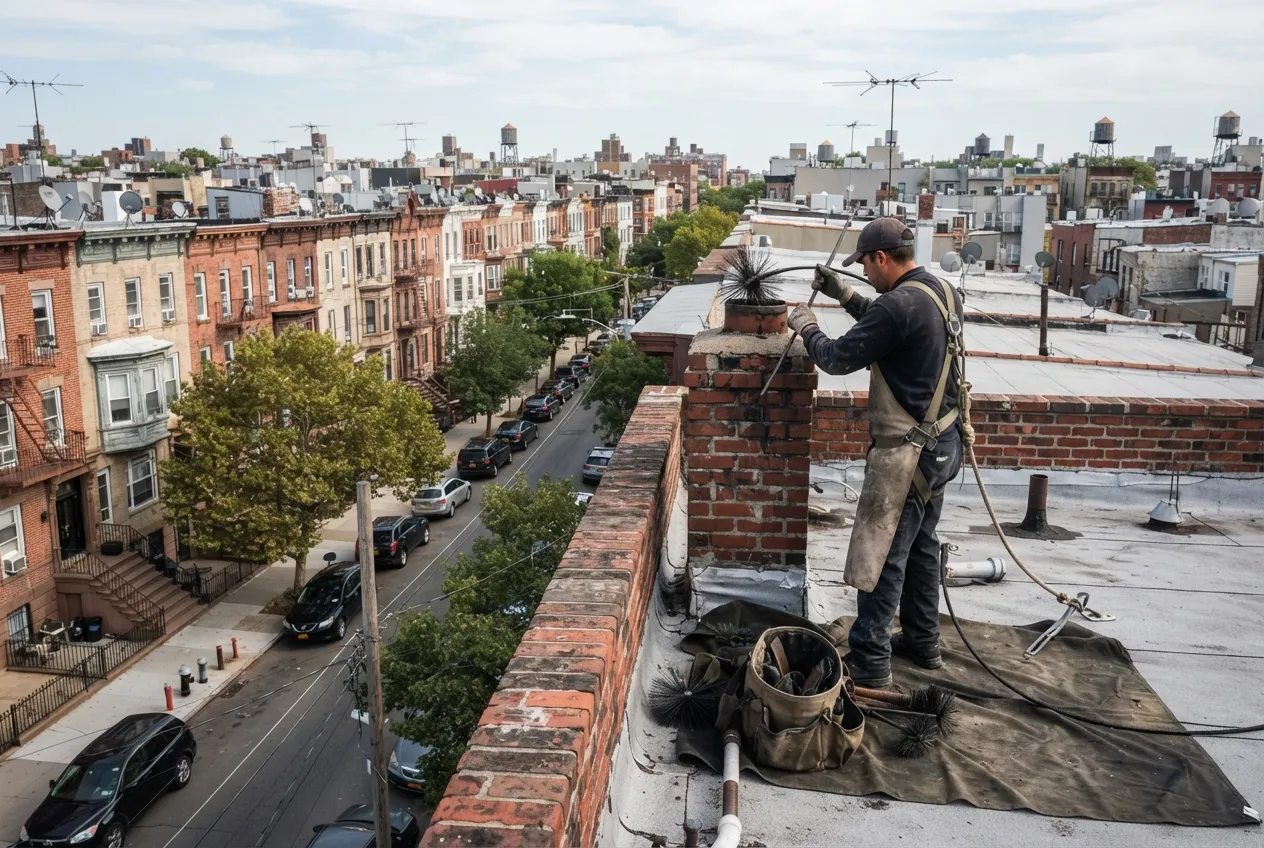
A sweep is more than running a brush up the flue. We protect the room first, then clean the firebox, damper, smoke shelf and smoke chamber along with the flue itself. These areas collect the heaviest buildup in older fireplaces, and they are easy to miss with a quick cleaning.
Once the flue is clean, we can see its condition much more clearly. We point out cracked or missing mortar, damaged flue tiles, loose bricks, a damper that won't seal, or animal nesting. You get a plain explanation of what we saw and what, if anything, needs attention.
- Removal of soot and creosote from the flue, smoke chamber and smoke shelf
- Firebox and damper cleaning and a check of how the damper operates
- Clearing of nests, leaves and other debris that block the flue
- Drop cloths and containment to keep dust out of your living space
- A clear report on any problems we find while we're there
Older Chimneys in Brownstones, Rowhouses and Pre-War Buildings
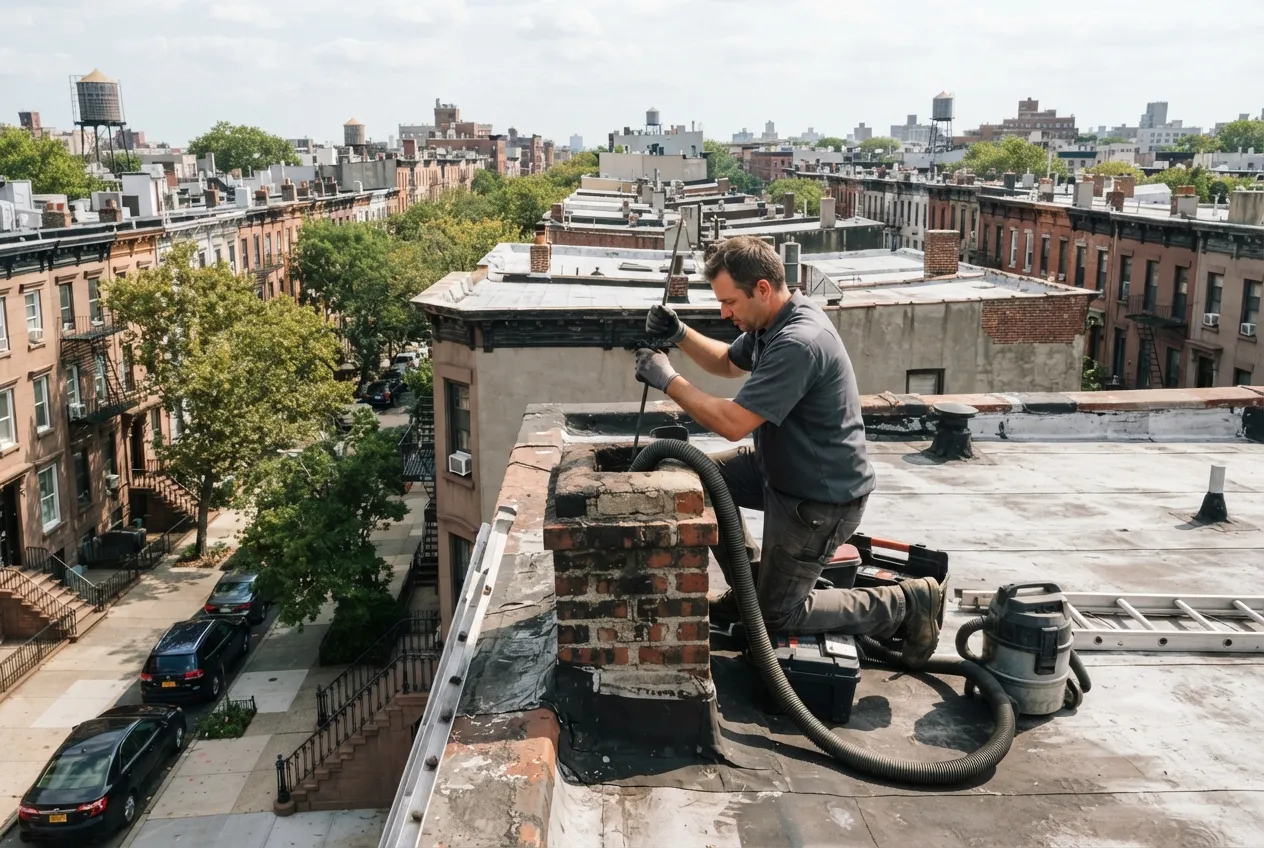
Much of the housing in Crown Heights is attached brownstones, rowhouses and pre-war apartment buildings, along with some detached homes. Many of these chimneys were built for coal or wood and later adapted for other uses. Some fireplaces were closed off for years and are now being opened again. Others share a chimney stack with a neighbor or serve a boiler in the cellar.
In attached homes, the condition of the chimney matters beyond your own walls. A blocked or deteriorating flue can push smoke or exhaust where it shouldn't go. If you're planning to start using a fireplace that has been sealed, have it swept and inspected before the first fire.
Boiler Flues and Oil-to-Gas Conversions
Many Crown Heights buildings heat with boilers that vent through the chimney. When a New York City building converts its boiler from oil to gas, the chimney has to be evaluated as part of the work. A new liner is often needed, because gas exhaust produces acidic condensate that can corrode a masonry flue.
If your building has converted, or you are planning to, we can sweep the flue and look at whether the existing chimney is suitable for the new appliance. Soot from years of oil burning should be cleaned out regardless, since buildup narrows the flue and can interfere with proper venting.
Time for your annual chimney check?
How Often to Schedule a Sweep
The NFPA 211 standard calls for chimneys, fireplaces and vents to be inspected once a year. The inspection tells you whether a sweep is needed. A fireplace you use often will need cleaning more frequently than one used a few times a winter. Boiler flues also need regular attention because they run for most of the year.
New York City's heat season runs from October 1 through May 31. During that period building owners must keep apartments heated to the city's minimum temperatures, so a boiler flue problem in the middle of winter can be urgent. Scheduling a sweep and inspection in late summer or early fall lets you fix any problems before the heat has to be on.
Inspections That Go Along With Sweeping
Chimney professionals use three inspection levels. Level 1 applies when nothing about the system has changed. Level 2 applies when something changes, such as a new appliance or a switch of fuel, or when the home is sold. Level 3 is used when a hidden hazard has to be reached by opening part of the chimney or building.
Most routine sweeps in Crown Heights homes go with a Level 1 inspection. If you're buying or selling a brownstone, or your building has changed its boiler or fuel, a Level 2 inspection is the appropriate step. We also serve nearby Prospect Lefferts Gardens, Wingate, Bedford-Stuyvesant, Prospect Heights and Clinton Hill.
More services in Crown Heights
- Chimney Inspection in Crown Heights
- Chimney Repair in Crown Heights
- Air Duct Cleaning in Crown Heights
- Chimney Liner Installation in Crown Heights