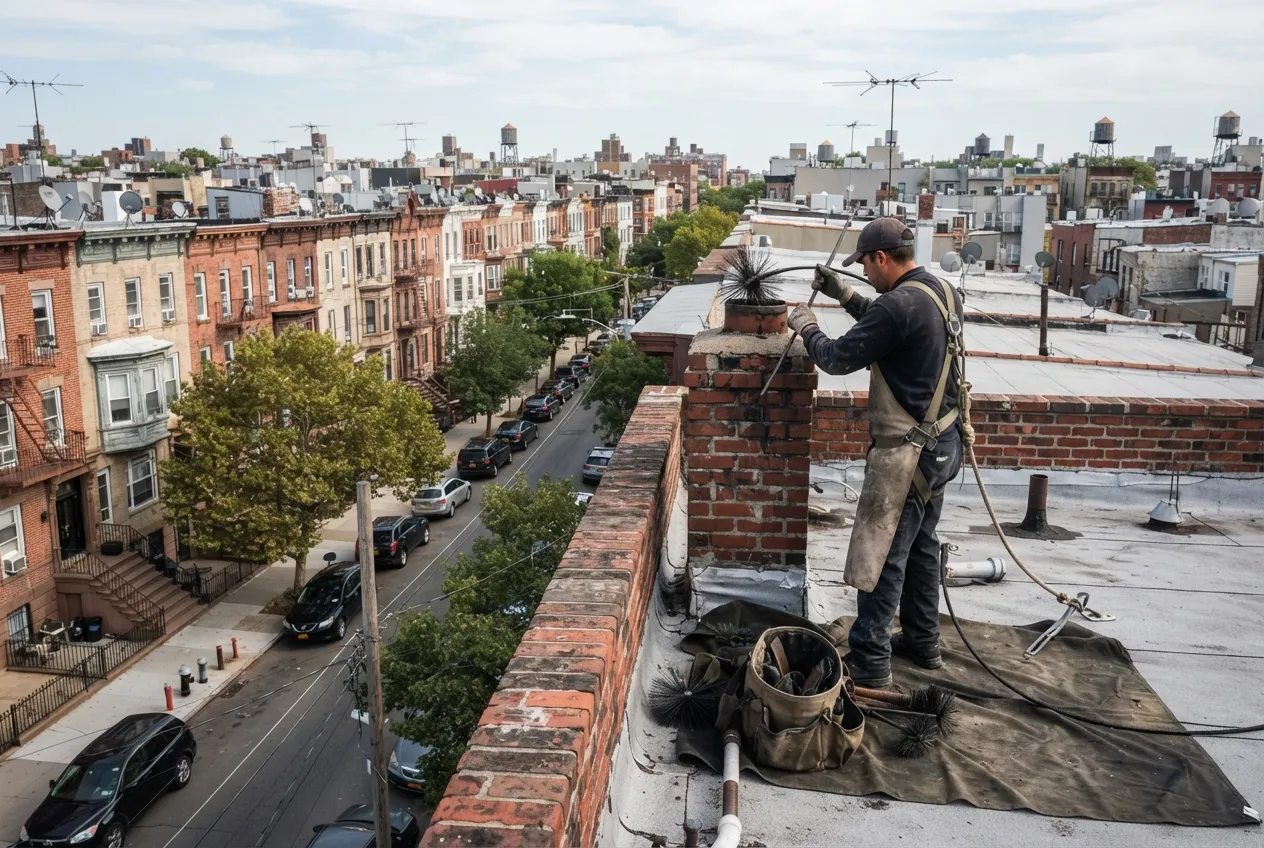
The short answer
A chimney sweep removes soot, creosote, and debris from your flue and checks it for damage, and the NFPA 211 standard calls for chimneys to be inspected once a year. Our certified technicians serve Fort Greene (11205) and nearby Brooklyn neighborhoods, working on fireplaces, wood stoves, and heating flues in brownstones, rowhouses, and pre-war buildings.
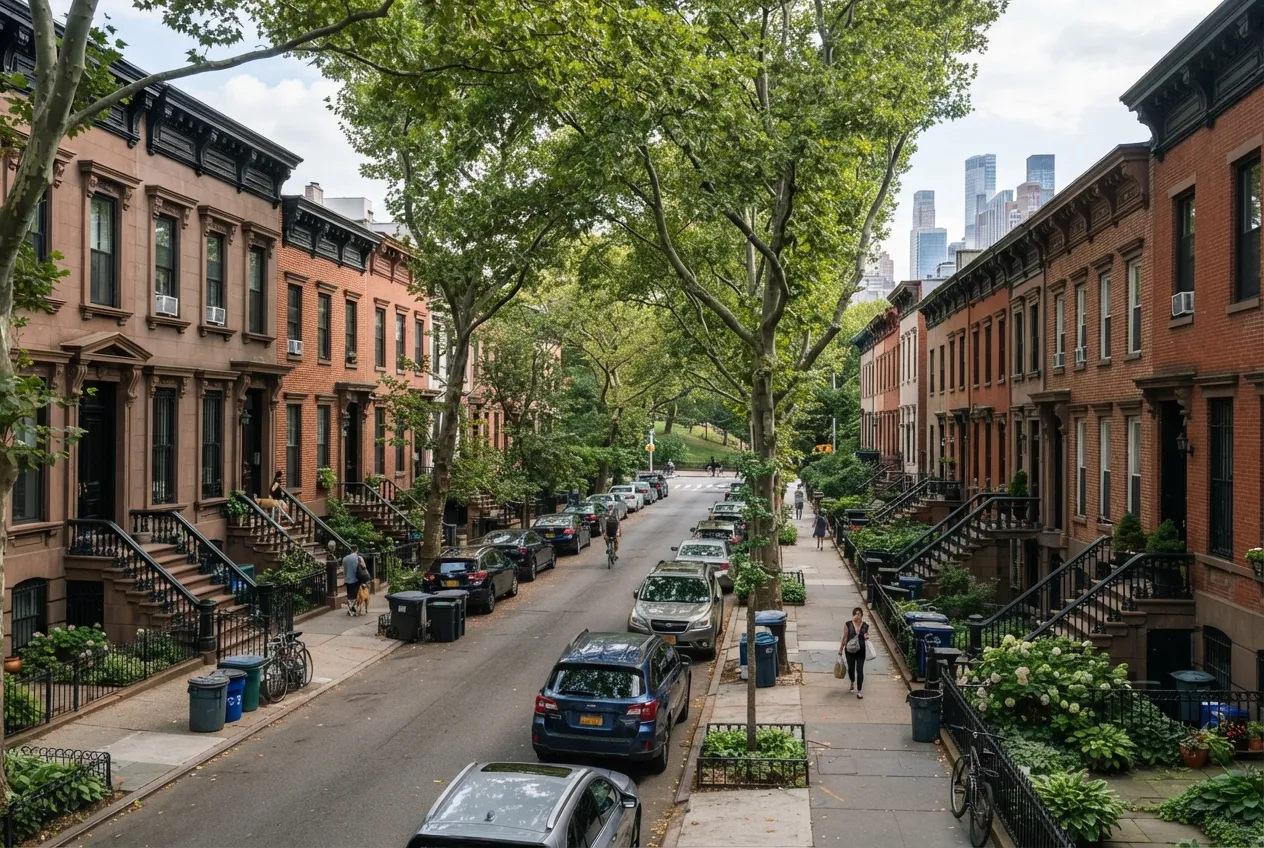
Fort Greene is about a mile northwest of our Prospect Heights office, so our chimney sweeps are close by when a fireplace, wood stove, or heating flue needs attention. Much of the neighborhood's housing is older brownstones, rowhouses, and pre-war apartment buildings, many with masonry chimneys built long before today's heating equipment. A sweep cleans out the soot and creosote that build up inside those flues. It also gives a trained eye a chance to spot cracked tiles, loose bricks, blockages, and other problems before they turn into a fire or a carbon monoxide risk.
Why Fort Greene Chimneys Need Regular Sweeping
Many Fort Greene homes have chimneys that have served several generations of heating equipment. A rowhouse flue may have started out venting coal, later handled oil, and now vents a gas boiler or a decorative fireplace. Each change leaves its mark. Older clay tile liners can crack, mortar joints wear down, and debris collects at the smoke shelf and the base of the flue.
Wood-burning fireplaces add creosote. This tar-like residue sticks to flue walls and can ignite if it builds up thick enough. Heating flues can collect soot, nesting material, and fallen masonry that slows or blocks exhaust. Regular sweeping clears that buildup and gives us a close look at the flue's condition.
What Happens During a Sweep
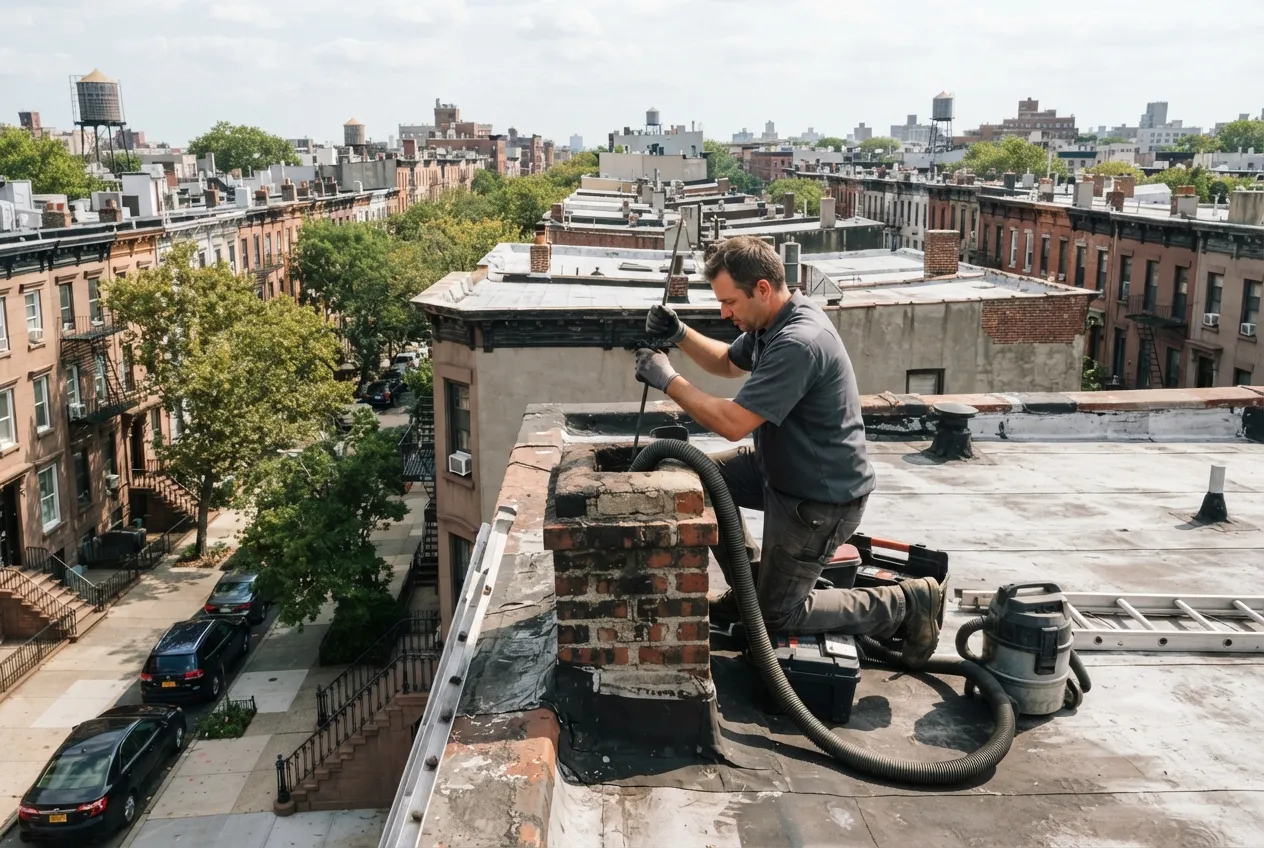
We protect the area around your fireplace or appliance before we start. Brooklyn brownstone parlors and finished rooms deserve care, so we put down drop cloths and use containment to keep soot out of the living space. Then we clean the flue with brushes sized to fit it and remove the debris.
Once the flue is clean, we inspect what we can see and tell you plainly what we found.
- Brushing the flue from top to bottom to remove soot and creosote
- Clearing the smoke chamber, smoke shelf, and firebox
- Checking the damper for proper opening and sealing
- Looking for cracked or missing liner tiles and deteriorated mortar
- Checking for nests, debris, and other obstructions
- Noting any problems with the chimney cap or crown visible during the visit
Annual Inspections and the Three Levels
The NFPA 211 standard calls for chimneys, fireplaces, and vents to be inspected once a year. Chimney professionals use three inspection levels. A Level 1 inspection fits when nothing about the system has changed. A Level 2 inspection applies when the system changes, such as a new appliance or a switch of fuel, or when the home is sold. A Level 3 inspection is needed when a hidden hazard can only be reached by opening part of the chimney or building.
For most Fort Greene homeowners who use their fireplace or stove regularly, a yearly sweep and Level 1 inspection is the routine. If you're buying or selling a brownstone or replacing your heating equipment, let us know so we can plan for the right level of inspection.
Time for your annual chimney check?
Oil-to-Gas Conversions and Heating Flues
Older Brooklyn buildings often convert their boilers from oil to gas. When a New York City building makes that change, the chimney has to be evaluated as part of the work. A new liner is often needed, because gas exhaust produces acidic condensate that can corrode a masonry flue that was never built for it.
If your building has converted, or plans to, we can sweep the old flue and look at its condition. We'll explain whether the existing liner looks suitable or whether a relining should be part of the project.
Timing Your Sweep Around Heat Season
New York City's heat season runs from October 1 through May 31. During that time, building owners must keep apartments heated to the city's minimum temperatures. A heating flue that's blocked or damaged in the middle of winter can create a real problem for owners and tenants.
Late summer and early fall are good times to schedule a sweep, before boilers and fireplaces are in heavy use. That leaves room to handle any repairs before the cold arrives. We also serve Clinton Hill, Downtown Brooklyn, DUMBO, Boerum Hill, and Prospect Heights, so neighbors on nearby blocks can often be scheduled around the same time.
More services in Fort Greene
- Chimney Inspection in Fort Greene
- Chimney Repair in Fort Greene
- Air Duct Cleaning in Fort Greene
- Chimney Liner Installation in Fort Greene