The short answer
Most Downtown Brooklyn chimneys should be swept and inspected once a year, ideally before the heat season starts on October 1. A sweep removes soot and creosote, and the inspection that goes with it checks the flue, liner, damper and crown for damage common in older brownstones and pre-war buildings.
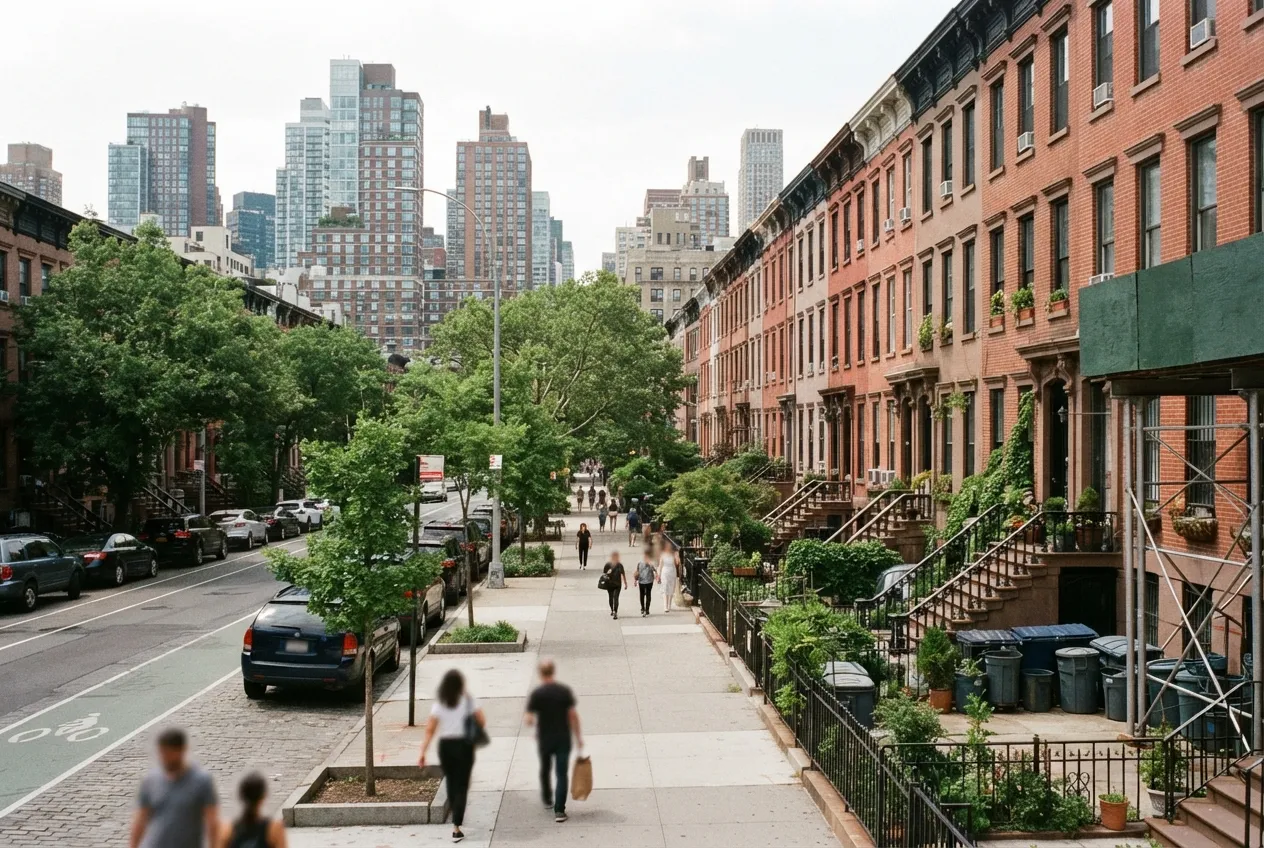
Downtown Brooklyn mixes nineteenth-century brownstones and rowhouses with pre-war apartment buildings and newer towers, and many of those older homes still have working fireplaces, coal-era flues, or boiler chimneys that see heavy use every winter. TrueHearth Chimney Service sends certified technicians from our Prospect Heights office, about 2 miles southeast, to sweep and inspect chimneys throughout the 11201 area. This page covers what a sweep involves for the kinds of homes found here, when to schedule one, and what we look for while we're on your roof and at your hearth.
What a chimney sweep covers in a Downtown Brooklyn home
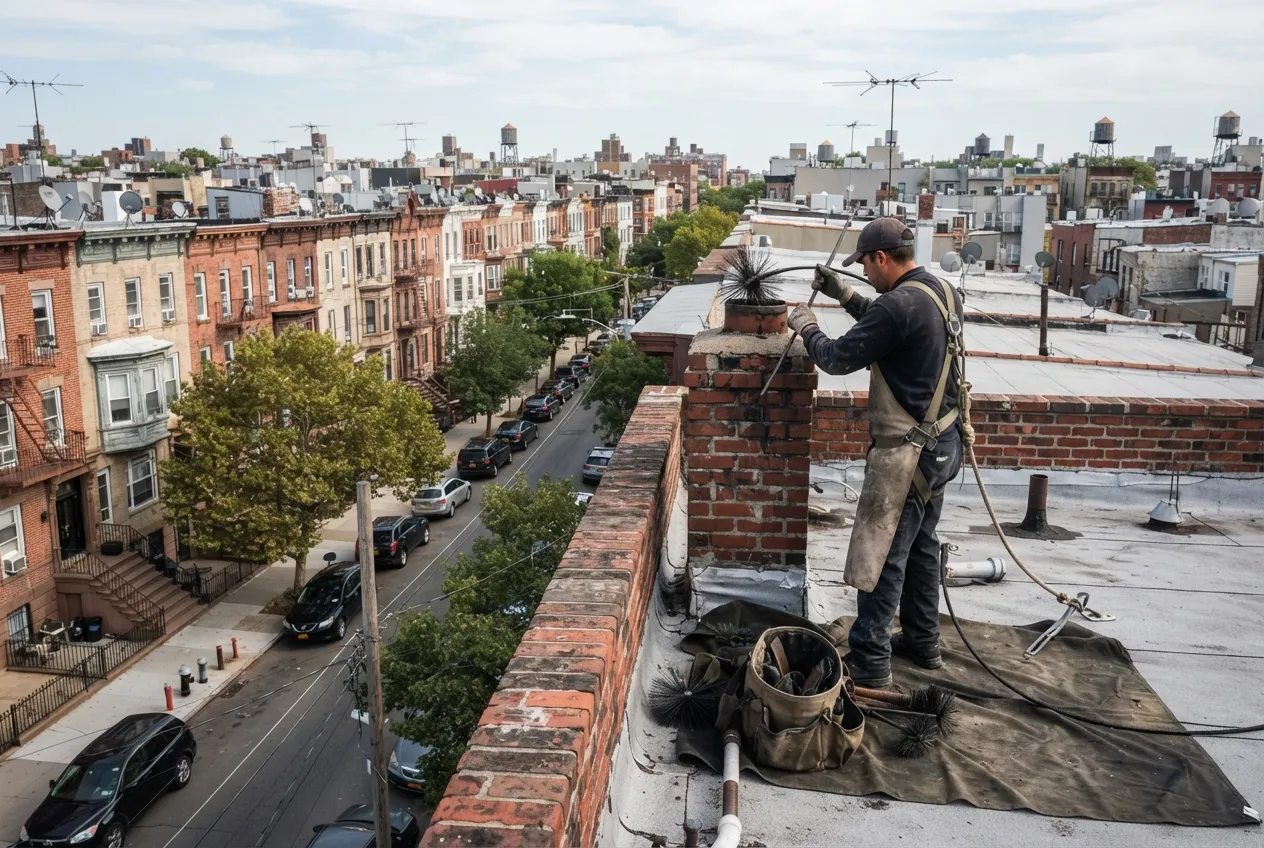
A sweep is more than running a brush down the flue. Our technicians protect the room around the fireplace, clean the firebox, smoke shelf and flue, and remove the soot and creosote that build up when wood burns or when a heating appliance vents through the chimney. Creosote is flammable, and thick deposits are the main fuel behind chimney fires.
While the flue is open and clean, we look at its condition. That pairs the sweep with a basic visual inspection, so you learn about problems before they turn into smoke in the living room or water in a ceiling.
- Firebox, damper, smoke chamber and flue cleaned
- Creosote and soot removed and bagged, not left in the house
- Damper operation and seal checked
- Crown, cap and visible masonry looked at from the roof where access allows
- Notes on liner condition, cracks, gaps or blockages such as nests and debris
Chimneys in brownstones, rowhouses and pre-war buildings
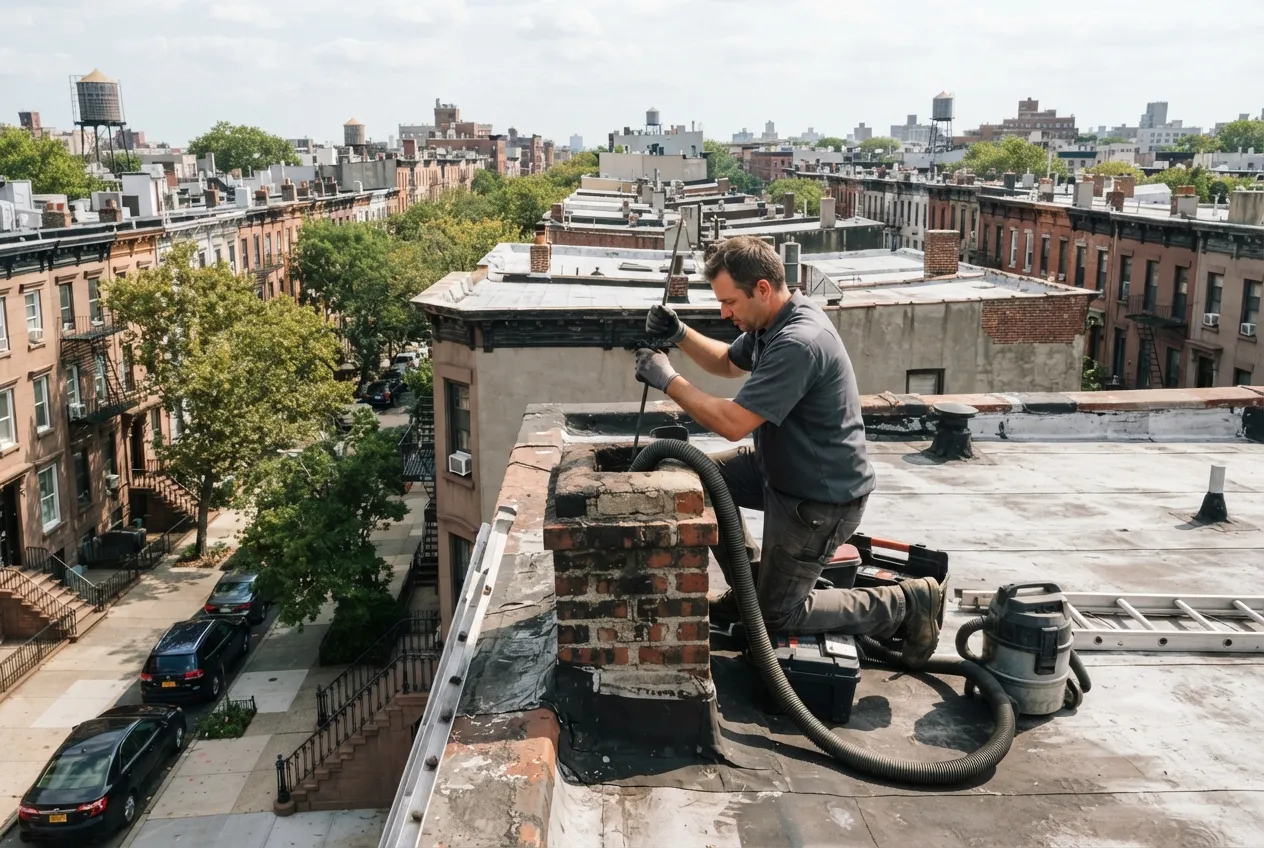
Older Brooklyn homes often share party walls, and a single chimney stack can hold several flues serving fireplaces on different floors. Some of those fireplaces were built for coal and later converted to wood or decorative use. Many original flues are unlined brick or have clay tile liners that have cracked over a century of freeze-thaw cycles and settling.
That history matters during a sweep. We identify which flue serves which fireplace, check that each one is open from top to bottom, and point out mortar loss, spalling brick or a deteriorated crown. In pre-war apartment buildings, we also sweep and inspect boiler and appliance chimneys, which carry exhaust from the building's heating system rather than an occasional fire.
Oil-to-gas conversions and boiler chimneys
Many Downtown Brooklyn buildings have switched their boilers from oil to gas. When a New York City building makes that conversion, the chimney has to be evaluated as part of the work. A new liner is often needed, because gas exhaust produces acidic condensate that can eat away at an unlined or poorly lined masonry flue.
If your building has converted, or is planning to, a sweep and inspection is a sensible first step. Oil-fired systems leave heavy soot that should be cleaned out, and the inspection shows whether the existing flue is in shape to handle gas exhaust or whether relining should be part of the project.
Time for your annual chimney check?
When to schedule your sweep
The NFPA 211 standard calls for chimneys, fireplaces and vents to be inspected once a year. For most homes in the neighborhood, booking in late summer or early fall makes the most sense. New York City's heat season runs from October 1 through May 31, and building owners must keep apartments at the city's minimum temperatures during that period, so a boiler chimney problem found in January is far harder to handle than one found in September.
Beyond the yearly visit, call for a sweep if you notice a smoky smell when the fireplace isn't in use, smoke backing into the room, black flakes in the firebox, or water stains near the chimney breast.
Inspection levels and selling a home
Chimney professionals use three inspection levels. A Level 1 inspection fits when nothing about the system has changed. A Level 2 inspection is called for when the system changes, such as a new appliance or a fuel switch, or when the home is sold. A Level 3 inspection is used when a hidden hazard can only be reached by opening part of the chimney or building.
If you're buying or selling a brownstone or rowhouse in 11201, a sweep followed by a Level 2 inspection gives both sides a clear picture of the chimney's condition. We also serve nearby DUMBO, Boerum Hill, Fort Greene, Clinton Hill and Prospect Heights.
More services in Downtown Brooklyn
- Chimney Inspection in Downtown Brooklyn
- Chimney Repair in Downtown Brooklyn
- Air Duct Cleaning in Downtown Brooklyn
- Chimney Liner Installation in Downtown Brooklyn