The short answer
TrueHearth sends certified chimney sweeps to Park Slope from our Prospect Heights office, about a mile away. We clean and inspect fireplace and heating flues in brownstones, rowhouses and pre-war buildings, in line with the yearly inspection the NFPA 211 standard calls for.
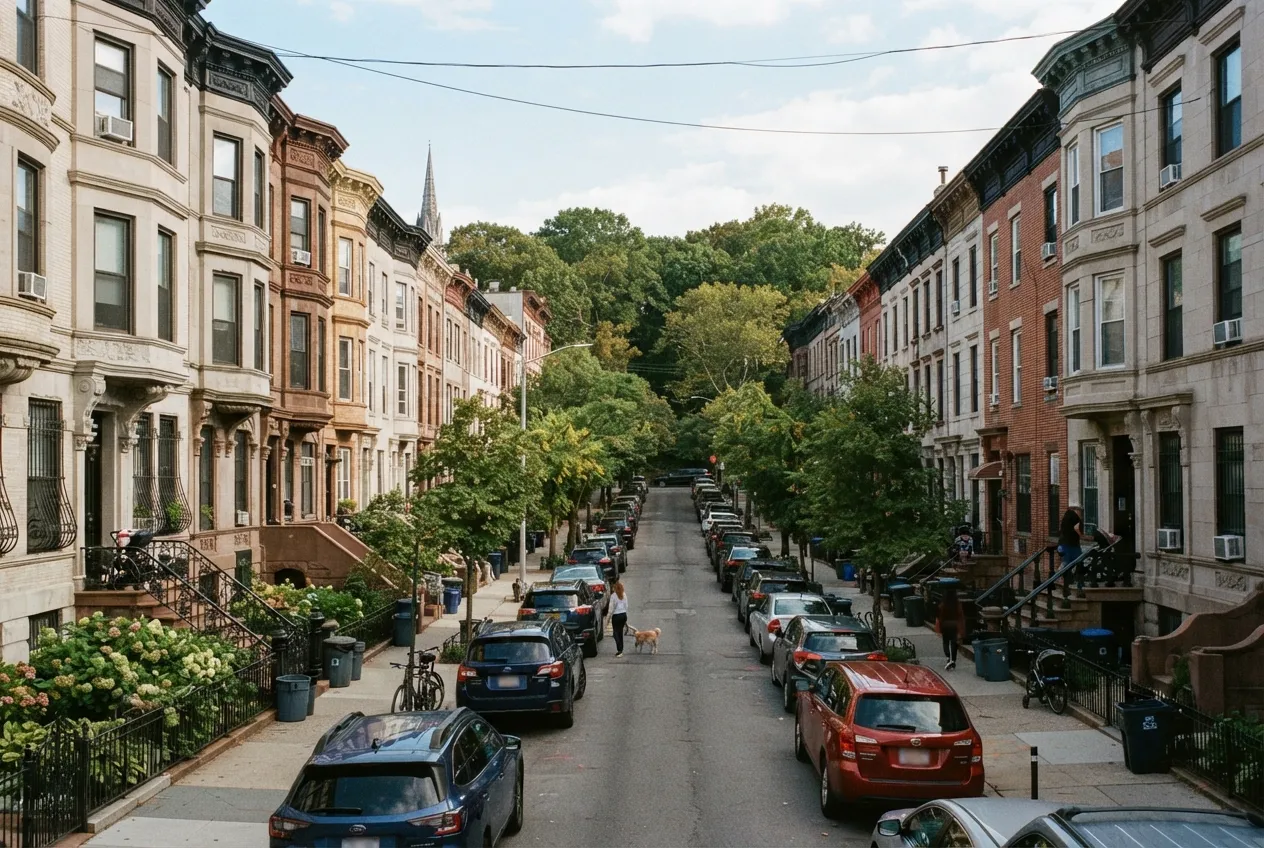
Park Slope's brownstones, rowhouses and pre-war apartment buildings were built when many rooms had a fireplace and buildings burned coal or oil for heat. Many of those flues are still in use, whether for an occasional wood fire in the parlor or for the boiler in the cellar. TrueHearth Chimney Service sends certified chimney sweeps to homes across the 11217 ZIP code from our office in Prospect Heights, about a mile away. We clean the flue, check what we find, and explain plainly what it means for your home.
What a Park Slope Chimney Sweep Visit Includes
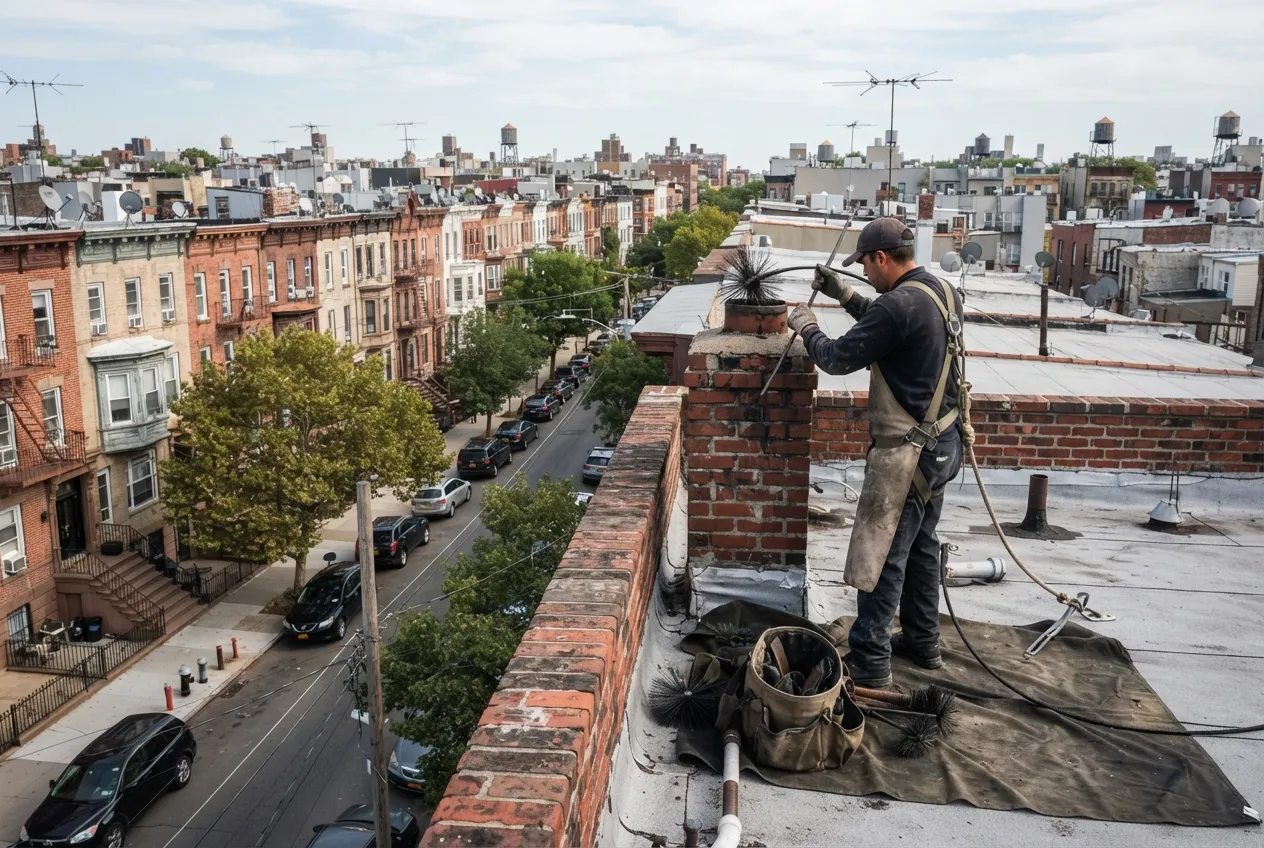
A sweep is more than running a brush up the flue. On a typical visit we protect the floor and furnishings around the firebox, brush and vacuum the flue to remove soot and creosote, and clean the smoke chamber and damper area where buildup tends to collect. Then we look over the parts we can see and reach.
Creosote is the main reason fireplace flues need regular sweeping. It forms when smoke cools inside the flue and builds up as a flammable layer, and it collects faster when you burn damp wood or let fires smolder.
- Firebox, damper and smoke chamber cleaned and checked
- Flue brushed from below, from the roof, or both, depending on access
- Visible mortar, liner and crown condition noted
- Debris, nests and fallen masonry removed from the base
- A plain-language summary of what we found and any next steps
Chimneys in Brownstones and Rowhouses
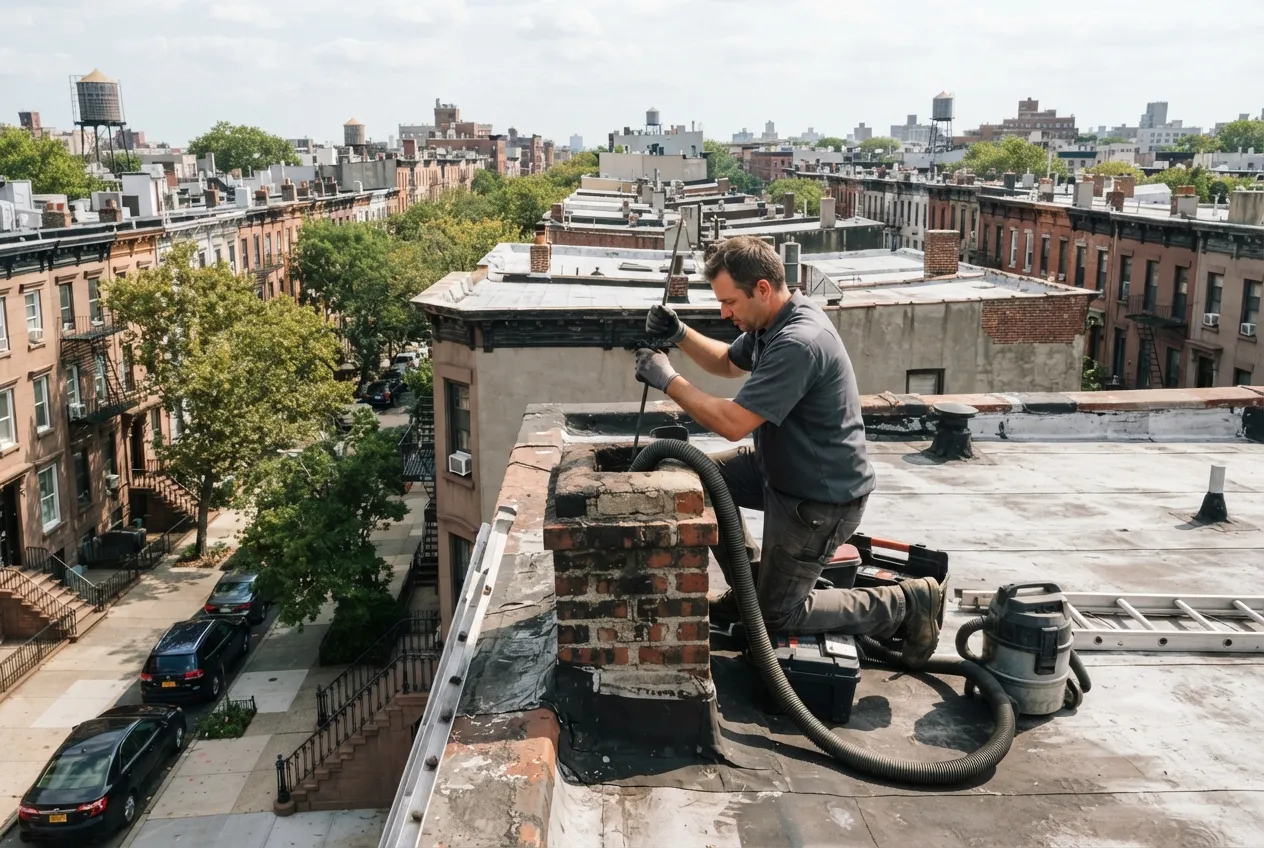
Row construction means chimneys often sit in party walls and run alongside a neighbor's flues. Older masonry flues in these buildings may be unlined or have clay tile that has cracked over the decades, and many fireplaces were closed off at some point and later reopened. Before anyone lights a fire in a fireplace that has sat unused, it's worth having it swept and looked at. Shared and adjacent flues also mean a problem in one can affect another, so we note what we can see of the rest of the stack.
Roof access matters here too. Many rowhouse roofs are flat and reached through a hatch or bulkhead, which helps when we need to work from the top. We'll ask about access when you book so the crew arrives prepared.
Boiler Flues and Oil-to-Gas Conversions
Chimneys in Park Slope don't only serve fireplaces. Many vent a boiler or water heater. When a New York City building converts its boiler from oil to gas, the chimney has to be evaluated as part of that work, and a new liner is often needed. Gas exhaust produces acidic condensate that can corrode a masonry flue, so a flue that served oil well for years may not be suited to gas.
If you're planning a conversion, or you already converted and never had the chimney checked, a sweep and inspection is a sensible first step.
Time for your annual chimney check?
When to Schedule a Sweep
The NFPA 211 standard calls for chimneys, fireplaces and vents to be inspected once a year. New York City's heat season runs from October 1 through May 31, so late summer and early fall are good times to have heating flues swept before the boiler is working hard. Fireplace owners often book then too, before the first fire of the season.
Don't wait for the season if you notice any of these:
- A strong smoky or musty smell from the fireplace
- Smoke drifting into the room instead of up the flue
- Flakes of black, crusty creosote in the firebox
- Debris, bits of tile or water collecting at the base
- Scratching or chirping sounds inside the chimney
Inspection Levels and What Comes Next
Chimney inspections come in three levels. Level 1 covers a system that hasn't changed. Level 2 applies when something has changed, such as a new appliance or a switch of fuel, or when the home is being sold. Level 3 is for hidden hazards that can only be reached by opening part of the chimney or building. Most routine visits are Level 1, and we'll tell you if we see reason to go further.
If a sweep turns up a problem, such as cracked flue tile, a damaged crown or a missing cap, we'll show you photos where we can and explain your options before any further work is scheduled. Beyond Park Slope, we also serve nearby Prospect Heights, Fort Greene, Clinton Hill, Downtown Brooklyn and DUMBO.
More services in Park Slope
- Chimney Inspection in Park Slope
- Chimney Repair in Park Slope
- Air Duct Cleaning in Park Slope
- Chimney Liner Installation in Park Slope