The short answer
A chimney sweep removes creosote, soot and debris from your flue so smoke and exhaust vent safely, and it lets the technician see the flue's condition. In Clinton Hill's older brownstones, rowhouses and apartment buildings, plan on a yearly inspection under NFPA 211 and a sweep whenever buildup or blockage is found, ideally before heat season starts on October 1.
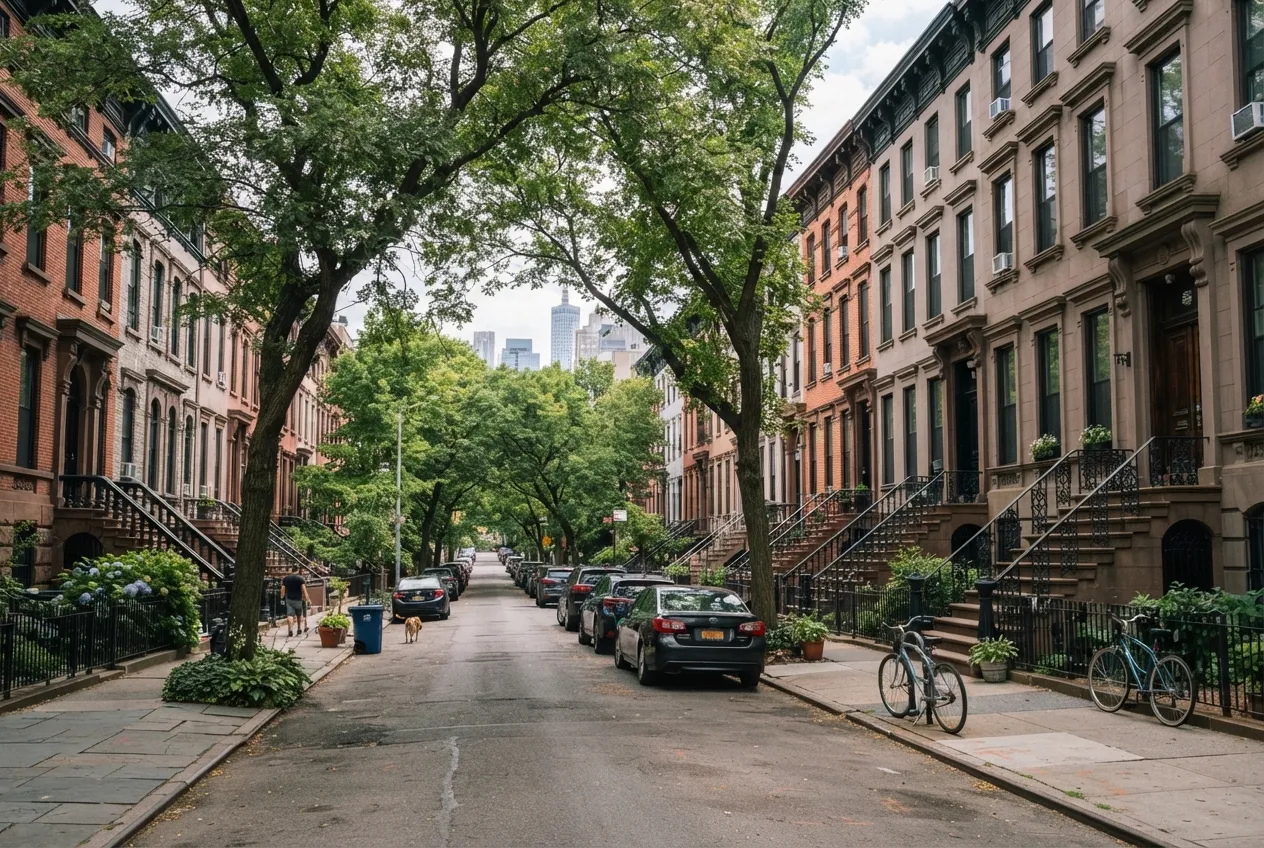
Clinton Hill has many brownstones, rowhouses and pre-war apartment buildings. Many of them still have working fireplaces, decorative fireplaces their owners want to use again, or masonry chimneys that vent a boiler or water heater. TrueHearth Chimney Service sends certified technicians from our office in Prospect Heights, about a mile south, to sweep and check these chimneys. This page explains what a sweep involves in a Clinton Hill home, what we look for in older masonry flues, and how to plan around the heating season.
What a Chimney Sweep Includes
A sweep removes soot, creosote and debris from the flue so smoke and exhaust leave the house as they should. Creosote is a tar-like residue from burning wood. It builds up in layers and can ignite. Boiler flues collect soot, scale and bits of fallen masonry instead. In either case, a clean flue drafts better and gives us a clear view of its condition.
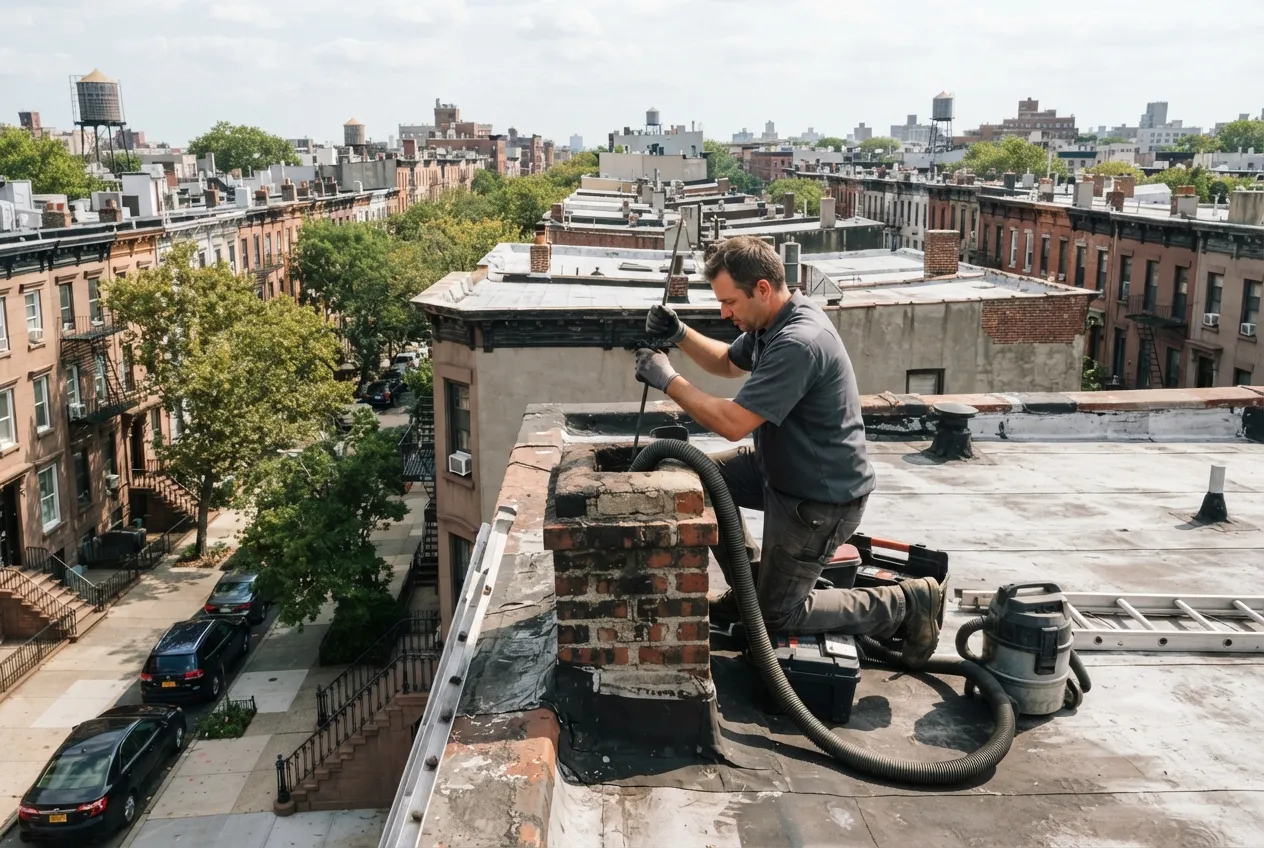
- Covering the room with drop cloths and running a vacuum to contain dust
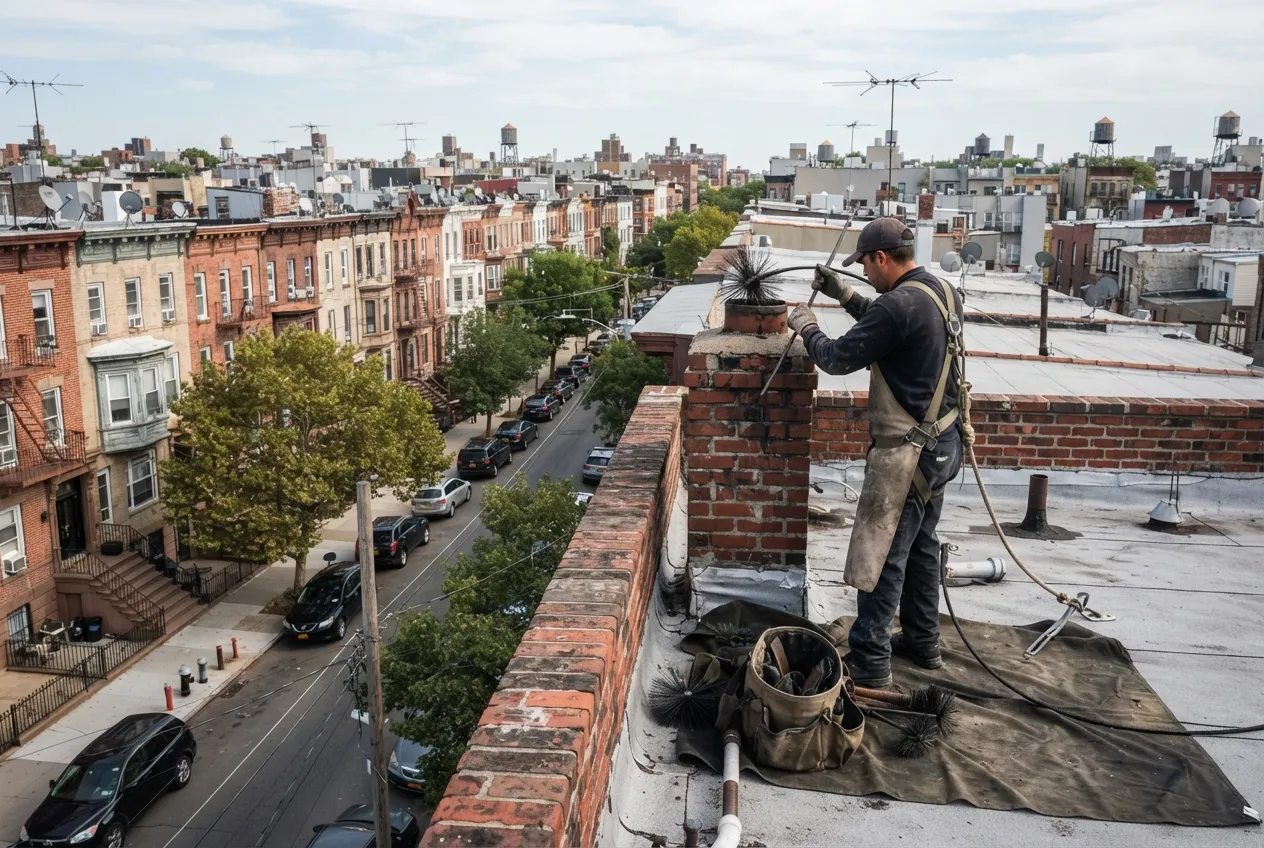
- Brushing the flue from the firebox, the roof, or both, depending on access
- Cleaning the smoke chamber, smoke shelf and firebox
- Checking that the damper seals properly and opens and closes easily
- Looking for nests, debris and blockages, especially in flues that have sat unused
- Going over what we found with you, with photos where they help
Brownstone and Rowhouse Fireplaces
Many fireplaces in older Brooklyn rowhouses were built for coal or wood and later closed off. Some flues have been shared, altered, or left open to the weather for decades. Before you relight a fireplace that hasn't been used in years, have it swept and inspected. A flue can look fine from the hearth and still have cracked tiles, missing mortar or debris lodged higher up.
In attached homes, a chimney often runs through a party wall and may sit beside a neighbor's flue. We note anything that suggests smoke or gas could travel where it shouldn't, such as gaps between flues or a deteriorated liner. We also explain what further evaluation would be needed.
Boiler Chimneys and the Heating Season
In many Clinton Hill buildings, the busiest chimney isn't connected to a fireplace at all. It serves the boiler. New York City's heat season runs from October 1 through May 31. During that period, building owners must keep apartments at the city's minimum temperatures, so a blocked or failing boiler flue in midwinter is a serious problem. If you have the flue swept and checked before October, you have time to handle any repairs without a deadline bearing down.
If your building has converted from oil to gas, or plans to, the chimney has to be evaluated as part of that work. Gas exhaust produces acidic condensate that can corrode a masonry flue, so a new liner is often needed. We can sweep the flue and report what we see, so you and your heating contractor can plan the next steps.
Time for your annual chimney check?
How Often to Schedule a Sweep
The NFPA 211 standard calls for chimneys, fireplaces and vents to be inspected once a year. Whether you also need a sweep depends on what the inspection finds, such as how much creosote or soot has built up and whether anything is blocking the flue. A wood fireplace used regularly through the winter usually needs sweeping more often than one lit a few times a year.
Chimney professionals use three levels of inspection:
- Level 1: used when nothing about the chimney or the appliances it serves has changed
- Level 2: used when the system changes, such as a new appliance or a switch of fuel, or when the home is sold
- Level 3: used when a suspected hidden hazard can only be reached by opening part of the chimney or building
Scheduling a Sweep in Clinton Hill and Nearby
Late summer and early fall are the easiest times to book, before fireplaces and boilers are in daily use. If you're buying a home with a fireplace, schedule a sweep and inspection before you plan to light it. When you book, tell us how many flues the building has, what each one serves, and whether we can get onto the roof, so we arrive prepared.
Our technicians also work in Fort Greene, Prospect Heights, South Williamsburg, Downtown Brooklyn and DUMBO.
More services in Clinton Hill
- Chimney Inspection in Clinton Hill
- Chimney Repair in Clinton Hill
- Air Duct Cleaning in Clinton Hill
- Chimney Liner Installation in Clinton Hill