The short answer
A chimney sweep removes creosote, soot and debris so smoke and exhaust leave your home safely. The NFPA 211 standard calls for a yearly inspection, and we usually sweep at the same visit. Our certified technicians work out of 20 Underhill Ave and serve Prospect Heights and nearby Brooklyn neighborhoods.
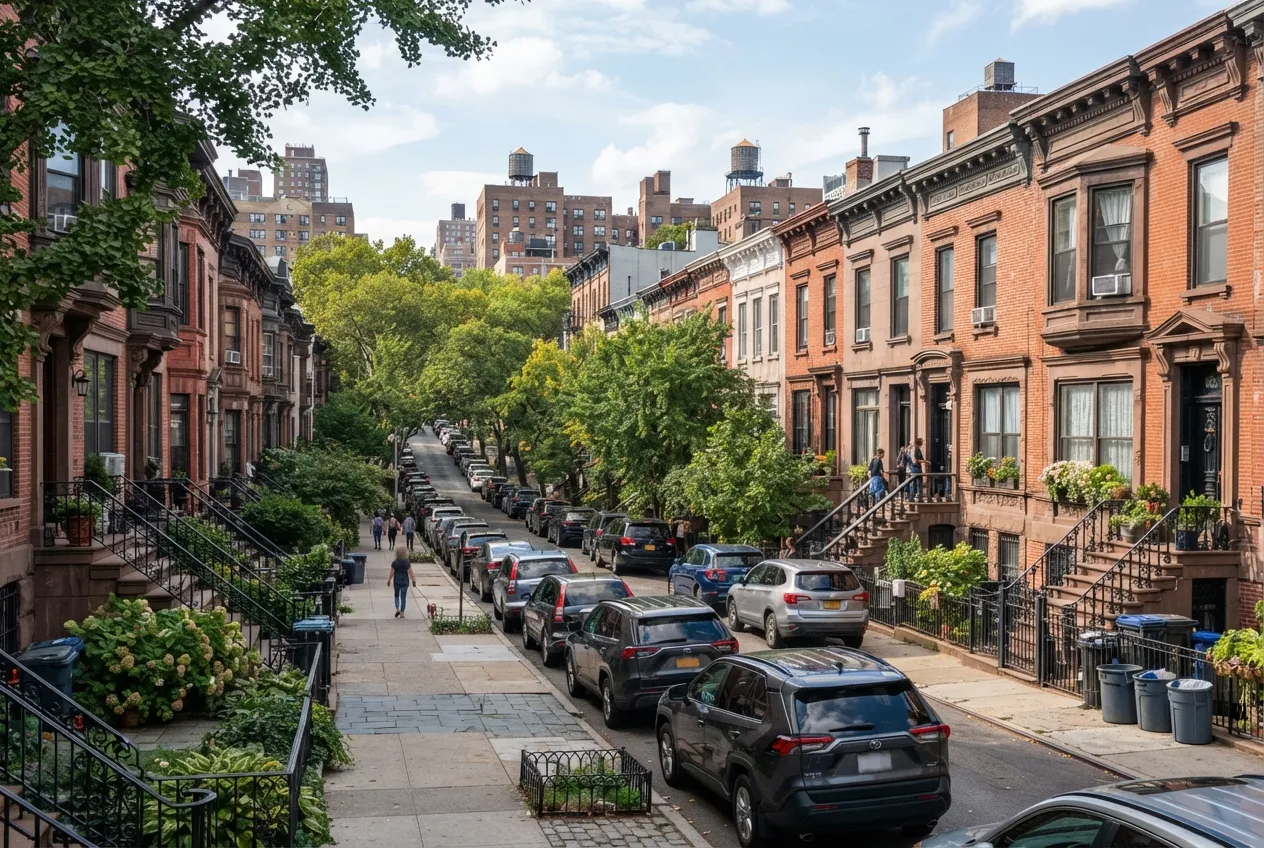
Many homes in Prospect Heights still burn wood in a parlor-floor fireplace or vent a boiler through an old masonry chimney. Our office is at 20 Underhill Ave, so a sweep here is a short trip for our crew. TrueHearth's certified technicians clean flues, remove creosote and soot, check for blockages, and tell you plainly what they found. Whether you live in a brownstone, a rowhouse, or a pre-war apartment building, we'll explain what your chimney needs and why.
What a Sweep Involves in a Prospect Heights Home
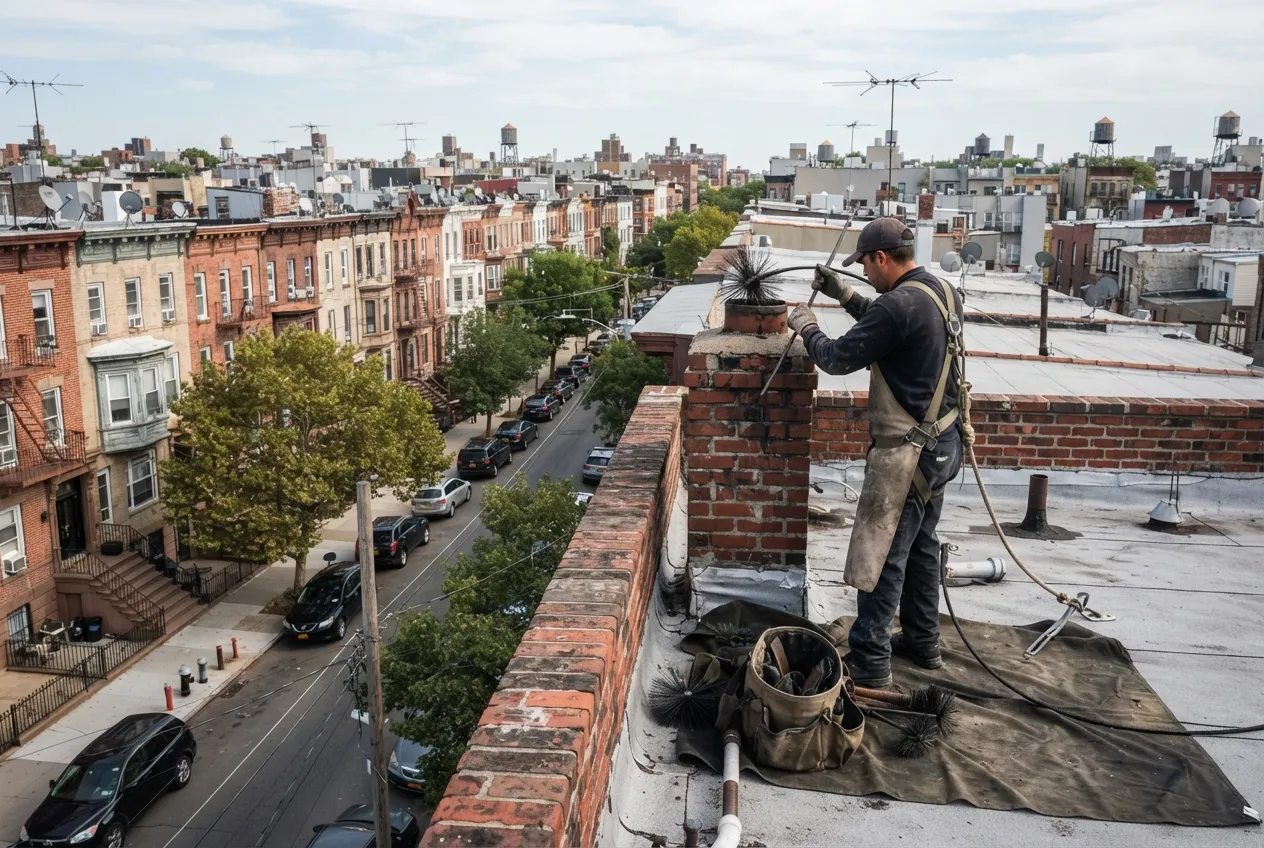
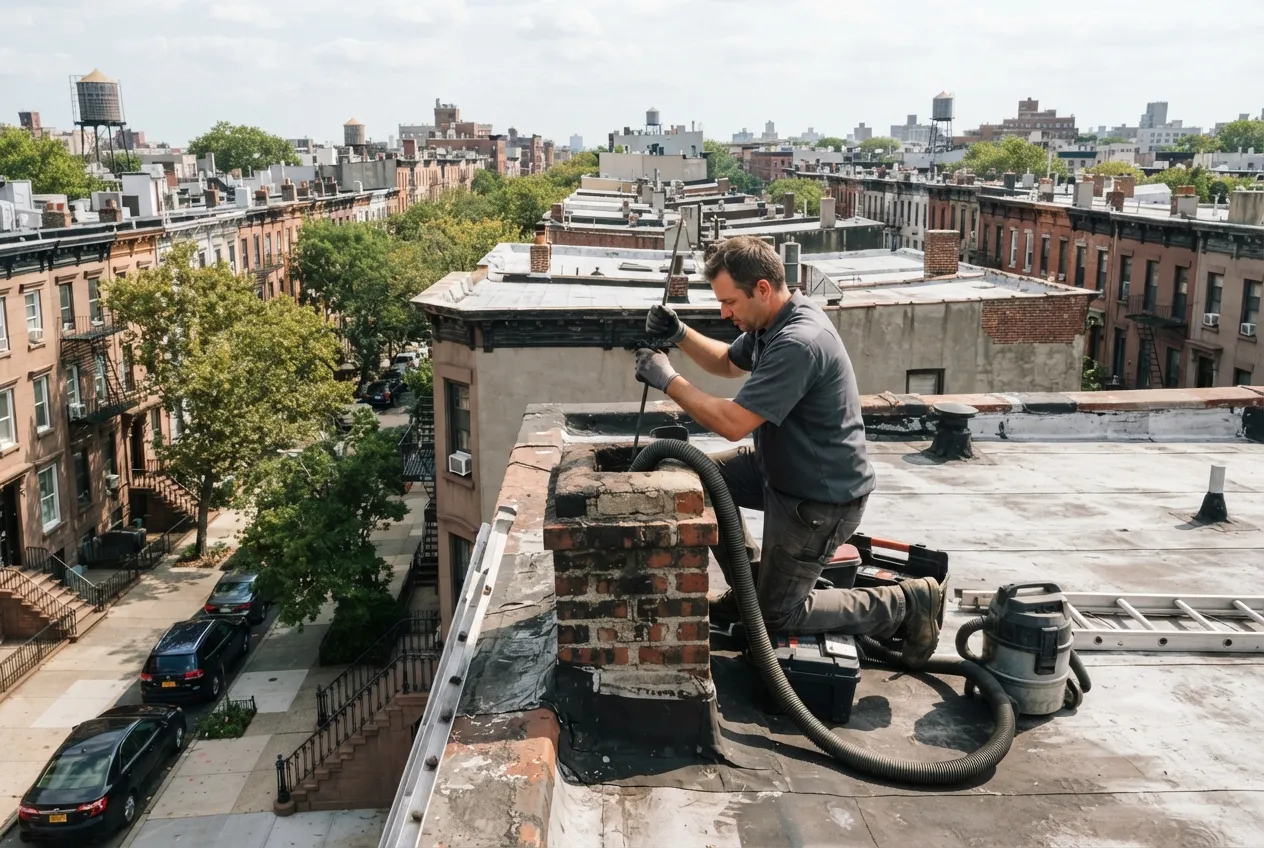
A sweep starts with protecting your home. We lay drop cloths from the door to the hearth and seal off the fireplace opening. Then we use rods, brushes and a vacuum to clean the firebox, smoke chamber and flue. In rowhouses and brownstones, chimneys are often shared stacks with several flues side by side. We confirm which flue serves your fireplace or appliance before we start.
Once the flue is clean, we look at what's left: cracked tiles, gaps in mortar joints, a damper that won't seal, or a missing cap. We show you photos and explain what we saw instead of handing you a list of jargon.
- Firebox, smoke shelf and smoke chamber cleaned
- Flue brushed and vacuumed to remove creosote and soot
- Damper checked to make sure it opens and closes fully
- Chimney cap and crown checked for gaps and damage
- Photos and a plain-language summary of what we found
Why Older Brooklyn Chimneys Need Regular Attention
Many chimneys in Prospect Heights were built long before modern flue liners were common. Some have clay tile liners that have cracked over time. Others were never lined at all. Creosote, a tar-like byproduct of burning wood, builds up faster in cold, oversized or damaged flues, and it can catch fire.
Debris is another common problem. Bird nests, loose brick and leaves can partly block a flue that hasn't been used in a while. That can push smoke or carbon monoxide back into the house. A sweep clears out that material and gives us a clear view of the flue.
Boilers, Furnaces and Oil-to-Gas Conversions
Not every chimney here serves a fireplace. In many brownstones and pre-war apartment buildings, the chimney vents the boiler or water heater. That flue does a lot of work during New York City's heat season, which runs from October 1 through May 31. A blocked or worn-out heating flue is a problem you don't want to discover in January.
If your building is converting its boiler from oil to gas, the chimney has to be evaluated as part of that work. Gas exhaust produces acidic condensate that can corrode a masonry flue, so a new liner is often needed. We can sweep and inspect the flue so you know its condition before the conversion moves forward.
Time for your annual chimney check?
Inspection Levels and How Often to Schedule
The NFPA 211 standard calls for chimneys, fireplaces and vents to be inspected once a year. We usually pair the sweep with the inspection, so you get a clean flue and a clear picture of its condition in one visit. Chimney professionals use three inspection levels:
Whether you need a sweep every year depends on how much you burn and what we find. If buildup is light, we'll tell you so.
- Level 1: a routine check when nothing about the system has changed
- Level 2: when you add or change an appliance, switch fuels, or sell the home
- Level 3: when a hidden hazard can only be reached by opening part of the chimney or building
Serving Prospect Heights and Nearby Neighborhoods
Our office is at 20 Underhill Ave, so Prospect Heights is home base for us. We also sweep chimneys in Park Slope, Clinton Hill, Fort Greene, Crown Heights and Downtown Brooklyn. The housing in those neighborhoods is similar: rowhouses, brownstones, pre-war apartment buildings and some detached homes.
Late summer and early fall are good times to book. That's before you light the first fire, and before the heat season puts your boiler flue to work.
More services in Prospect Heights
- Chimney Inspection in Prospect Heights
- Chimney Repair in Prospect Heights
- Air Duct Cleaning in Prospect Heights
- Chimney Liner Installation in Prospect Heights