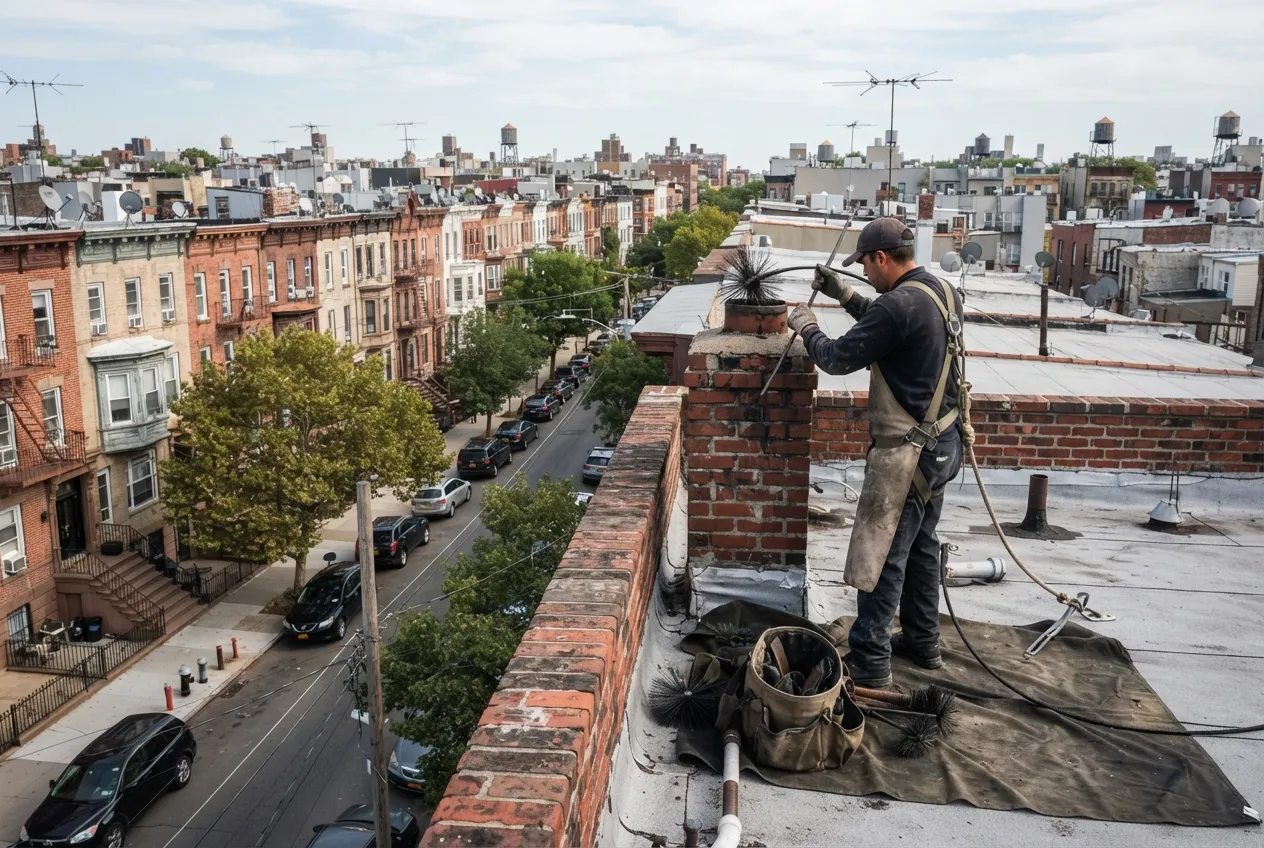
The short answer
TrueHearth repairs chimneys in Prospect Heights brownstones, rowhouses and pre-war buildings, including repointing, crowns, flashing, caps and flue relining. Every repair starts with an inspection based on the NFPA 211 inspection levels. If you're converting a boiler from oil to gas, the chimney needs to be evaluated and often needs a new liner.
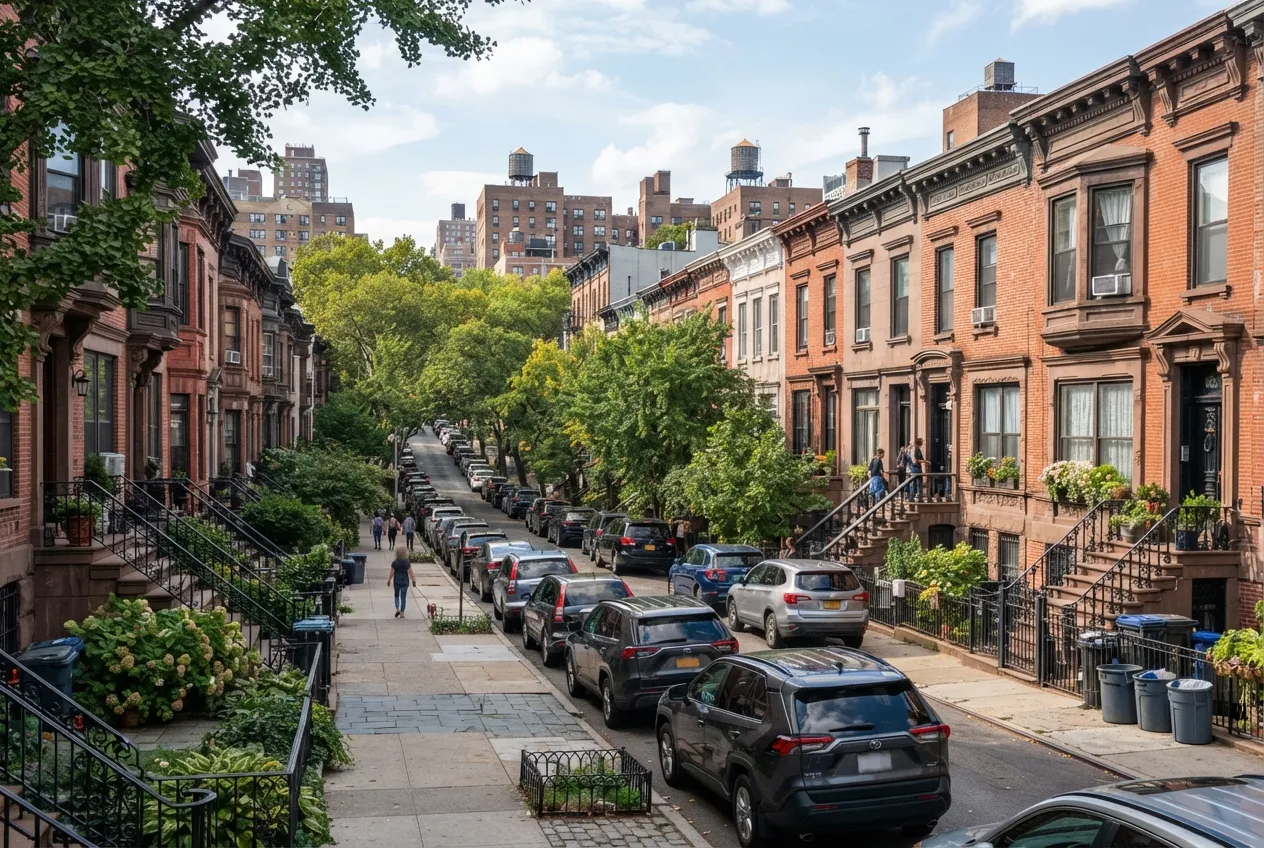
TrueHearth Chimney Service repairs chimneys for homeowners across Prospect Heights from our office at 20 Underhill Ave. Most chimneys here belong to brownstones, rowhouses and pre-war apartment buildings, so they combine old masonry and shared walls with flues that have served several kinds of heating equipment over the years. Repair work in these buildings is rarely just a patch. We look at how the whole system is holding up and explain what we find in plain terms. Then we fix the problems that affect safety and keep water out first.
Common chimney repairs in Prospect Heights homes
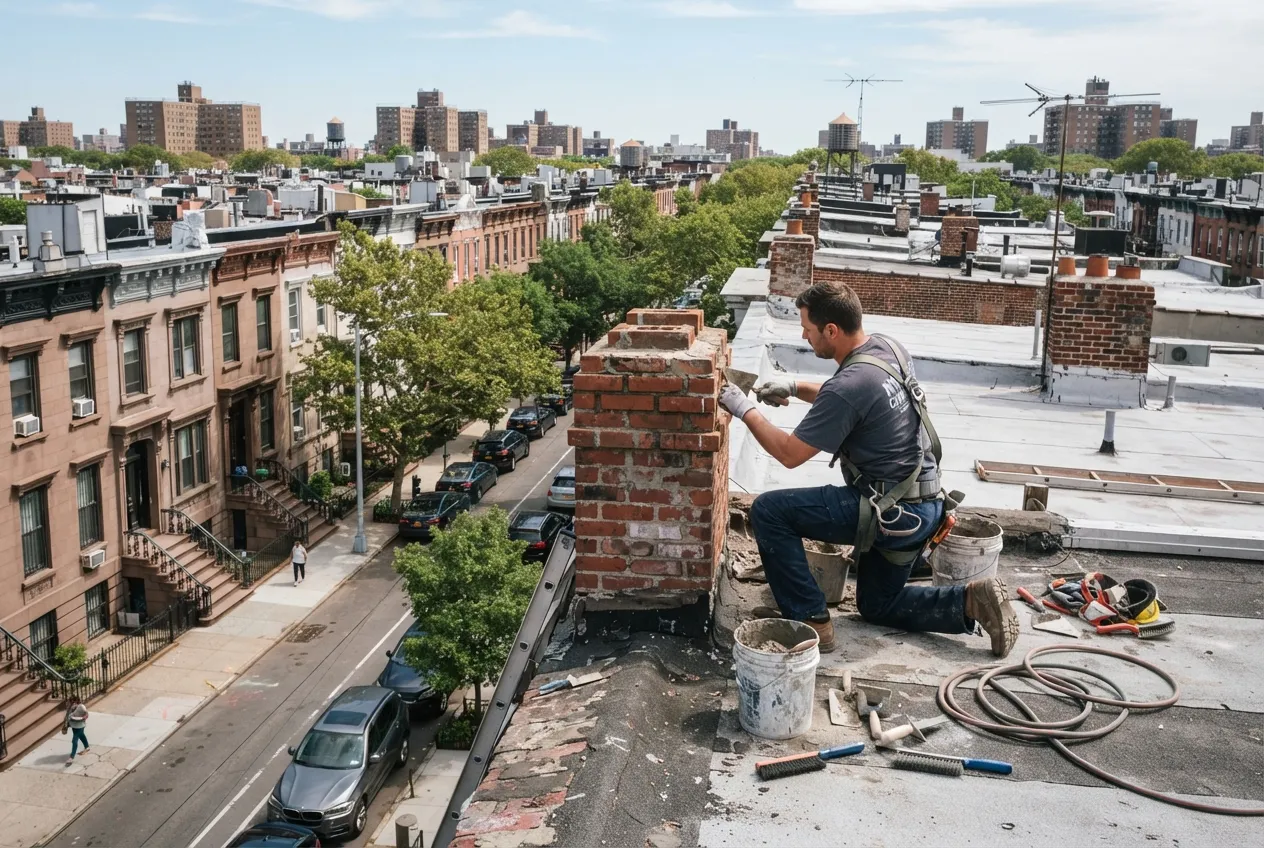
New York winters are hard on brick and brownstone chimneys. Water gets into small cracks, freezes and slowly opens them wider. On rowhouses, chimneys often rise from a shared wall and sit on flat roofs. Flashing and crowns there are easy to overlook until a stain shows up on a top-floor ceiling. These are the repairs we're called for most often:
- Repointing loose or crumbling mortar joints on the chimney stack
- Rebuilding or resealing cracked chimney crowns
- Replacing or resealing flashing where the chimney meets the roof
- Installing or replacing chimney caps to keep out rain, birds and animals
- Repairing damaged firebox brick and fireplace dampers
- Relining flues that are cracked, deteriorated or the wrong size for the appliance
Inspection comes before repair
We don't quote repairs from the sidewalk. The NFPA 211 standard calls for chimneys, fireplaces and vents to be inspected once a year, and chimney professionals use three inspection levels. A Level 1 inspection is used when nothing about the system has changed. A Level 2 inspection is called for when the system changes, such as a new appliance or a switch of fuel, or when the home is sold. A Level 3 inspection is reserved for cases where a hidden hazard can only be reached by opening part of the chimney or the building.
In older brownstones and rowhouses, a camera scan of the flue often tells us far more than a visual check from the roof or the fireplace. A flue in these buildings may be fully relined, partly relined or never lined at all. The only way to know is to look inside.
Oil-to-gas conversions and flue liners
Many Prospect Heights brownstones and pre-war buildings still have flues that were built for oil or coal heat. When a New York City building converts its boiler from oil to gas, the chimney has to be evaluated as part of the work. A new liner is often needed, because gas exhaust produces acidic condensate that can corrode a masonry flue from the inside.
If you're planning a conversion, bring us in early. We can evaluate the chimney and tell you whether a liner is likely to be needed. We can also coordinate timing with your heating contractor so the chimney work doesn't hold up the boiler installation.
Time for your annual chimney check?
Plan repairs around heat season
New York City's heat season runs from October 1 through May 31. During that time, building owners must keep apartments heated to the city's minimum temperatures. If you own a multi-unit brownstone or a small apartment building, a chimney problem that takes the boiler offline in January affects your tenants as well as your building.
Late spring and summer are the easiest times to schedule masonry work, crown rebuilding and relining. Mortar cures better in mild weather, and there's no pressure to rush the boiler back into service. If you notice warning signs in the fall or winter, don't wait. Get in touch so we can check whether the system is safe to run.
Signs your chimney needs repair
Some chimney problems are obvious and others aren't. Contact us if you notice any of the following:
- Water stains on walls or ceilings near the chimney
- Spalling brick, or flakes of masonry on the roof or in the firebox
- White, powdery staining on the outside of the chimney
- A damper that sticks, won't close or lets in a draft
- Smoke or a fuel odor that lingers indoors
- Pieces of tile or debris collecting at the bottom of the flue
Serving Prospect Heights and nearby neighborhoods
Our office is at 20 Underhill Ave, right here in Prospect Heights. We also repair chimneys in Park Slope, Clinton Hill, Fort Greene, Crown Heights and Downtown Brooklyn. Those neighborhoods have a similar mix of brownstones, rowhouses, pre-war apartment buildings and some detached homes, and their chimneys need many of the same repairs. Our certified technicians explain what they find, show you photos and lay out your options before any work begins.
More services in Prospect Heights
- Chimney Sweep in Prospect Heights
- Chimney Inspection in Prospect Heights
- Air Duct Cleaning in Prospect Heights
- Chimney Liner Installation in Prospect Heights