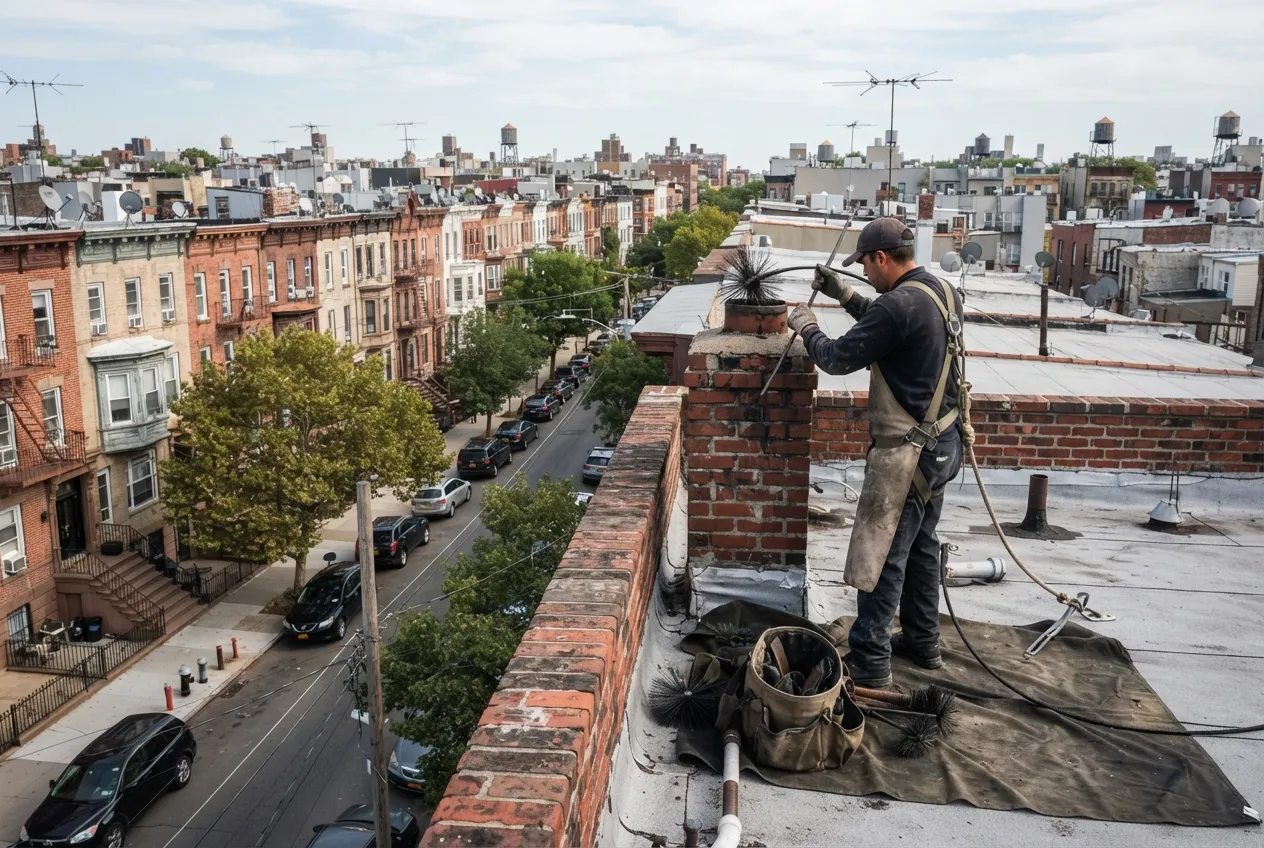
The short answer
Chimney repair in Park Slope usually means fixing worn mortar, cracked crowns, failed flashing, damaged flue liners or deteriorated chimney tops on older brownstones and rowhouses. TrueHearth inspects the chimney first, identifies the cause of the damage, and then repairs it so the chimney vents safely and keeps water out.
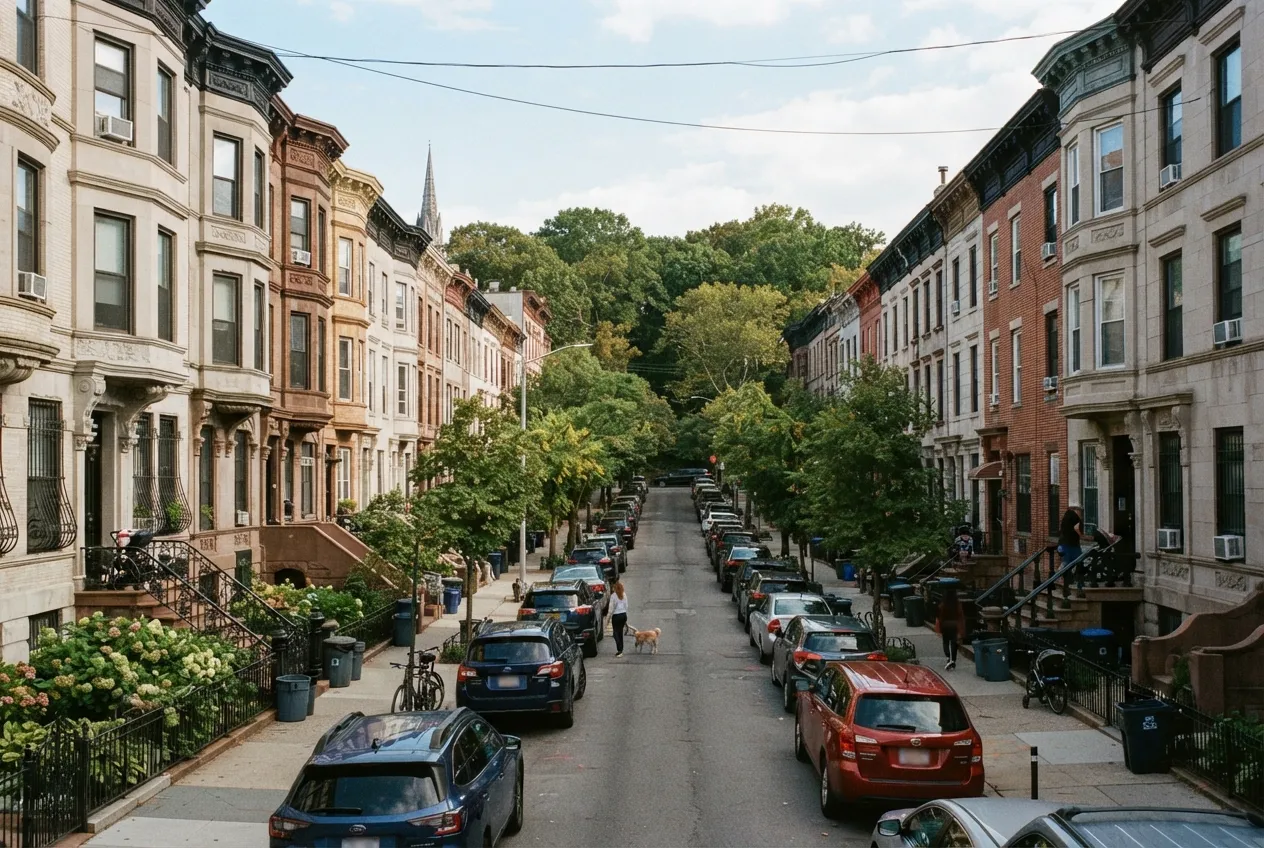
Park Slope's brownstones, rowhouses and pre-war apartment buildings were built with masonry chimneys that have taken decades of freeze-thaw cycles, heating seasons and settling. TrueHearth Chimney Service repairs chimneys throughout Park Slope (ZIP 11217) from our office in Prospect Heights, about a mile away. Our certified technicians start by finding out why the chimney is failing, explain what they see in plain terms, and recommend the repair that addresses the cause. That way you aren't paying to patch the same problem again next year.
Common Chimney Problems in Park Slope Homes
Most chimneys in Park Slope are brick or stone and are shared by several flues in a single stack. Many rise above flat roofs where water can collect, and many sit close to neighboring buildings. That combination puts steady wear on the masonry, the roof connection and the flue lining.
These are the problems we see most often on older Brooklyn masonry:
- Eroded or missing mortar joints that let water into the brick
- Cracked or crumbling chimney crowns that let rain run straight into the chimney
- Spalling brick, where the face of the brick flakes or pops off after freezing
- Failed flashing where the chimney meets the roof, leading to leaks on top-floor ceilings
- Cracked, gapped or missing clay flue tiles
- Missing or rusted chimney caps that let in rain, debris and animals
- Leaning or loose chimney tops above the roofline
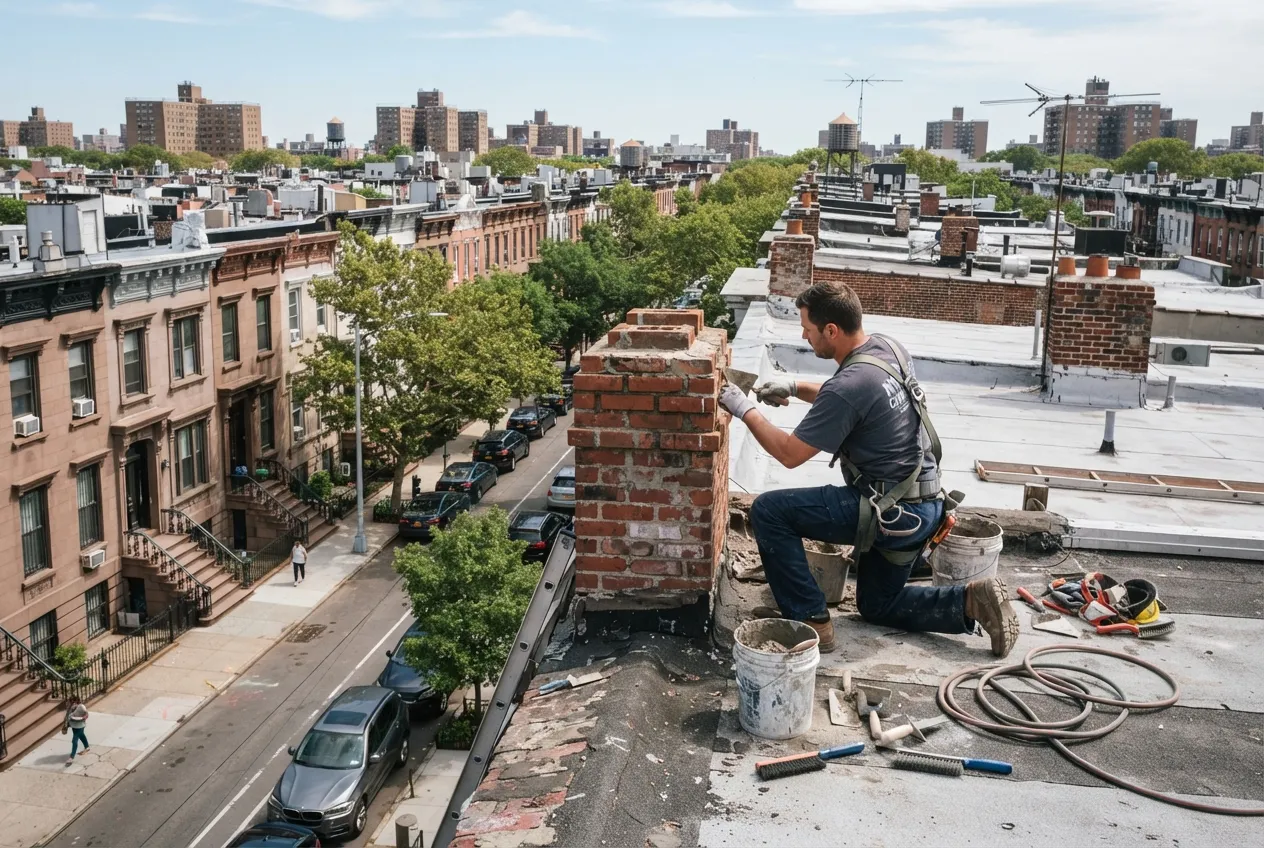
How We Approach a Repair
We start with an inspection, because the visible damage is often only part of the story. A water stain on a ceiling might come from flashing, a cracked crown, porous brick or a broken cap, and each one needs a different fix. Our technicians check the chimney from the roof, look at the firebox and any appliance connections, and examine the flue where it can be reached.
After the inspection, we walk you through what we found, show you photos where possible, and explain which repairs matter for safety and which can wait. Typical work includes repointing mortar joints, rebuilding or resurfacing crowns, replacing damaged brick, resealing or replacing flashing, installing caps, and repairing or relining flues. On attached homes we work carefully around shared walls and neighboring roofs.
Oil-to-Gas Conversions and Flue Liners
Many Park Slope buildings have switched or are planning to switch their boilers from oil to gas. Under New York City requirements, the chimney has to be evaluated as part of that conversion. A new liner is often needed, because gas exhaust produces acidic condensate that can corrode an unlined or tile-lined masonry flue over time.
If your building is converting, we can inspect the chimney, tell you whether the existing flue is suitable, and install a properly sized liner when one is needed. Planning this ahead of the boiler work helps prevent delays.
Time for your annual chimney check?
When to Schedule Chimney Repair
The NFPA 211 standard calls for chimneys, fireplaces and vents to be inspected once a year. Professionals use three levels of inspection. Level 1 applies when nothing about the system has changed. Level 2 applies when something changes, such as a new appliance, a switch of fuel or the sale of the home. Level 3 applies when a hidden hazard can only be reached by opening part of the chimney or the building.
Timing matters in New York City. Heat season runs from October 1 through May 31, when building owners must keep apartments heated to the city's minimum temperatures. A chimney problem found in January can leave a boiler out of service at the worst time. Late spring and summer are good times to inspect and repair, so the heating system is ready before October.
Signs Your Chimney Needs Attention
Call for an inspection if you notice any of the following. Small problems in masonry usually grow, especially after a few winters of freezing and thawing.
- Water stains or peeling paint near the chimney on upper floors
- Brick fragments, mortar sand or tile pieces in the fireplace or on the roof
- White staining on the outside brick
- A smoky smell or poor draft from the fireplace
- Rust on the damper, firebox or cap
More services in Park Slope
- Chimney Sweep in Park Slope
- Chimney Inspection in Park Slope
- Air Duct Cleaning in Park Slope
- Chimney Liner Installation in Park Slope