The short answer
Chimney repair in Fort Greene usually means fixing weathered brick and mortar, cracked crowns, leaking flashing or damaged flue liners on older brownstones and rowhouses. TrueHearth inspects first, shows you what we found, and repairs only what the chimney needs.
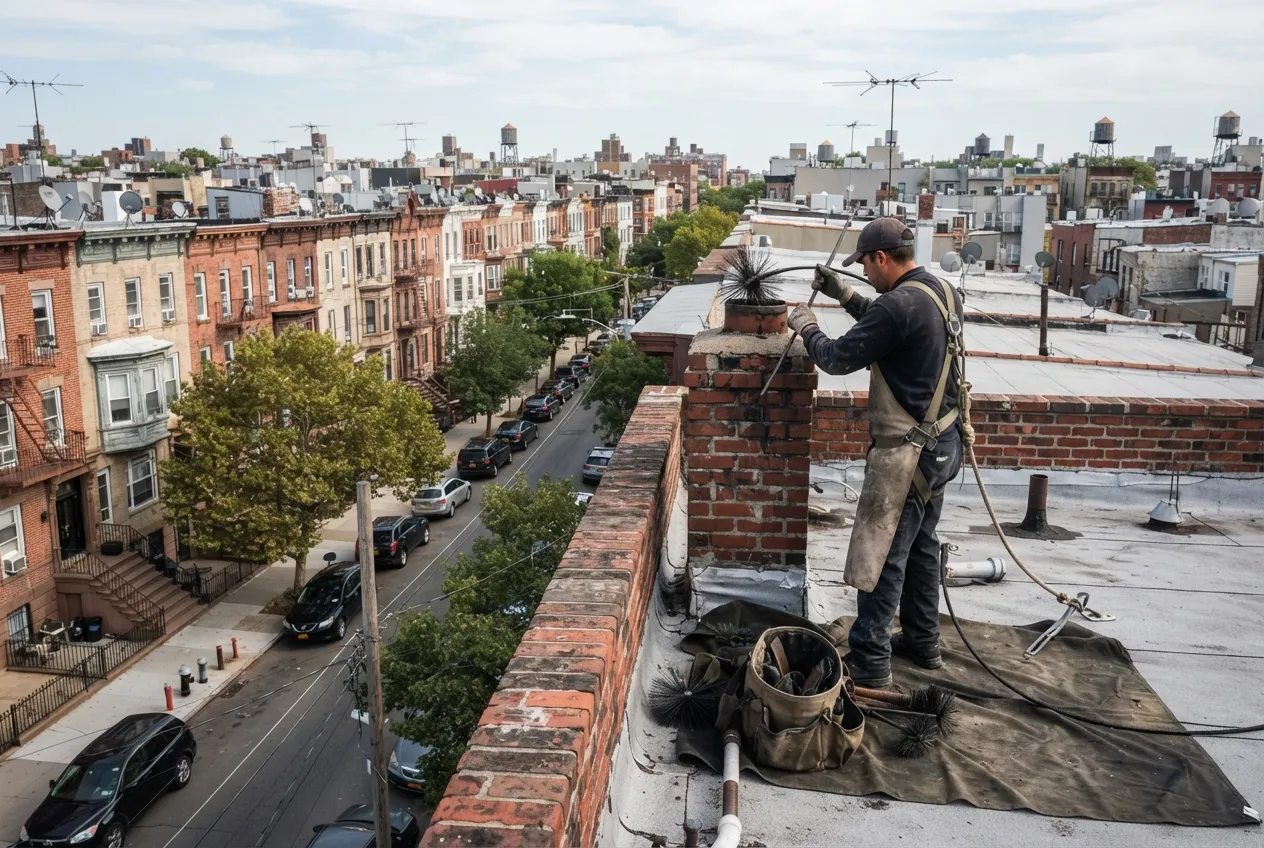
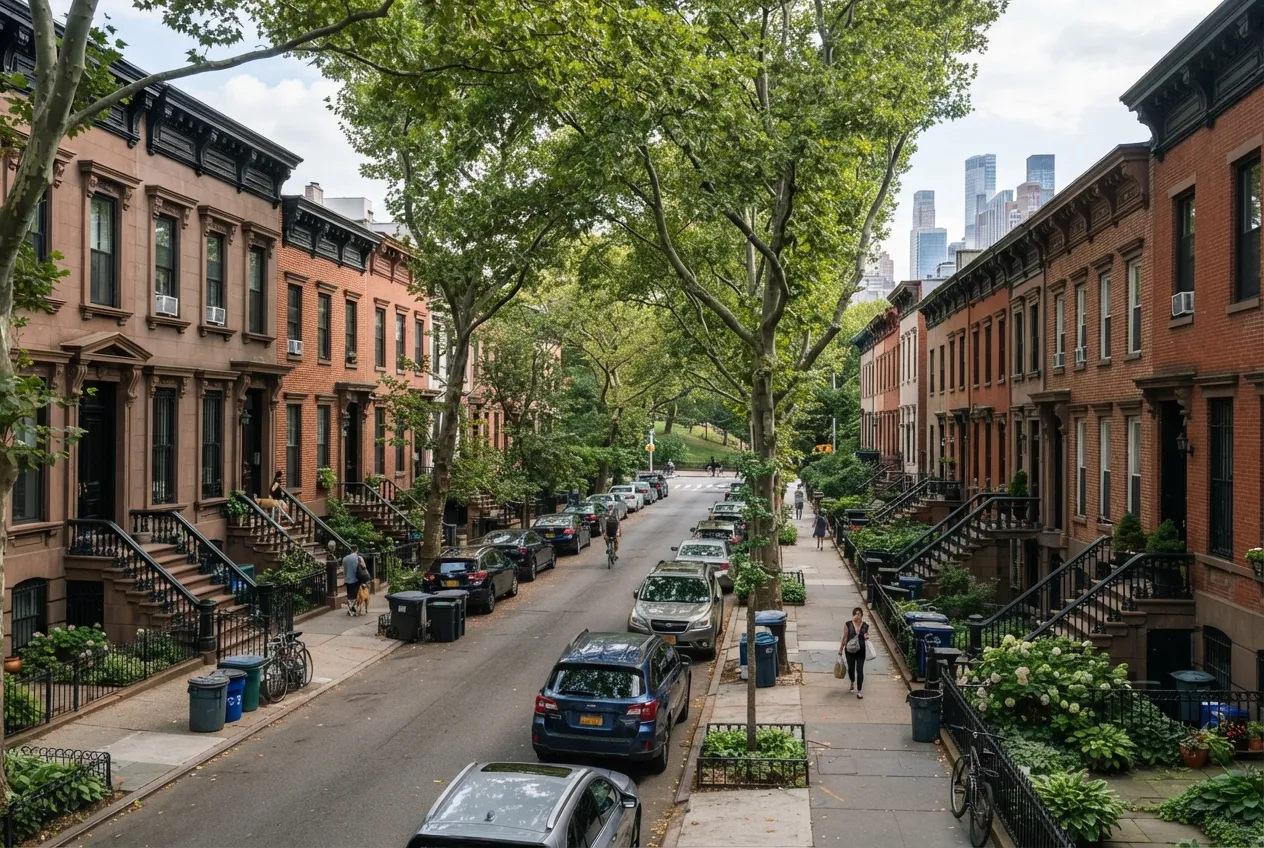
Fort Greene's brownstones, rowhouses and pre-war apartment buildings have chimneys that have been doing their job for a long time, and old masonry eventually needs attention. TrueHearth Chimney Service repairs chimneys throughout Fort Greene (ZIP 11205) from our office in Prospect Heights, about a mile to the southeast. Our certified technicians find out what is actually wrong, explain it in plain terms, and fix the part that needs fixing. That could be a leaking crown, loose brick, failed flashing or a damaged flue.
Chimney Problems We See in Fort Greene Homes
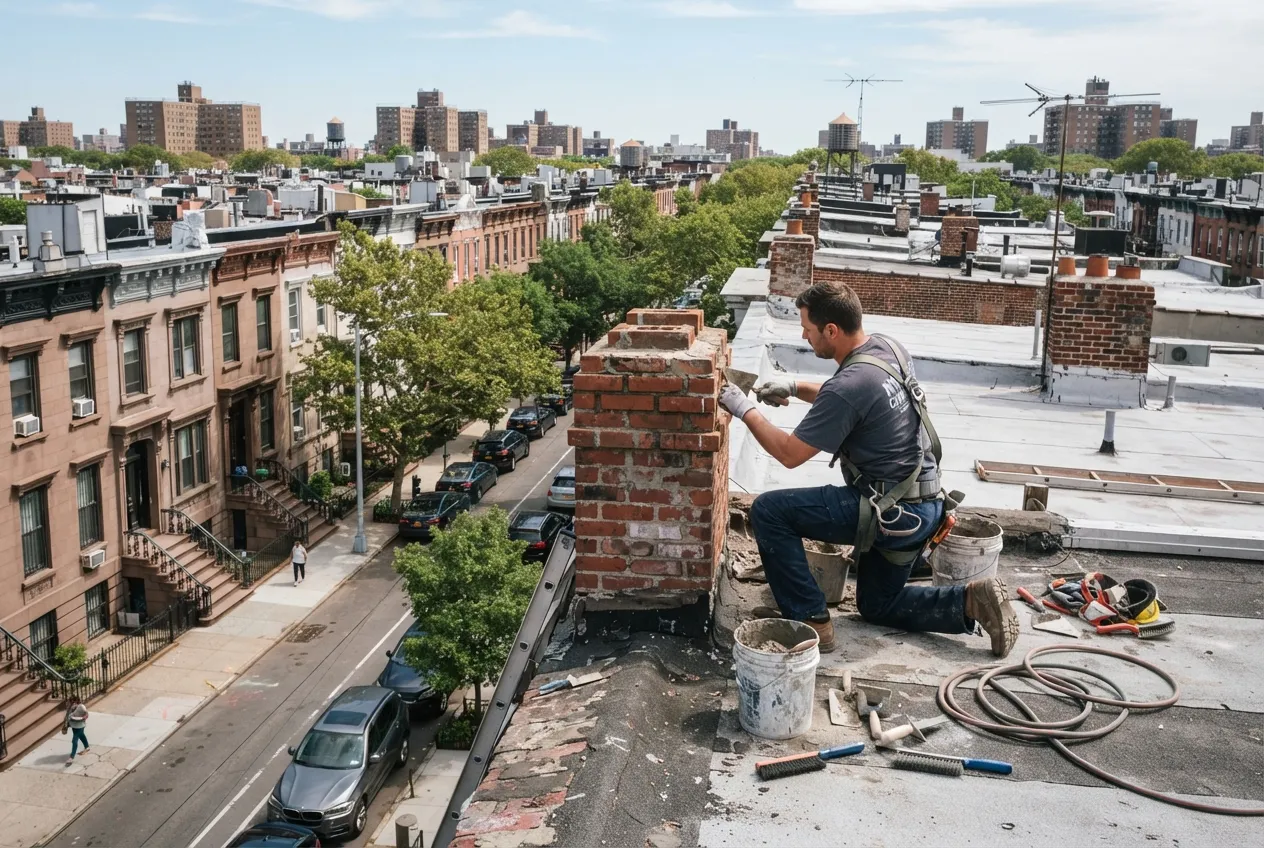
Most chimneys in the neighborhood are brick and run up through party walls or along the back of a rowhouse. Years of freeze-thaw cycles, rain and flue gases wear them down from the outside and the inside. These are the repairs we handle most often:
- Spalling or loose brick near the top of the stack, where weather exposure is worst
- Eroded mortar joints that need repointing before water gets into the wall
- Cracked or crumbling chimney crowns that let rain run down inside the masonry
- Failed flashing where the chimney meets a flat or low-slope roof
- Cracked, gapped or missing flue tiles
- Missing or rusted chimney caps that let in rain, debris and animals
How We Approach a Chimney Repair
Every repair starts with an inspection. The NFPA 211 standard calls for chimneys, fireplaces and vents to be inspected once a year, and it uses three levels. A Level 1 inspection covers a system where nothing has changed. A Level 2 inspection applies when the system changes, such as a new appliance or a switch of fuel, or when the home is sold. A Level 3 inspection is for cases where a hidden hazard can only be reached by opening part of the chimney or building.
After the inspection, we walk you through what we found, with photos of the parts you can't easily see yourself, like the crown, the flashing and the inside of the flue. We separate what needs attention now from what can wait, so you can make a clear decision.
Flue Liners and Oil-to-Gas Conversions
Many older Brooklyn buildings were built for oil or coal heat. When a New York City building converts its boiler from oil to gas, the chimney has to be evaluated as part of the work. A new liner is often needed, because gas exhaust produces acidic condensate that can corrode a masonry flue. If your building is planning a conversion, or has already converted and you aren't sure the chimney was addressed, we can inspect the flue and tell you whether it needs a liner.
A damaged liner on a wood-burning fireplace matters too. Gaps and cracks can let heat and gases reach the surrounding brick and framing. We repair or replace liners so the flue is sized and sealed for the appliance it serves.
Time for your annual chimney check?
Planning Repairs Around Heat Season
New York City's heat season runs from October 1 through May 31, when building owners must keep apartments heated to the city's minimum temperatures. For buildings where the boiler vents through the chimney, the summer and early fall are the easiest times to schedule liner work or major masonry repairs. That way the heating system isn't shut down when tenants are relying on it. If a problem shows up mid-winter, call us anyway. We'll assess it and talk through how to handle it with as little disruption as possible.
Working on Rowhouse and Brownstone Chimneys
Attached homes come with their own details. Chimneys often sit on shared roofs, flues may run alongside a neighbor's, and roof access is usually through a hatch or bulkhead rather than from the street. We plan access before the job starts, protect your roof surface while we work, and keep the work area clean inside the house. If a repair might affect an adjoining building, we tell you up front so you can talk with your neighbor.
Serving Fort Greene and Nearby Neighborhoods
Because Fort Greene is close to our Prospect Heights office, we can get to most homes here without a long wait. We also repair chimneys in Clinton Hill, Downtown Brooklyn, DUMBO, Boerum Hill and Prospect Heights. If you've noticed water stains near the fireplace, brick pieces on the roof, or a smoky or smelly flue, reach out and we'll set up an inspection.
More services in Fort Greene
- Chimney Sweep in Fort Greene
- Chimney Inspection in Fort Greene
- Air Duct Cleaning in Fort Greene
- Chimney Liner Installation in Fort Greene