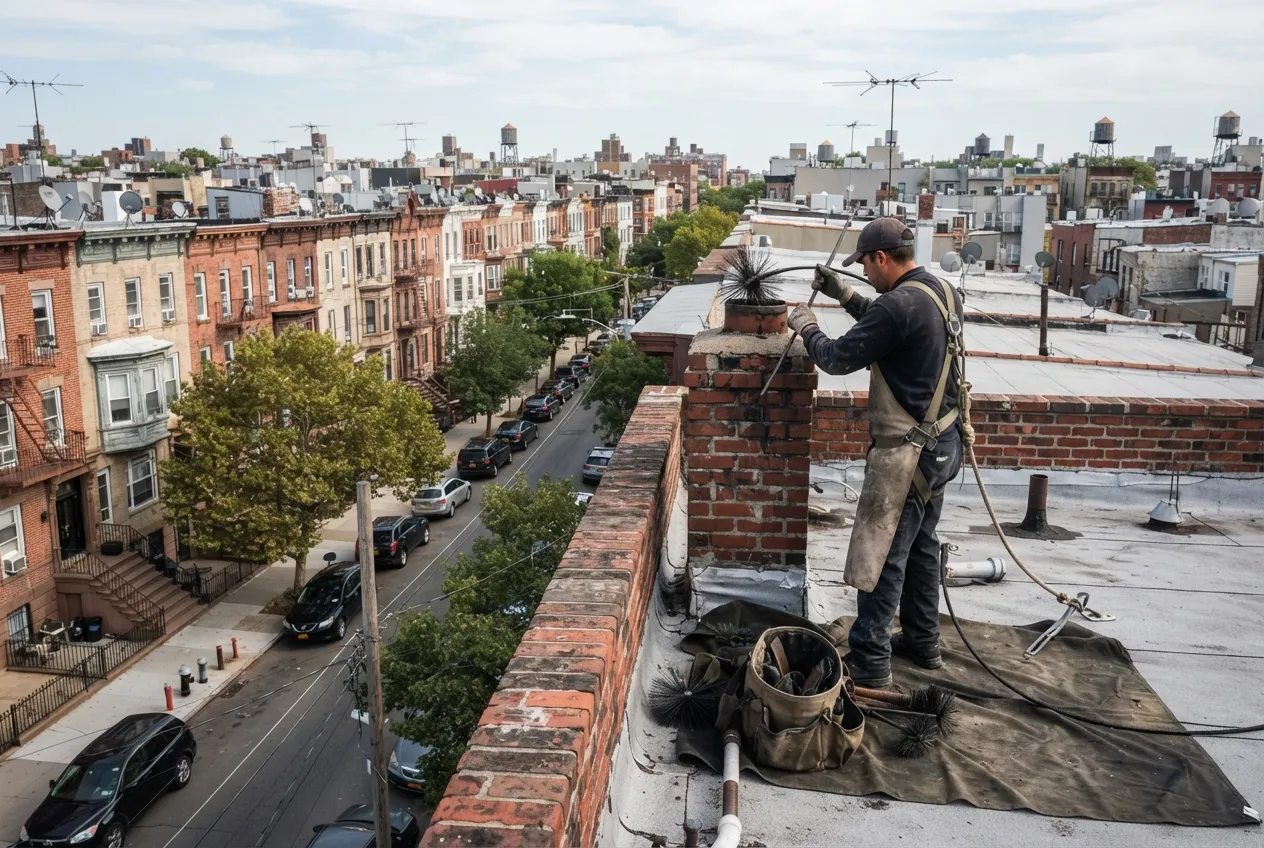
The short answer
Most chimney repairs in Crown Heights involve worn mortar joints, cracked crowns, leaking flashing, or flue liners that are damaged or no longer suit the appliance they serve. TrueHearth's certified technicians inspect the whole chimney first, show you what they found, and explain the repair options before any work starts.
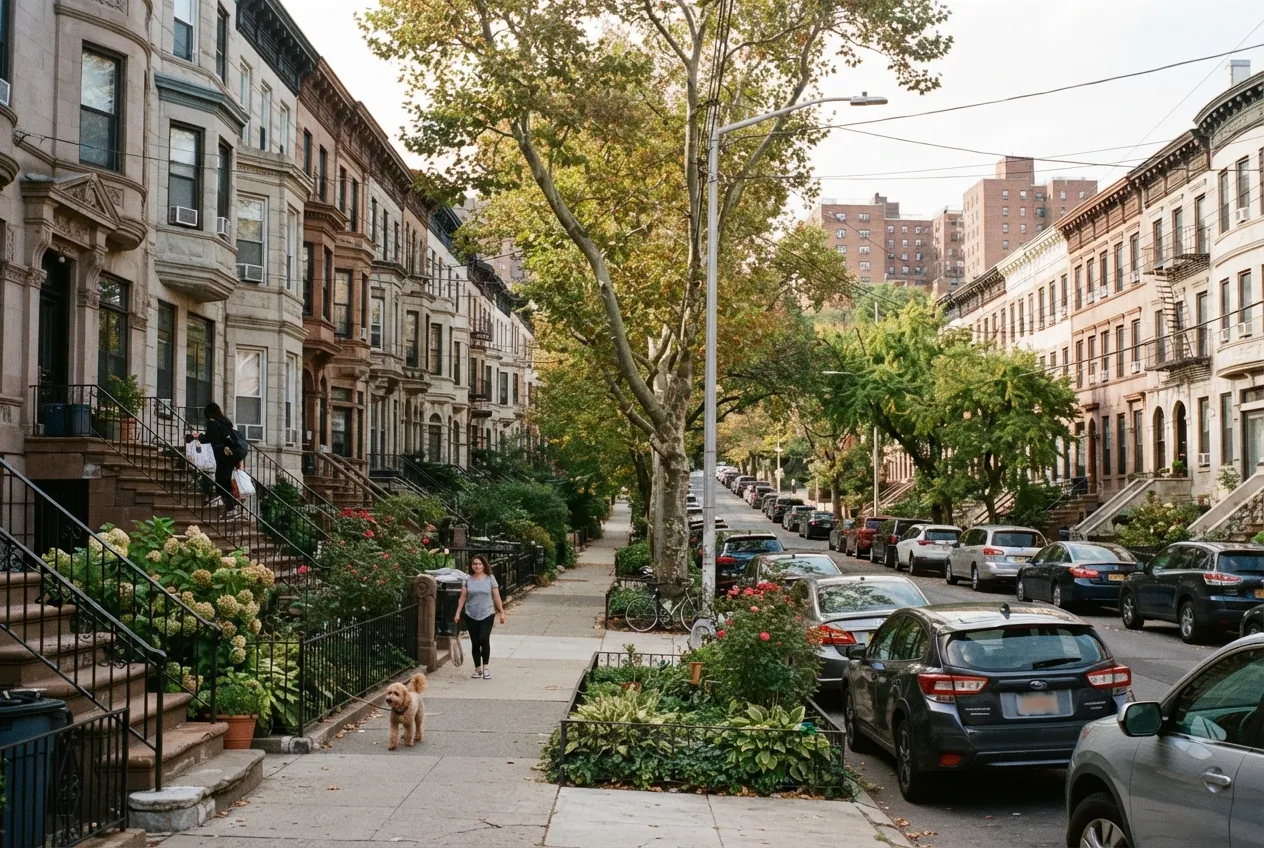
Crown Heights is full of masonry chimneys: brownstones and rowhouses with fireplaces on several floors, pre-war apartment buildings with tall boiler flues, and a smaller number of detached homes. Many of these chimneys have stood for generations, and age, weather and changes in how they're used all take a toll. TrueHearth Chimney Service is based in Prospect Heights, about a mile northwest of Crown Heights, so our certified technicians can get to homes in 11213 quickly to find out what's wrong and repair it. This page explains the repairs we do most often in the neighborhood, why these chimneys break down, and what to expect when you call us.
Chimney Repairs We Handle in Crown Heights
A chimney is a system, and a problem in one part usually shows up somewhere else. Water that gets past a cracked crown can wash out mortar inside the flue, and loose flashing can stain a ceiling two floors down. We look for the source of the problem, not only the symptom.
Common repairs on Crown Heights homes include:
- Repointing eroded or crumbling mortar joints
- Rebuilding or resealing cracked chimney crowns
- Repairing or replacing roof flashing where the chimney meets a flat or pitched roof
- Replacing spalled or broken brick
- Installing or replacing chimney caps to keep out rain, animals and debris
- Repairing or relining damaged flue liners
- Fixing dampers that stick, rust through or don't close
- Parging rough or deteriorated smoke chambers above the fireplace
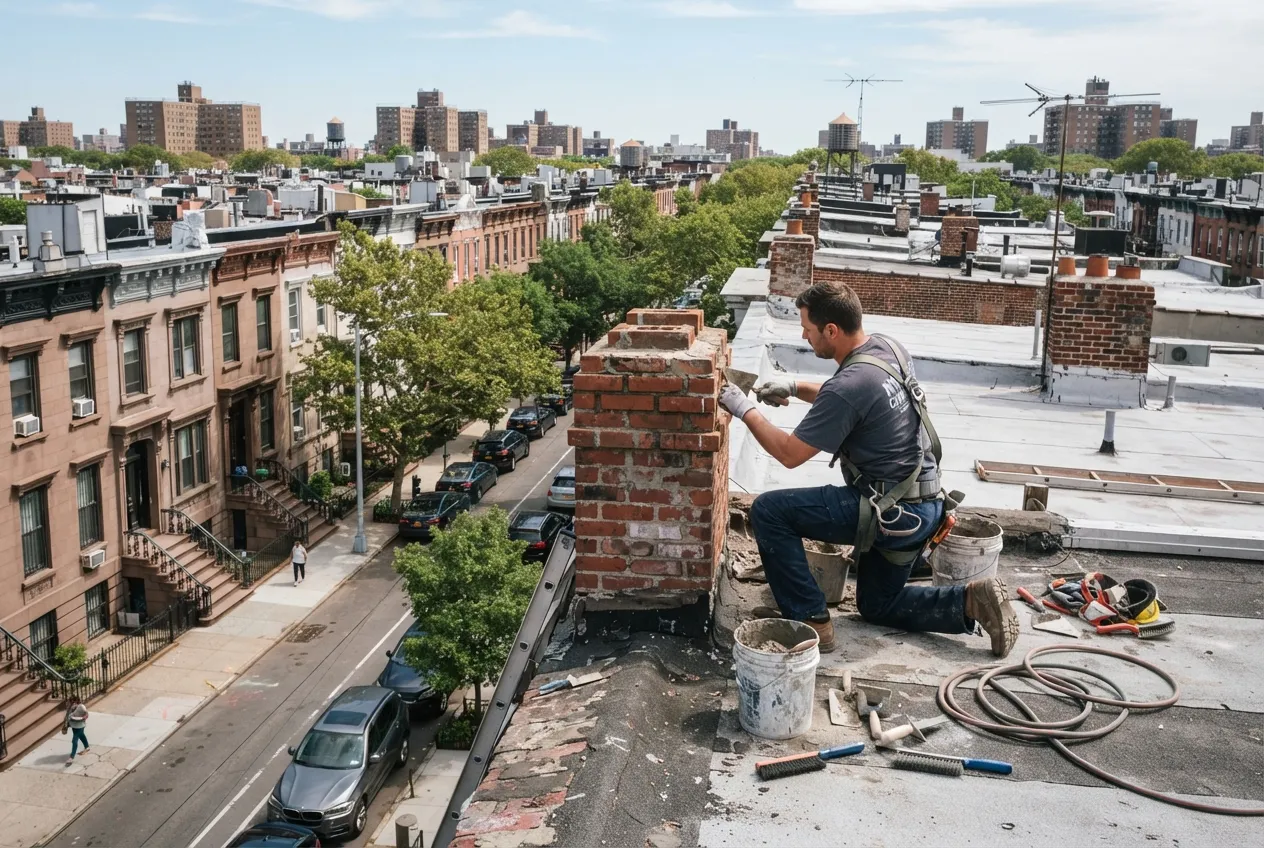
Why Older Brooklyn Chimneys Need Repair
Most chimneys in the neighborhood are brick, and brick and mortar wear out at different rates. Water is the main cause of damage. When rain and snowmelt soak into masonry and then freeze, the expansion opens small cracks a little wider each winter. Over years that turns into loose brick, crumbling joints and leaks.
Rowhouses and brownstones add their own issues. Chimneys often sit on or near shared party walls, so a problem can affect more than one home, and roof access may involve a neighbor's roof. Many houses also have fireplaces that were closed off decades ago while the flue stayed open to weather. In apartment buildings, a single flue may carry exhaust from a boiler that runs much of the year, which puts steady stress on the liner.
Oil-to-Gas Conversions and Chimney Liners
Many Crown Heights buildings have switched or are planning to switch boilers from oil to gas. In New York City, the chimney has to be evaluated as part of that conversion. A new liner is often needed, because gas exhaust produces acidic condensate that can corrode a masonry flue that was built for oil.
If your building is converting, we can inspect the chimney, explain whether the existing flue can stay in use, and install a properly sized liner when one is needed. It helps to bring us in early so the chimney work fits the boiler schedule rather than holding it up.
Time for your annual chimney check?
How We Approach a Chimney Repair
The NFPA 211 standard calls for chimneys, fireplaces and vents to be inspected once a year. It describes three inspection levels: Level 1 when nothing has changed, Level 2 when the system changes, such as a new appliance or a switch of fuel, or when the home is sold, and Level 3 when a hidden hazard can only be reached by opening part of the chimney or building. Before recommending a repair, we choose the level that fits your situation.
We take photos, walk you through what we found, and explain which repairs are urgent and which can wait. Timing matters here. New York City's heat season runs from October 1 through May 31, and building owners must keep apartments heated to the city's minimums during that time. If a boiler flue needs work, we try to plan it so tenants aren't left without heat, ideally before the season starts.
Signs Your Chimney Needs Attention
Call us for an inspection if you notice any of the following:
- Water stains on walls or ceilings near the chimney
- Brick or mortar pieces in the fireplace or on the roof
- White staining on the outside brick
- A damper that won't open or close
- Smoke or odors coming into the room
- Rust on the firebox, damper or chimney cap
- Visible cracks in the crown or leaning masonry
Serving Crown Heights and Nearby Neighborhoods
Crown Heights is close to our Prospect Heights office, and we also do chimney repair in Prospect Lefferts Gardens, Wingate, Bedford-Stuyvesant, Prospect Heights and Clinton Hill. Whether you own a single brownstone or manage a pre-war apartment building, we'll explain the condition of your chimney in plain terms and recommend only the work it actually needs.
More services in Crown Heights
- Chimney Sweep in Crown Heights
- Chimney Inspection in Crown Heights
- Air Duct Cleaning in Crown Heights
- Chimney Liner Installation in Crown Heights