The short answer
TrueHearth Chimney Service repairs masonry, crowns, caps, flashing, dampers and flue liners on Clinton Hill brownstones, rowhouses and pre-war buildings. We inspect first to find the cause, then explain your options before any work starts. Liner work is common after oil-to-gas boiler conversions, when the chimney has to be evaluated anyway.
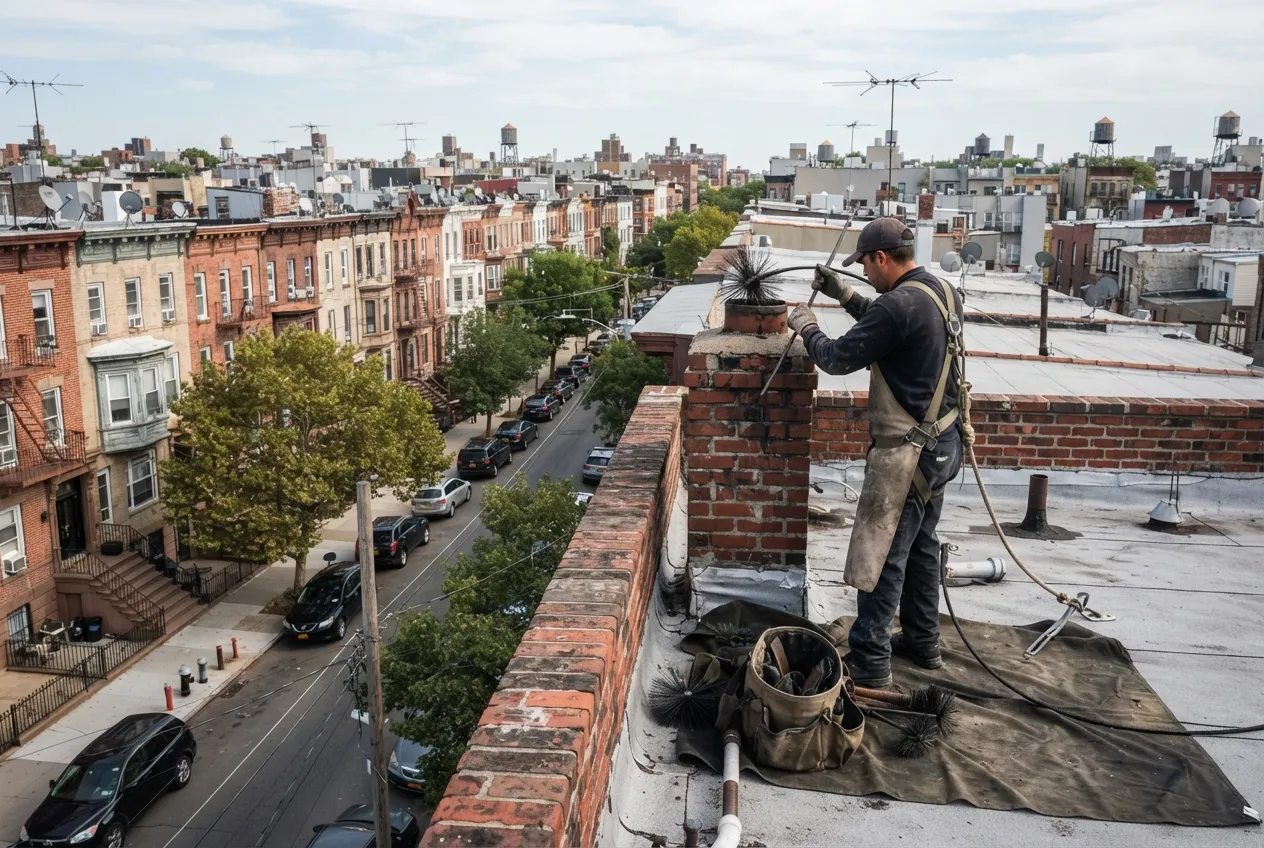
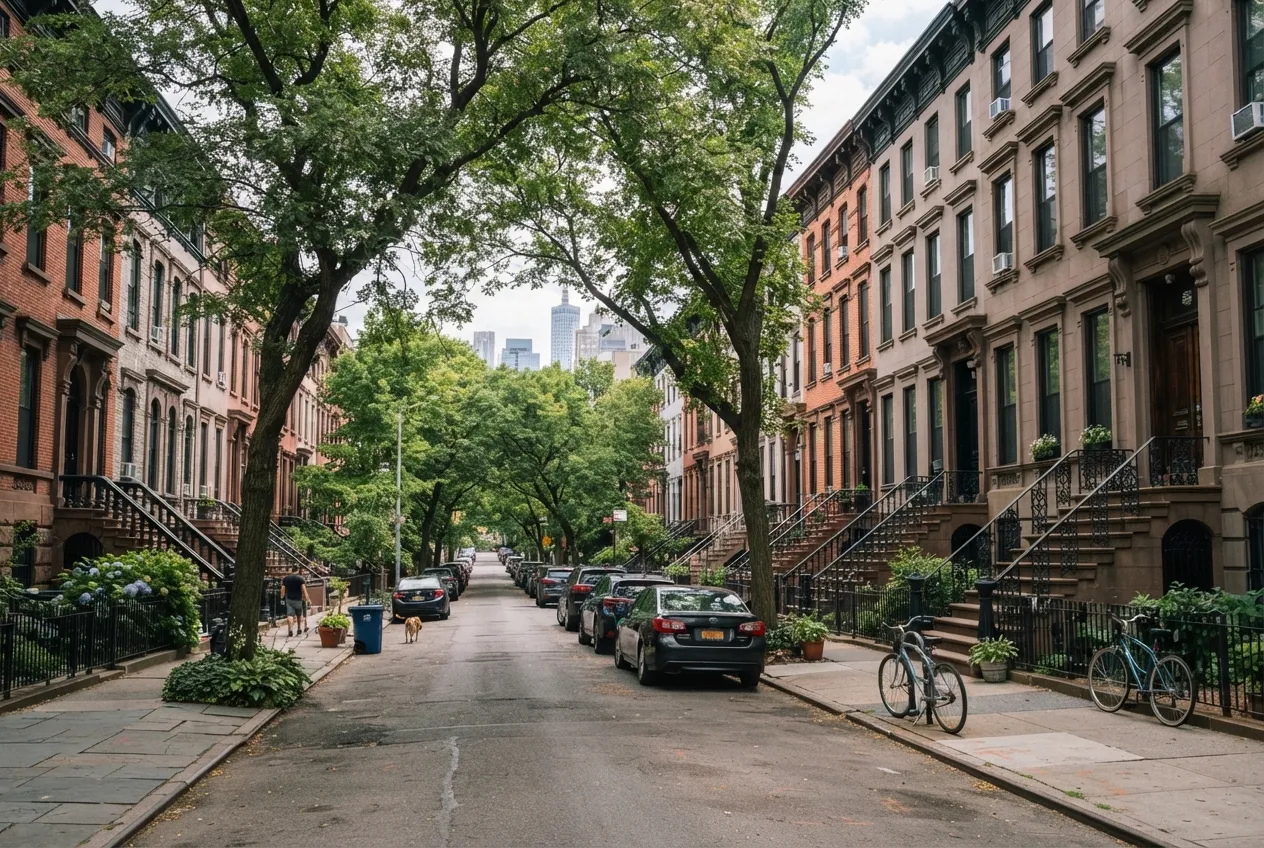
Clinton Hill's brownstones, rowhouses and pre-war apartment buildings rely on masonry chimneys that have been in service for a long time. Brick, mortar, crowns and flue liners wear down from weather, heat and moisture, and small problems tend to grow if they are left alone. TrueHearth Chimney Service repairs chimneys throughout Clinton Hill from our office in Prospect Heights, about a mile to the south. Our certified technicians find the actual cause of the problem, show you what they found, and repair what needs repairing, without padding the job.
Why Clinton Hill Chimneys Need Repair
Most chimneys in the neighborhood are brick and built into attached or closely spaced homes. Over the years, New York winters push water into mortar joints, where it freezes, expands and loosens the brick. A cracked crown or a missing cap lets rain run straight down the flue. Worn flashing where the chimney meets the roof is one of the most common sources of leaks we find on rowhouse roofs.
Inside the flue, heat and combustion byproducts slowly break down clay tile and mortar. In older buildings the liner may be cracked, partly missing, or the wrong size for the heating equipment it now serves. These problems are hard to see from the ground, so they often go unnoticed until something else shows up.
- Water stains on ceilings or walls next to the chimney
- Crumbling mortar, loose bricks or bits of masonry on the roof
- Flaking or white staining on the outside brick
- Pieces of tile or debris in the fireplace or cleanout
- A damper that sticks, won't close, or lets in drafts
- Smoke or odors coming back into the room
Repairs We Handle
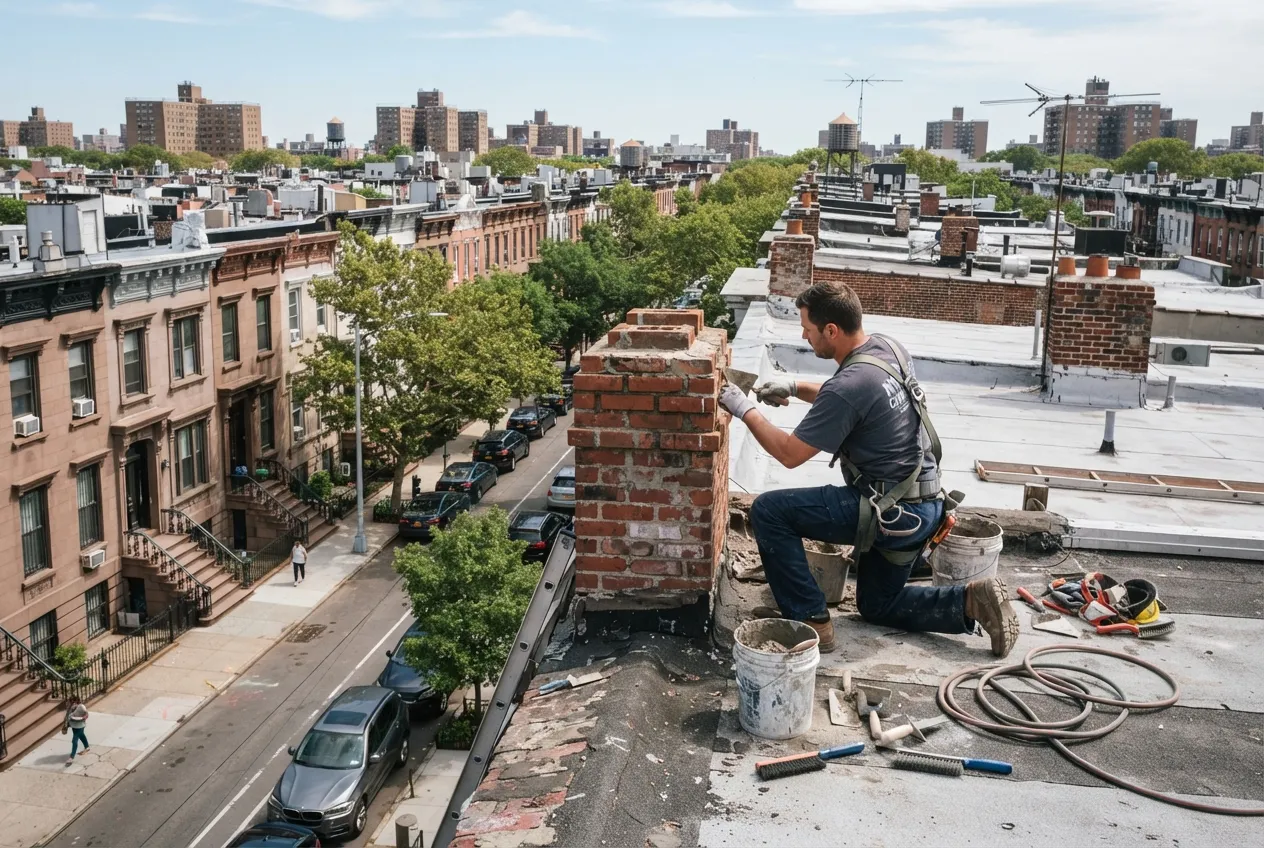
Every chimney is different, but most repairs in Clinton Hill fall into a few categories. We match the repair to the problem rather than recommending a full rebuild when targeted work will do.
- Repointing: removing and replacing failed mortar joints
- Crown repair or rebuilding to shed water away from the flue
- Chimney cap installation to keep out rain, debris and animals
- Flashing repair and replacement at the roofline
- Flue liner repair and relining for fireplaces and heating appliances
- Damper repair, replacement, or top-sealing dampers
- Firebox and smoke chamber repair
- Breathable water repellent for exposed masonry
Oil-to-Gas Conversions and Flue Liners
Many pre-war buildings and brownstones in the area have switched or are planning to switch their boilers from oil to gas. When a New York City building converts from oil to gas, the chimney has to be evaluated as part of the work. A new liner is often needed, because gas exhaust produces acidic condensate that can corrode a masonry flue that was fine under oil.
If a conversion is in your plans, we can evaluate the chimney early so the liner is sized and installed to suit the new equipment. That helps keep the project on schedule and avoids finding a flue problem after the boiler is already in.
Time for your annual chimney check?
How a Repair Visit Works
We start with an inspection. The NFPA 211 standard calls for chimneys, fireplaces and vents to be inspected once a year, and professionals use three levels. A Level 1 inspection fits when nothing has changed. A Level 2 inspection, which includes a camera look inside the flue, applies when the system changes, such as a new appliance or a fuel switch, or when the home is sold. A Level 3 inspection is reserved for hidden hazards that can only be reached by opening part of the chimney or building.
After the inspection, we walk you through what we found, with photos when they help, and explain which repairs are urgent and which can be planned. Once you approve the work, we protect your floors and furnishings, keep the work area tidy, and clean up when we're done.
Planning Around Heat Season
New York City's heat season runs from October 1 through May 31, when building owners must keep apartments heated to the city's minimum temperatures. If you own a multi-unit building, a boiler flue problem during those months is something to deal with right away. When possible, schedule liner and masonry work for late spring or summer so the heating system is ready before October.
We also serve nearby Fort Greene, Prospect Heights, South Williamsburg, Downtown Brooklyn and DUMBO, so if you own property in more than one of these neighborhoods, we can coordinate the visits.
More services in Clinton Hill
- Chimney Sweep in Clinton Hill
- Chimney Inspection in Clinton Hill
- Air Duct Cleaning in Clinton Hill
- Chimney Liner Installation in Clinton Hill