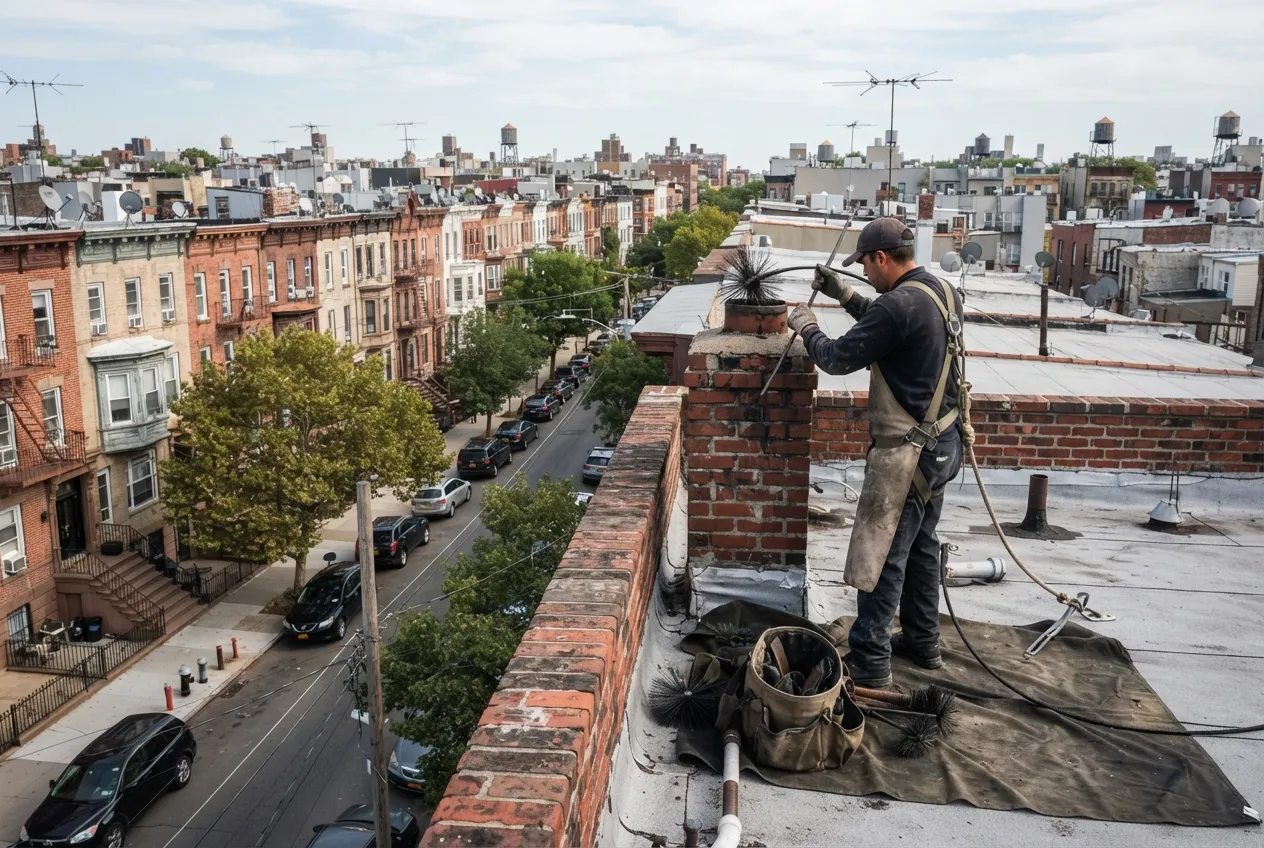

The short answer
Bedford-Stuyvesant homeowners should clean their air ducts when there is visible mold, evidence of vermin, or excessive dust and debris in the system. That matches the guidance from the U.S. EPA. TrueHearth's certified technicians inspect first and tell you plainly whether a cleaning is needed in your brownstone, rowhouse or apartment.
Air duct cleaning in Bedford-Stuyvesant is worth doing when there is a clear reason for it, such as mold you can see inside the ducts, signs of mice or insects, or heavy dust blowing out of the registers. TrueHearth Chimney Service is based in Prospect Heights, about a mile west of Bed-Stuy. Our certified technicians clean ducted heating and cooling systems in brownstones, rowhouses, pre-war apartments and detached homes in ZIP codes 11216 and 11221. This page covers when cleaning makes sense, how the ductwork in local homes is usually laid out, what we do during a visit, and what to watch out for when you hire anyone for this work.
When Air Duct Cleaning Makes Sense
The U.S. EPA advises cleaning air ducts in three situations: substantial visible mold growth, vermin, or excessive dust and debris. The EPA also says duct cleaning has not been shown to prevent health problems. We take that seriously, so we won't promise that a cleaning will cure allergies or headaches. What a cleaning does is remove material that shouldn't be in your system.
These are the signs we look for in Bed-Stuy homes:
- Mold growth you can actually see on duct surfaces or around registers, not just a musty smell
- Droppings, nesting material or insects in the ductwork. Older attached homes often have gaps and shared walls that pests can travel through.
- Dust or debris that puffs out of the registers when the system starts up
- Construction dust left behind after a renovation, a gut job or floor refinishing
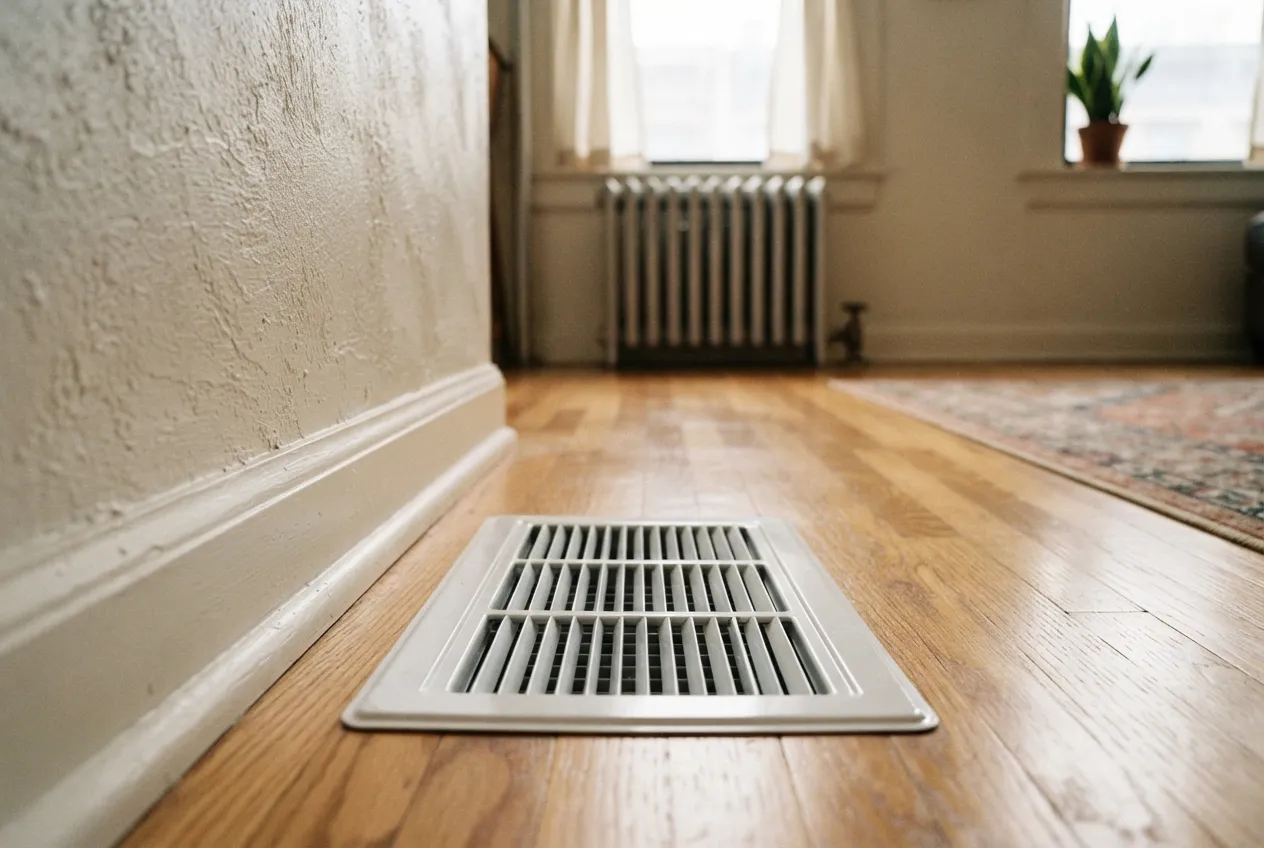
Ductwork in Bed-Stuy Brownstones and Rowhouses
Many homes in Bedford-Stuyvesant were built long before central air existed. Their ductwork was usually added later, during a renovation, a conversion to separate units, or an HVAC upgrade. Those runs are often squeezed into closets, dropped ceilings, cellar ceilings and top-floor crawlspaces. The result is a lot of flexible duct, tight bends and joints where dust and debris tend to collect.
Pre-war apartment buildings and detached homes vary even more. Some have a separate system for each unit, and others share equipment. We start by figuring out the layout and where we can safely get into the system. Then we tell you what we can reach and what we can't before any cleaning begins.
What Our Cleaning Involves
A typical visit follows these steps:
- Inspect the registers, return grilles and accessible duct sections, and show you what we find
- Cover floors and furniture near the work areas
- Put the system under negative pressure with a vacuum, then work brushes and air whips through the supply and return runs
- Remove and clean the registers and grilles
- Check the blower area and filter slot where we can reach them, and recommend the right filter
- Walk you through photos of what came out and point out any problems, such as disconnected or crushed duct
Time for your annual chimney check?
Be Careful With Chemical Treatments and Cheap Offers
The EPA warns homeowners to research the process before responding to very cheap advertised duct cleaning offers. It also urges caution with chemical treatments. We don't spray sanitizers, deodorizers or sealants into your ducts by default. If we find mold, the first step is to find the moisture source that caused it. Cleaning alone won't solve that. If a product might help, we'll explain what it is and why before using it, and the decision is yours.
Timing Around Heat Season and Dryer Vents
New York City's heat season runs from October 1 through May 31. If your home uses forced-air heat, try to schedule duct cleaning outside those months, or at least on a mild day, so the system isn't off when you need it.
If you have a clothes dryer, ask us to check its vent during the same visit. The U.S. Fire Administration identifies failure to clean as the leading factor contributing to home clothes dryer fires. In rowhouses, dryer vents often run a long way to reach an exterior wall, and lint builds up along that path.
Serving Bed-Stuy and Nearby Neighborhoods
Our office in Prospect Heights is about a mile from Bedford-Stuyvesant, so homes in 11216 and 11221 are close by for us. We also clean air ducts in Crown Heights, Clinton Hill, South Williamsburg, Prospect Heights and Fort Greene.
More services in Bedford-Stuyvesant
- Chimney Sweep in Bedford-Stuyvesant
- Chimney Inspection in Bedford-Stuyvesant
- Chimney Repair in Bedford-Stuyvesant
- Chimney Liner Installation in Bedford-Stuyvesant