The short answer
Downtown Brooklyn chimneys most often need repairs to mortar, crowns, flashing, caps and flue liners, especially on older brick buildings and boiler flues after an oil-to-gas conversion. TrueHearth inspects first, shows you what we find, and recommends the repair that fixes the cause rather than just the symptom.
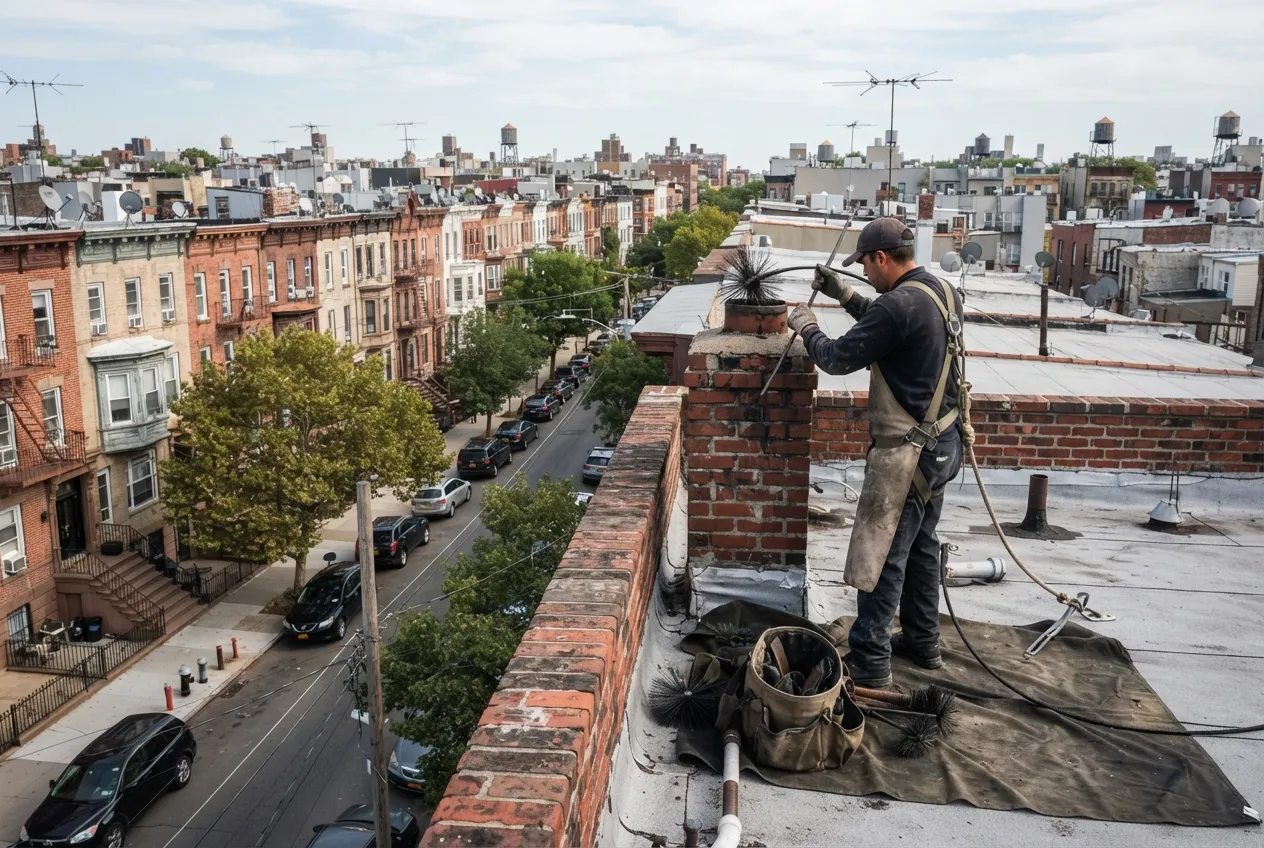
Chimney repair in Downtown Brooklyn usually means working on older masonry: brick chimneys on brownstones and rowhouses, and taller flues serving boilers in pre-war apartment buildings. Freeze-thaw cycles, wind on exposed rooftops, and years of combustion gases wear down mortar, crowns, flashing and flue liners. TrueHearth Chimney Service sends certified technicians from our Prospect Heights office, about 2 miles away, to find the actual cause of a problem and fix it. That might be a cracked crown letting water into a top-floor ceiling or a deteriorated liner on a boiler flue.
Chimney Repairs We Handle in Downtown Brooklyn
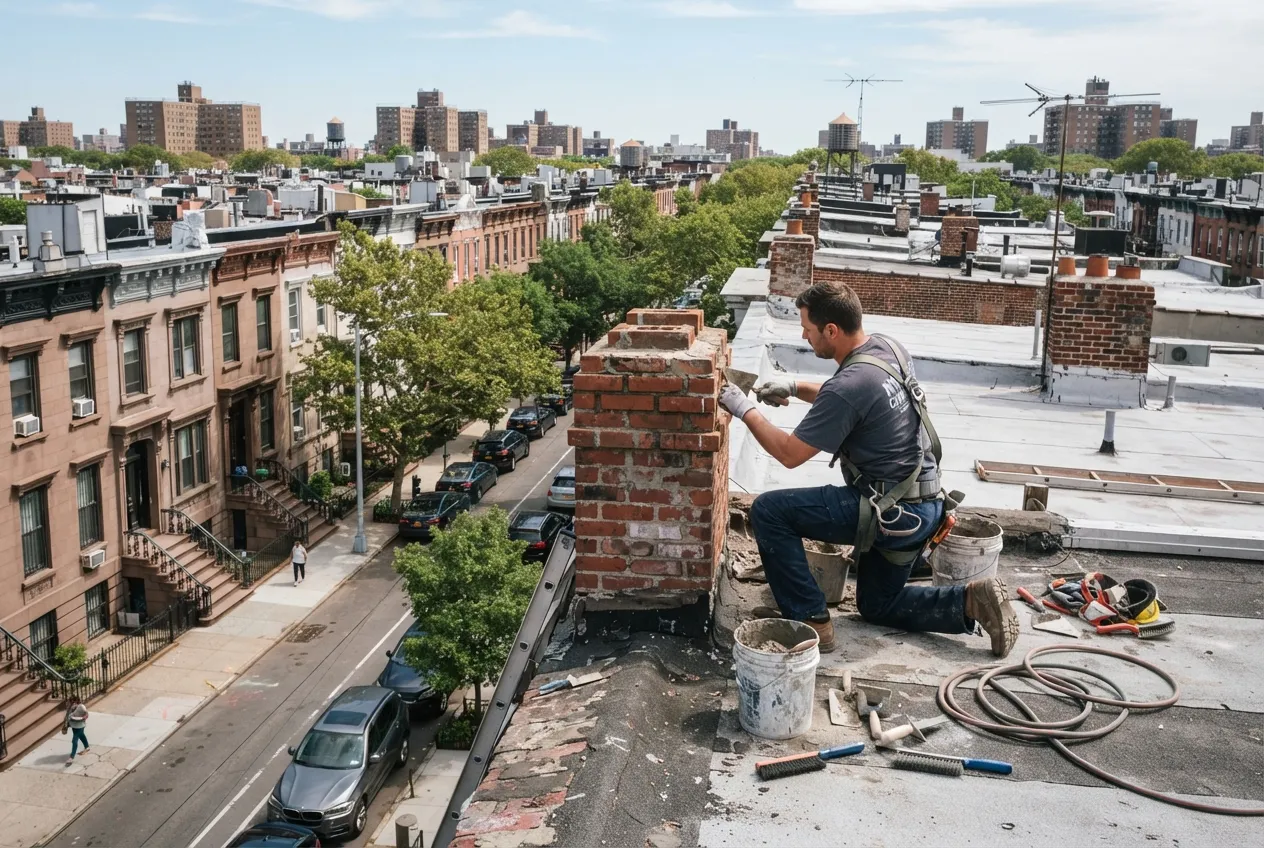
Most chimneys in this neighborhood are brick, and many were built long before modern liner systems. The repairs we take on include:
On attached rowhouses and brownstones, chimneys are often shared or run along a party wall, so we check how your flue relates to neighboring flues before recommending work. In apartment buildings, we coordinate roof and boiler room access with building management or the superintendent.
- Repointing loose or eroded mortar joints
- Rebuilding or resealing cracked chimney crowns
- Replacing damaged chimney caps to keep out rain, birds and debris
- Repairing or replacing flashing where the chimney meets the roof
- Relining flues with liner systems suited to the appliance they serve
- Rebuilding deteriorated brick above the roofline
- Repairing firebox and smoke chamber damage in working fireplaces
Signs Your Chimney Needs Repair
Chimney damage often shows up inside the home before anyone looks at the roof. Schedule an inspection if you notice:
A visible symptom doesn't always point to where the damage is. A ceiling leak near the chimney can come from flashing, the crown or porous brick, and each one needs a different fix. That's why we trace the problem before quoting any work.
- Water stains on ceilings or walls near the chimney, especially on top floors
- Crumbling mortar, loose bricks, or brick fragments on the roof or in the firebox
- White, chalky staining on exterior brick
- Rust on the damper, cap or firebox
- Flakes of tile or masonry collecting in the fireplace or boiler cleanout
- Smoke or odors drifting into rooms instead of drawing up the flue
Oil-to-Gas Conversions and Flue Liners
Many Downtown Brooklyn buildings heat with boilers, and some are converting from oil to gas. When a New York City building makes that switch, the chimney has to be evaluated as part of the work. A new liner is often needed, because gas exhaust produces acidic condensate that can corrode a masonry flue.
If you're planning a conversion, bring us in early so the liner size and material match the new boiler or water heater. If a conversion was done years ago without relining, signs like spalling brick, falling debris in the cleanout, or moisture at the base of the chimney are worth having checked.
Time for your annual chimney check?
Why We Inspect Before We Repair
The NFPA 211 standard calls for chimneys, fireplaces and vents to be inspected once a year, and chimney professionals use three inspection levels. Level 1 fits when nothing about the system has changed. Level 2 applies when something changes, such as a new appliance or a switch of fuel, or when the home is sold. Level 3 is used when a hidden hazard has to be reached by opening part of the chimney or building.
For repair work, we use the level that matches your situation, then walk you through what we found with photos and explain the repair options in plain terms before any work begins.
Planning Repairs Around Heat Season
New York City's heat season runs from October 1 through May 31, when building owners must keep apartments heated to the city's minimum temperatures. For landlords and co-op or condo boards, a boiler flue problem in the middle of winter is a serious disruption. Scheduling liner and masonry repairs in late spring or summer leaves time for materials, any permits the job requires, and weather-dependent work like mortar curing. Homeowners with fireplaces benefit from the same timing, since the chimney is ready before the first cold night.
Serving Downtown Brooklyn and Nearby Neighborhoods
We work throughout Downtown Brooklyn, ZIP code 11201, and in the surrounding neighborhoods of DUMBO, Boerum Hill, Fort Greene, Clinton Hill and Prospect Heights, where our office is located. Whether you own a single brownstone or manage a pre-war apartment building, we'll schedule a visit, inspect the chimney, and give you a clear repair plan.
More services in Downtown Brooklyn
- Chimney Sweep in Downtown Brooklyn
- Chimney Inspection in Downtown Brooklyn
- Air Duct Cleaning in Downtown Brooklyn
- Chimney Liner Installation in Downtown Brooklyn