The short answer
Yes, TrueHearth Chimney Service serves Cobble Hill (ZIP 11231), about 2 miles west of our Prospect Heights office. We sweep, inspect, repair, reline and waterproof chimneys, and we clean dryer vents and air ducts in the neighborhood's brownstones, rowhouses and pre-war buildings.
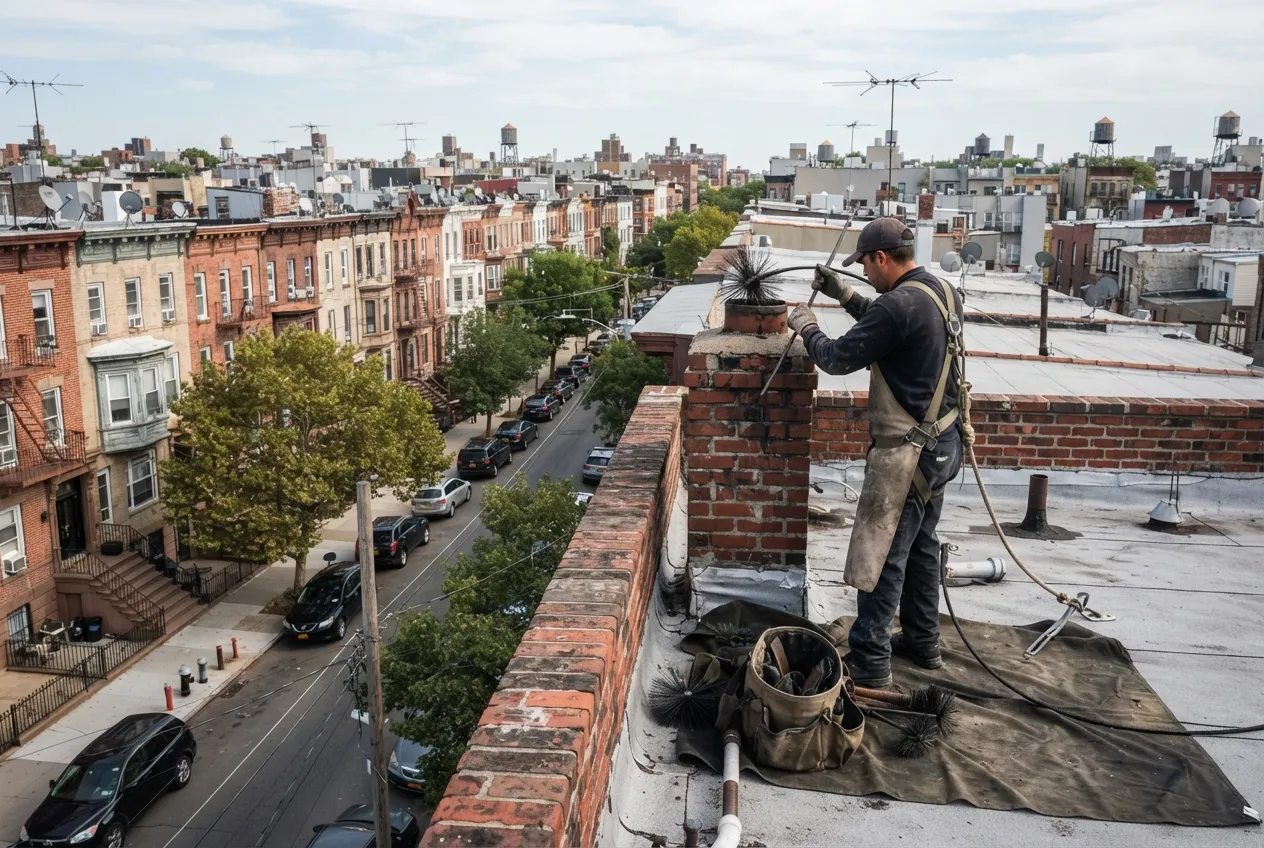
Cobble Hill is about 2 miles west of our Prospect Heights office, so getting a crew to ZIP code 11231 is a short trip across Brooklyn. TrueHearth Chimney Service provides chimney sweeping, inspections, repairs and liners, along with dryer vent and air duct cleaning, for homeowners and building owners throughout the neighborhood. Our technicians are certified. Most homes here are brownstones, rowhouses and pre-war apartment buildings, and their chimneys and vents tend to need the same kinds of care. This page covers what we usually find, what we recommend, and how to plan your work around the heating season.
Chimneys in Cobble Hill's Older Homes
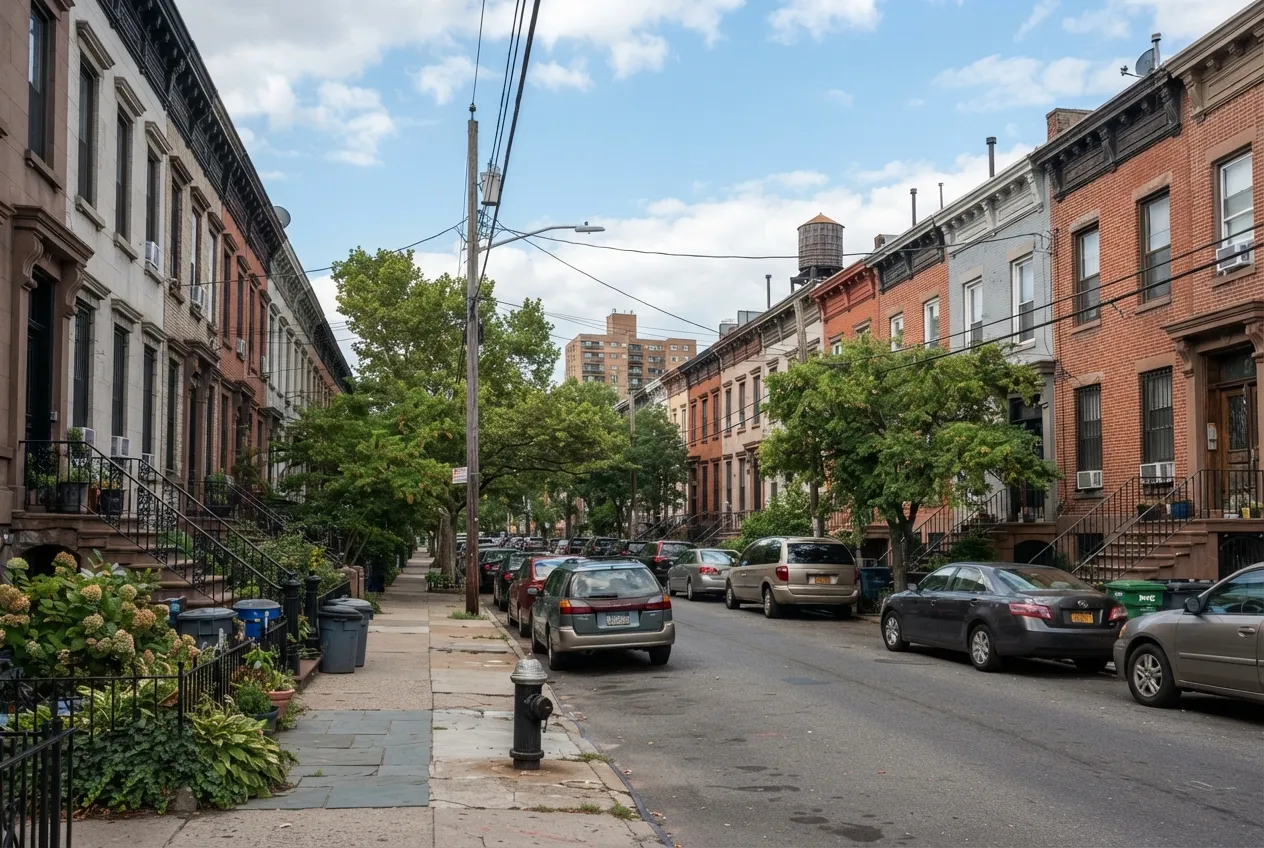
Brownstones and rowhouses in Cobble Hill often have several flues in one chimney stack. Some serve fireplaces on different floors, and one usually serves the boiler or furnace. Over the decades, many of those fireplaces have been closed off, reopened or converted. From inside the house, it isn't always clear which flue goes where or what condition it is in.
Shared walls add another layer. In an attached home, the chimney may sit in a party wall or run alongside a neighbor's flue, so cracked mortar or a failing liner can affect more than your own rooms. In pre-war apartment buildings, the main concerns are usually the boiler flue and the vents serving laundry rooms and individual units.
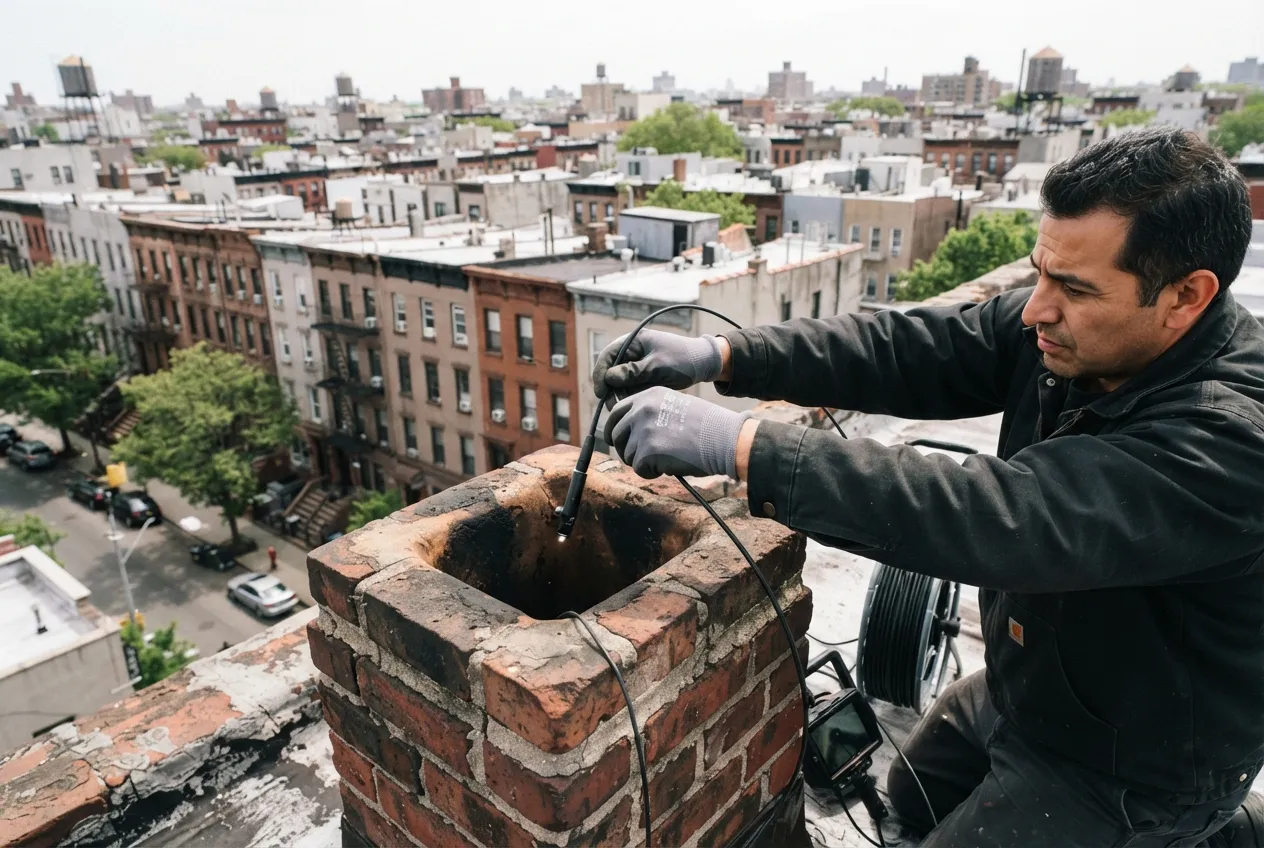
Before we recommend any work, we look at the whole system: firebox, damper, smoke chamber, flue, crown and cap. That way you know exactly what you have.
How Brooklyn's Weather Wears on Masonry
New York winters swing above and below freezing again and again. When water soaks into brick, mortar or a cracked chimney crown and then freezes, it expands and pushes the masonry apart. Each cycle widens the gaps a little more. That is why a small crack in the fall can become loose or flaking brick by spring. Wind-driven rain from coastal storms and nor'easters soaks chimney stacks exposed above the roofline. Humid summers keep moisture in the flue, where it mixes with soot and creosote and causes strong odors.
- Chimney caps and chase covers keep rain, snow, birds and squirrels out of the flue
- Crown repair seals the top of the chimney, where water most often gets in
- Breathable waterproofing sheds rain while letting the masonry release moisture
- Repointing and partial rebuilding replace mortar and brick that freezing has already damaged
Oil-to-Gas Conversions and Chimney Liners
Many older Brooklyn buildings have switched, or plan to switch, from oil heat to gas. When a New York City building converts its boiler from oil to gas, the chimney has to be evaluated as part of the work. A new liner is often needed, because gas exhaust produces acidic condensate that can corrode a masonry flue.
We inspect the existing flue, check whether it suits the new appliance, and install a liner when one is needed. If you are working with a heating contractor, we can handle the chimney side so the timing lines up.
Time for your annual chimney check?
Planning Around Heat Season and Yearly Inspections
New York City's heat season runs from October 1 through May 31. During those months, building owners must keep apartments heated to the city's minimum temperatures, so a boiler flue problem in midwinter is more than an inconvenience. Booking an inspection and cleaning in late summer or early fall leaves time to finish repairs before the boiler runs full-time.
The NFPA 211 standard calls for chimneys, fireplaces and vents to be inspected once a year. A Level 1 inspection fits when nothing has changed. A Level 2 inspection applies when the system changes, such as a new appliance or a switch of fuel, or when the home is sold. A Level 3 inspection is for hidden hazards that can only be reached by opening part of the chimney or building.
Dryer Vents and Air Ducts
According to the U.S. Fire Administration, failure to clean is the leading factor contributing to clothes dryer fires in homes. In rowhouses and apartments, dryer vents often run long distances or through tight spaces before reaching the outside, which lets lint build up. If loads take longer to dry than they used to, or the laundry area feels hot, have the vent checked.
For air ducts, we follow the EPA's guidance. Cleaning makes sense when there is substantial visible mold growth, vermin, or excessive dust and debris. Duct cleaning has not been shown to prevent health problems, and we are careful with chemical treatments. We'll give you a straight answer about whether your ducts actually need cleaning.
Nearby Neighborhoods We Serve
Besides Cobble Hill, our crews regularly work in Boerum Hill, Downtown Brooklyn, DUMBO, Park Slope and Fort Greene. The same services and scheduling are available throughout these neighborhoods.
ZIP codes we serve
- 11231