The short answer
Yes, TrueHearth Chimney Service serves Bushwick, Brooklyn (ZIP 11237) from our Prospect Heights office about 3 miles away. We sweep, inspect, repair, reline and rebuild chimneys, and we clean dryer vents and air ducts in rowhouses, brownstones, apartment buildings and detached homes.
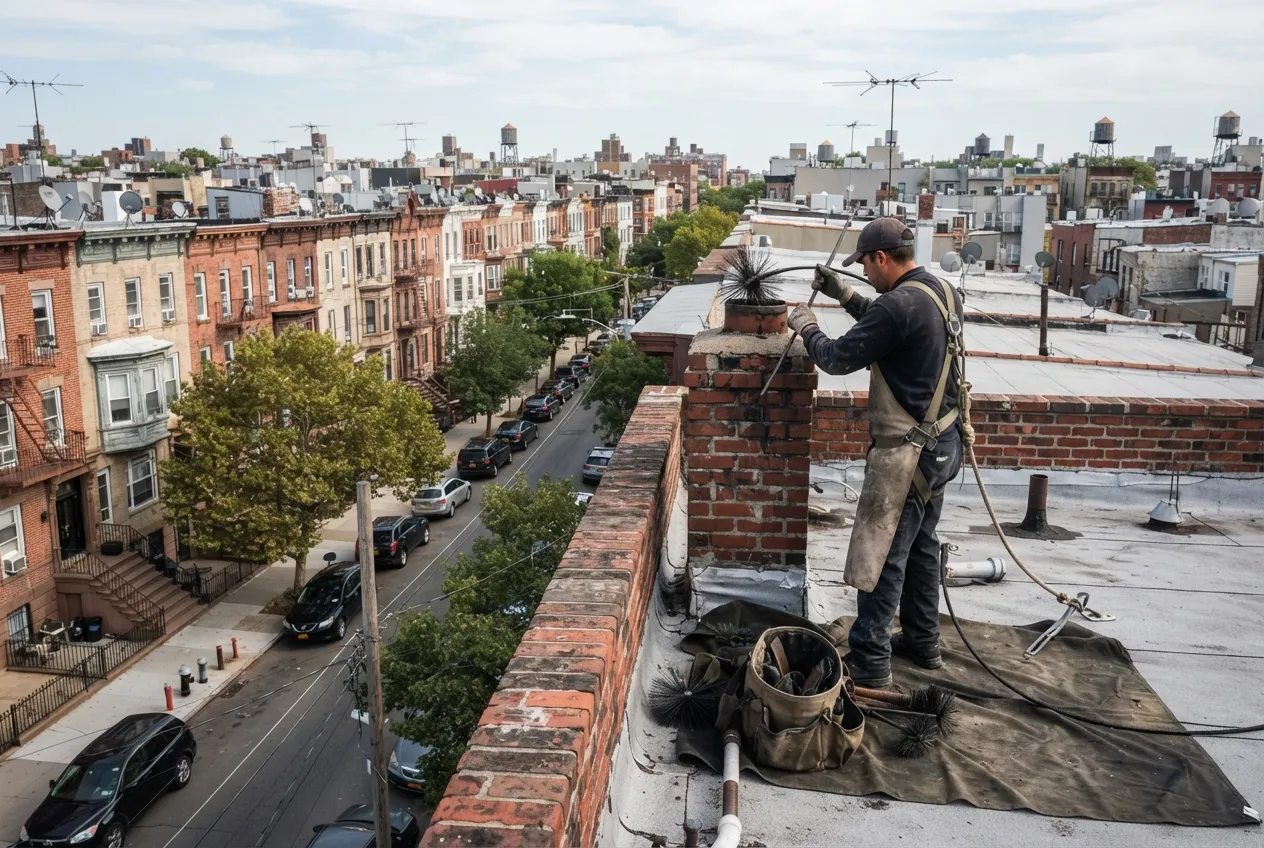
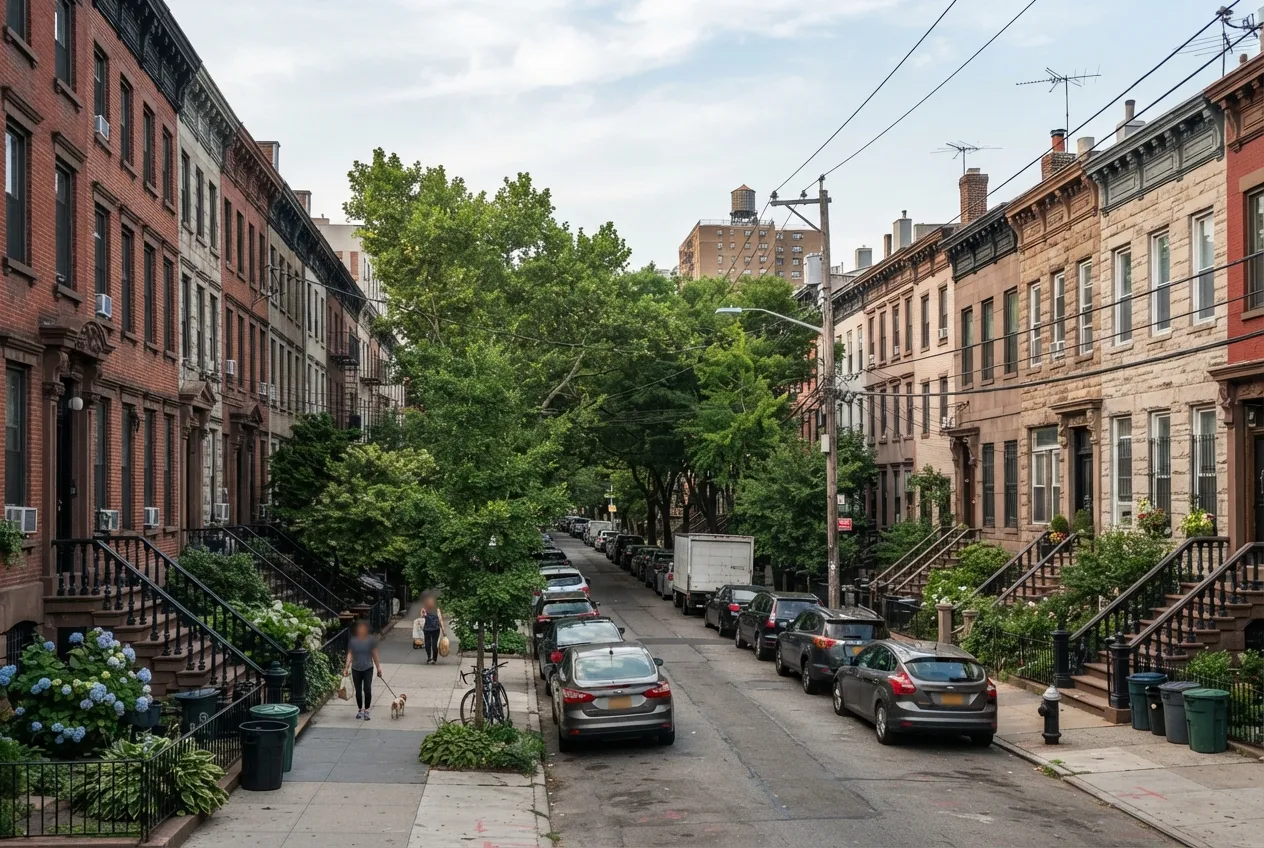
TrueHearth Chimney Service works in Bushwick from our office in Prospect Heights, about 3 miles southwest. We serve homes and buildings across ZIP code 11237, including rowhouses, brownstones, pre-war apartment buildings and the occasional detached house. Many of these buildings have masonry chimneys that have vented boilers, furnaces and fireplaces for generations, and they take a beating from Brooklyn's freezing winters and humid summers. Our certified technicians handle sweeping, inspection, repair, liners, waterproofing and rebuilding. We also clean dryer vents and air ducts, so one visit can cover the whole house or building.
What Bushwick's Weather Does to a Chimney
Brooklyn winters swing above and below freezing many times a season. Rain and melting snow soak into brick and mortar, freeze overnight, and expand. Over the years that cycle loosens joints, cracks crowns and pushes the faces off bricks. Summer brings humidity and heavy thunderstorms, and nor'easters can drive rain sideways into an open flue or a cracked crown.
Water is the main reason older chimneys fail. An uncapped flue lets rain run straight down to the damper or boiler connection. A cracked crown sends water into the masonry. Over time you may see stains on interior walls, flaking plaster near the chimney, or rust on a damper. Catching these early with a cap, a crown repair or waterproofing usually costs far less disruption than rebuilding later.
Heating Season and the Annual Inspection
New York City's heat season runs from October 1 through May 31. During those months, building owners must keep apartments heated to the city's minimum temperatures. That means the boiler and the chimney venting it work hard for eight months a year. Late summer and early fall are the best time to have the chimney checked, before a problem shows up on a cold night.
The NFPA 211 standard calls for chimneys, fireplaces and vents to be inspected once a year. We follow the three inspection levels used across the trade:
- Level 1: a standard yearly check when nothing about the system has changed.
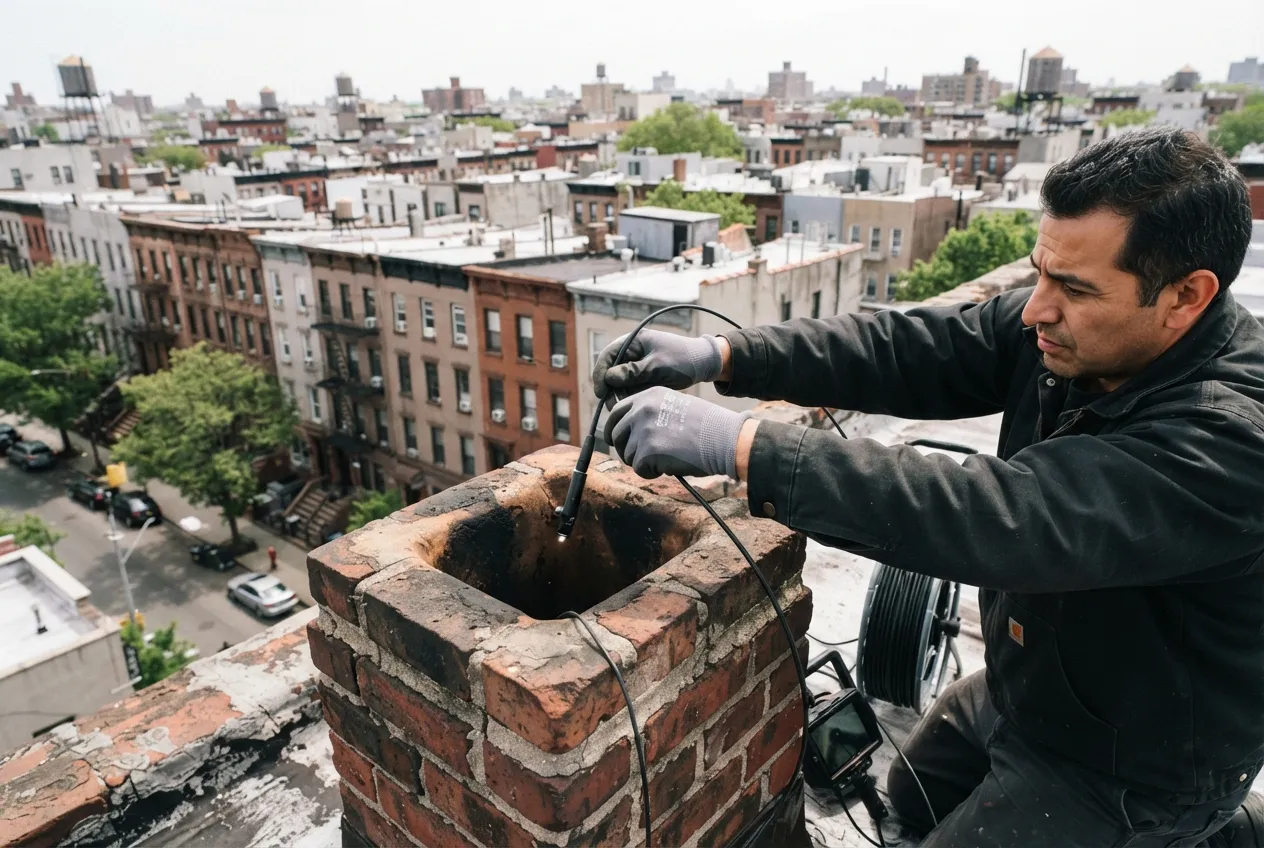
- Level 2: when you add a new appliance, switch fuels, or buy or sell the property. This level includes a camera inspection of the flue.
- Level 3: when a hidden hazard has to be reached by opening part of the chimney or building.
Oil-to-Gas Conversions and Chimney Liners
Many Bushwick buildings once heated with oil. When a New York City building converts its boiler from oil to gas, the chimney has to be evaluated as part of the work. A new liner is often needed. Gas exhaust produces acidic condensate, and that moisture can corrode an unlined or old masonry flue from the inside. We inspect the flue, size a liner to the new appliance, and install it, so the conversion can move forward. If your building is planning a conversion, bring us in early in the process.
Time for your annual chimney check?
Services We Offer in Bushwick
Whether you have a working fireplace in a brownstone parlor or a boiler flue in a multi-unit building, we can help with:
- Chimney sweeping to remove soot, creosote and debris
- Chimney inspection at Level 1, 2 or 3
- Chimney repair, including masonry, crowns and flashing
- Chimney liner installation for gas, oil and wood-burning appliances
- Chimney cap and chase cover installation to keep out rain and animals
- Chimney waterproofing for weathered brick
- Fireplace and damper repair
- Chimney rebuilding when masonry is beyond repair
- Dryer vent cleaning
- Air duct cleaning
Dryer Vents and Air Ducts
Dryer vents in rowhouses and apartment buildings often run long distances through walls or ceilings, and lint builds up where you can't see it. According to the U.S. Fire Administration, failure to clean is the leading factor contributing to clothes dryer fires in homes. If clothes take longer to dry or the laundry room feels hot, have the vent cleaned.
For air ducts, we follow the U.S. EPA's guidance. The EPA recommends cleaning when there is substantial visible mold growth, vermin, or excessive dust and debris. It also notes that duct cleaning has not been shown to prevent health problems. We'll tell you plainly whether your ducts need cleaning. We won't push chemical treatments you don't need, and we'll explain the process before we start.
ZIP codes we serve
- 11237