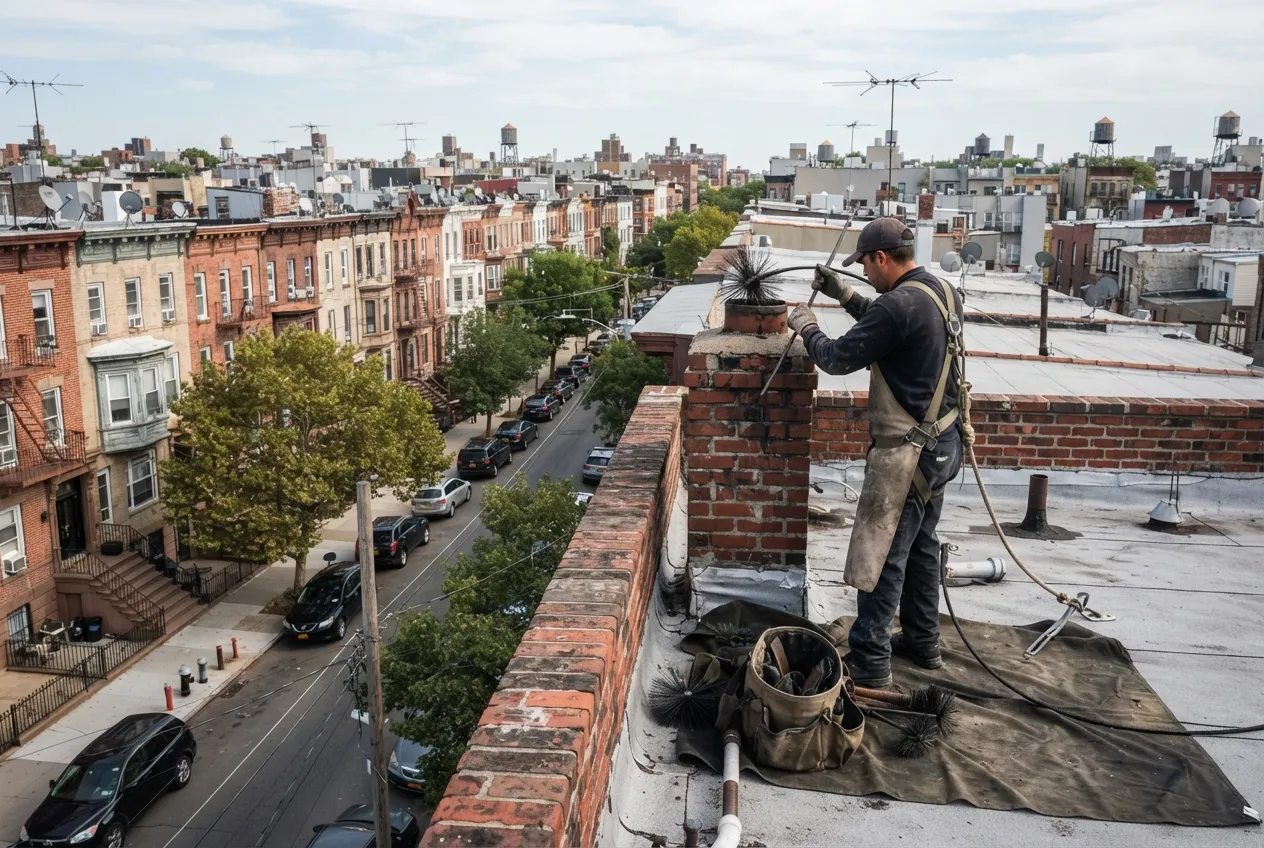
The short answer
TrueHearth Chimney Service handles chimney sweeping, inspection, repair, relining and dryer vent and air duct cleaning for Brooklyn Heights homes and buildings, about 2 miles from our Prospect Heights office. We focus on the needs of older brownstones, rowhouses and pre-war apartment buildings, and we recommend scheduling an inspection before the October heating season starts.
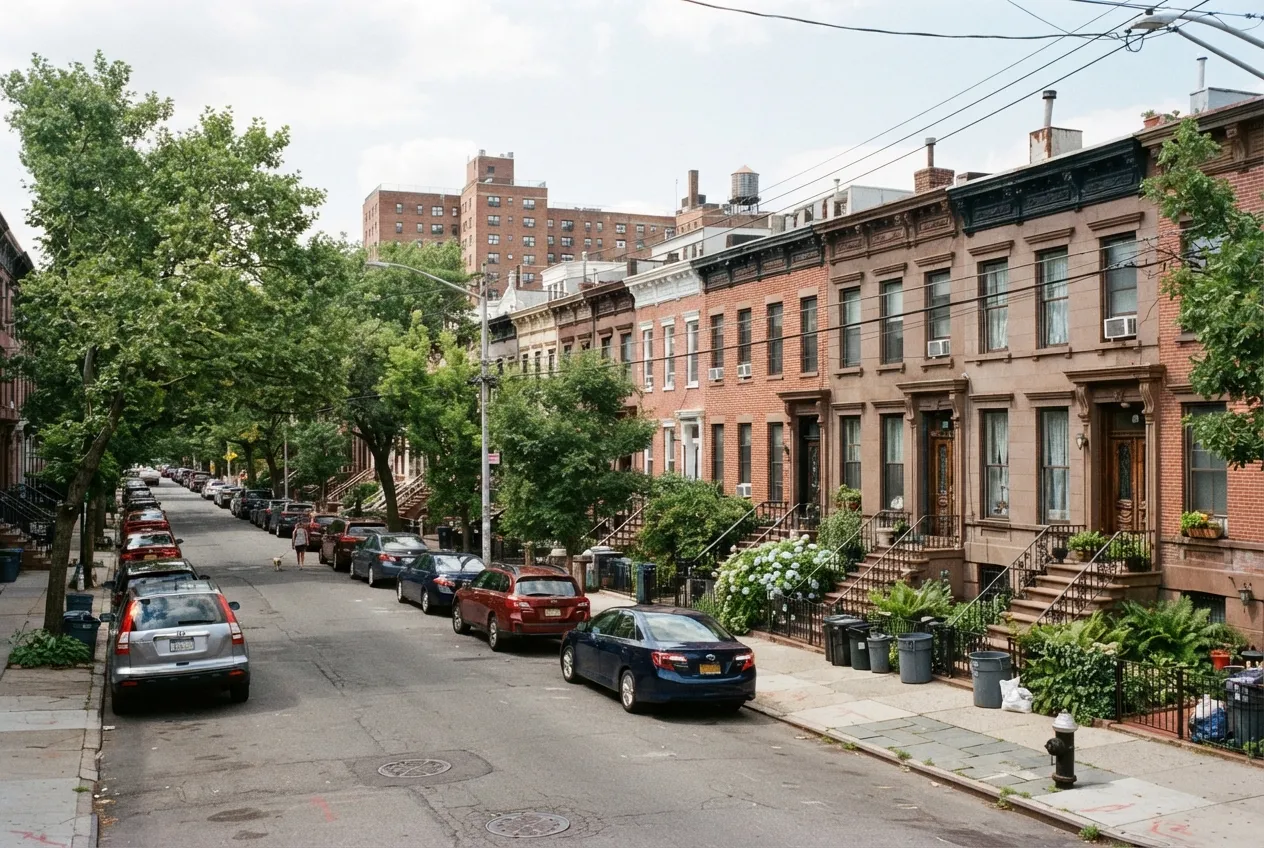
Brooklyn Heights is about 2 miles northwest of our office in Prospect Heights, so it's a short trip for our crews. Much of the housing here is older masonry: brownstones, rowhouses and pre-war apartment buildings whose chimneys have vented coal, oil, gas and wood over the decades. Those flues usually need closer attention than a chimney on a newer house. TrueHearth Chimney Service sends certified technicians who explain what they find in plain terms, show you photos, and tell you which repairs can wait and which shouldn't.
Chimneys in Older Brooklyn Heights Homes
Many brownstones and rowhouses have several flues running up one shared masonry stack. Some serve fireplaces on different floors, and one may vent the boiler or water heater. Over time, original clay tile liners crack, mortar joints wear away, and flues that haven't been used in years can fill with debris or animal nests. Because these homes share walls with their neighbors, it matters to know exactly which flue is which and what condition each one is in.
In pre-war apartment buildings, the boiler flue is usually the main concern. When a New York City building converts its boiler from oil to gas, the chimney has to be evaluated as part of the work. A new liner is often needed, because gas exhaust produces acidic condensate that can corrode a masonry flue. We inspect the existing flue and install a liner sized for the new equipment.
How Brooklyn Weather Wears Down Masonry
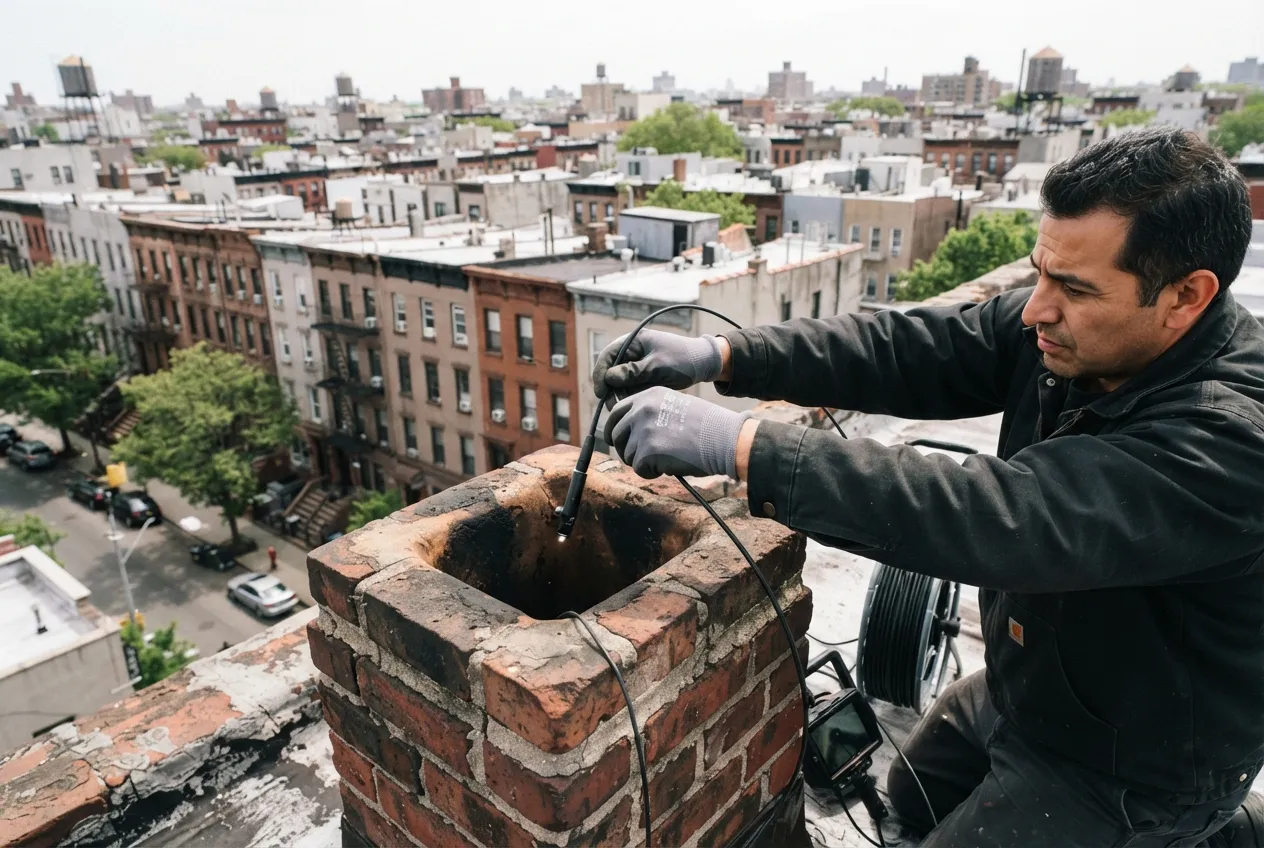
Brooklyn winters bring repeated freeze-thaw cycles. Water soaks into brick and mortar, freezes, expands, and slowly breaks the masonry apart from the surface inward. Wind-driven rain from coastal storms pushes water into cracked crowns and gaps in the flashing, and it often shows up as stains on ceilings or walls next to the chimney. Humid summers can make a damp firebox smell musty.
Most water damage starts small. A properly fitted chimney cap keeps rain, birds and debris out of the flue. A sound crown sheds water away from the stack. A breathable water repellent lets brick dry out instead of trapping moisture. Fixing these early is far less disruptive than rebuilding a deteriorated chimney above the roofline later.
When to Schedule an Inspection
The NFPA 211 standard calls for chimneys, fireplaces and vents to be inspected once a year. A Level 1 inspection fits when nothing about the system has changed. A Level 2 inspection is the right choice when you add a new appliance, switch fuels, or buy or sell a home. A Level 3 inspection is reserved for cases where a hidden hazard can only be reached by opening part of the chimney or building.
New York City's heat season runs from October 1 through May 31, when building owners have to keep apartments heated to the city's minimum temperatures. For buildings that rely on a boiler, late summer and early fall are the practical time to inspect and sweep, so any repairs are finished before the heat has to stay on.
Time for your annual chimney check?
Services We Offer in Brooklyn Heights
We work on single-family brownstones, multi-unit rowhouses and larger apartment buildings. We also serve the nearby neighborhoods of Downtown Brooklyn, DUMBO, Boerum Hill, Fort Greene and Clinton Hill.
- Chimney Sweep: removing soot and creosote from wood-burning and appliance flues
- Chimney Inspection: Level 1, 2 and 3 inspections with photos and a written summary
- Chimney Repair: repointing, crown repair and flashing fixes
- Chimney Liner Installation: relining for fuel conversions, new appliances or damaged clay tile
- Chimney Cap & Chase Cover: keeping out rain, animals and debris
- Chimney Waterproofing: breathable repellents for brick and stone
- Fireplace & Damper Repair: firebox, damper and smoke chamber work
- Chimney Rebuilding: rebuilding deteriorated masonry above or below the roofline
- Dryer Vent Cleaning: clearing lint from the duct and the exterior termination
- Air Duct Cleaning: cleaning supply and return ducts when the conditions call for it
Dryer Vents and Air Ducts
According to the U.S. Fire Administration, failure to clean is the leading factor contributing to clothes dryer fires in homes. In rowhouses and apartments, dryer vents often run long distances to a rear wall or the roof, and lint builds up along the way. We clean the entire run and check that air moves freely at the outside end.
For air ducts, we follow the U.S. EPA's guidance. Cleaning makes sense when you have substantial visible mold, signs of vermin, or excessive dust and debris. The EPA notes that duct cleaning has not been shown to prevent health problems, and it advises caution with very cheap advertised offers and with chemical treatments. If your ducts don't need cleaning, we'll tell you.